Black Women's March in Belém Advocates for Rights and Democracy
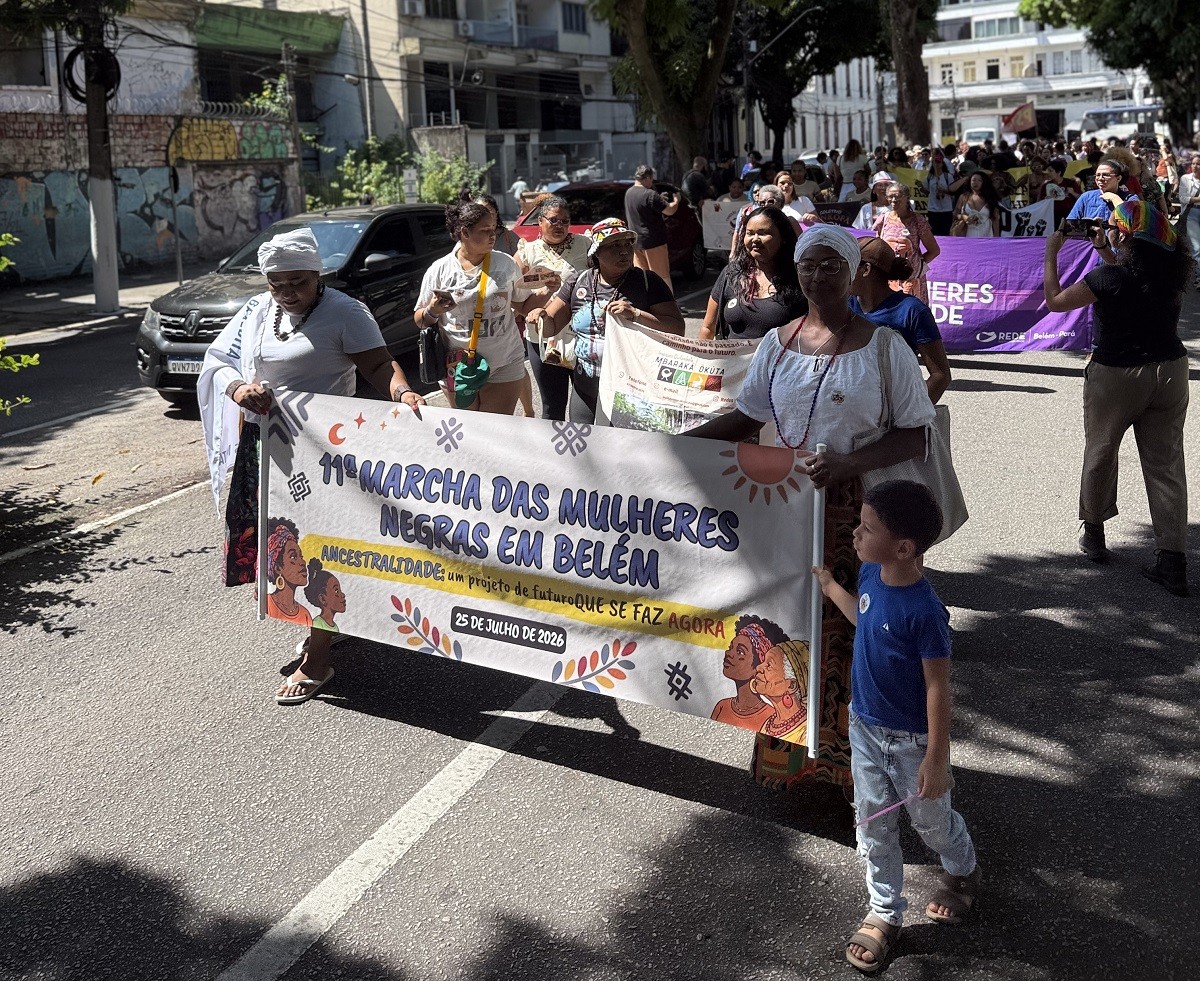
The 11th Black Women's March took place in Belém, the capital of Pará, on Saturday, July 25th, filling the streets of the city center. This event marked the culmination of a month-long series of mobilizations and discussions aimed at combating racism. Participants gathered near Praça da República to advocate for fundamental rights, democratic principles, and increased political representation. The march commenced at 9 AM in front of Quilombo da República (QR), proceeding around the square before returning to the starting point, uniting various generations, social movements, and cultural expressions. This year's theme, "Ancestrality: a project for the future being built now," invited society to acknowledge the historical contributions of Black women to the Amazon's development and to reflect on political decisions shaping the coming years. Given the context of general elections, the march held significant strategic importance. Speeches and actions throughout the route emphasized the critical need for greater representation in positions of power, the reinforcement of democracy, and concrete commitments to the rights of Black people, particularly Black Amazonian women. Since its inception in 2016, the Belém Black Women's March has become a prominent public demonstration within the "Julho das Pretas" (Black Women's July) initiative in Pará. The gathering included representatives from Black movements, feminist collectives, community and religious leaders, researchers, students, and local artists. The march was part of a national network of Black women demanding historical reparations, racial justice, and the promotion of "Bem Viver" (Good Living). The event concluded by celebrating intergenerational unity and the strength of institutional partnerships that supported the Anti-Racism Activism Campaign throughout July.
The Black Women's March in Belém highlights the persistent struggle for racial and gender equity within Brazil's democratic framework. By framing ancestrality as a forward-looking project, participants are asserting a claim to historical recognition and demanding that present-day political and social structures actively incorporate the perspectives and rights of Black women. The timing, coinciding with general elections, underscores a strategic effort to leverage public attention towards increasing political representation and ensuring accountability from elected officials. This mobilization reflects a broader trend of marginalized groups utilizing public demonstrations to challenge systemic inequalities and advocate for policy changes that promote social justice and inclusive governance, particularly in the lead-up to significant electoral cycles.
AI-generated to prompt reflection — not editorial opinion, not advice, not a statement of fact. How this works.