Blind Japanese Sailor Aims to Solo Cross Pacific at 59
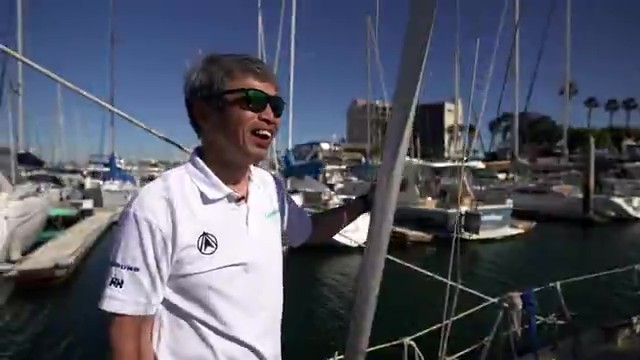
Hiro Iwamoto, a 59-year-old Japanese man who lost his sight at age 16, is preparing for an ambitious solo voyage across the Pacific Ocean. The journey will cover approximately 14,000 kilometers, sailing from San Diego, California, to Japan. Iwamoto, who has never had a confirmed cause for his blindness, initially struggled with his condition. However, a dream in which a relative told him his blindness had a purpose—to inspire others through challenges—transformed his perspective. This led him to pursue increasingly difficult feats, including climbing Japan's highest mountain, where he found validation in inspiring strangers. He later discovered sailing in 2002, experiencing a profound sense of freedom at sea. His first attempt to cross the Pacific in 2013 with presenter Jiro Shinbo ended when their sailboat collided with a blue whale, causing it to sink. They were adrift for 11 hours before being rescued by the Japanese Navy. Despite the psychological trauma and public criticism, Iwamoto persevered. In 2019, he successfully completed the same route in 55 days with his friend Doug Smith. For navigation, he relies on non-visual cues, such as feeling the sun's position for direction and using a voice-command compass and a custom-developed app named Lina, after his daughter, which provides wind data. Iwamoto plans to undertake the solo crossing in February 2027, emphasizing his feeling of greater safety on the boat than on land, where he requires assistance. He views his continued challenges as a testament to his philosophy that courage lies in moving forward despite fear, particularly when facing societal doubts about his abilities due to his age and blindness.
Hiro Iwamoto's planned solo Pacific crossing highlights the potential for human resilience and technological adaptation in overcoming perceived limitations. His assertion that the boat is safer than land suggests a redefinition of environmental risk based on sensory input and control, rather than objective hazard metrics. This endeavor prompts consideration of how individuals can leverage personal motivation and tailored assistive technologies to achieve extraordinary goals, potentially challenging societal assumptions about disability and age. The narrative also implicitly raises questions about the role of media in framing such achievements, from initial skepticism to eventual inspiration, and the psychological fortitude required to pursue ambitious objectives against a backdrop of potential failure and public scrutiny.
AI-generated to prompt reflection — not editorial opinion, not advice, not a statement of fact. How this works.