BNP Leader Claims Awami League's Yaba Trade Now Controlled by Opposition Figures
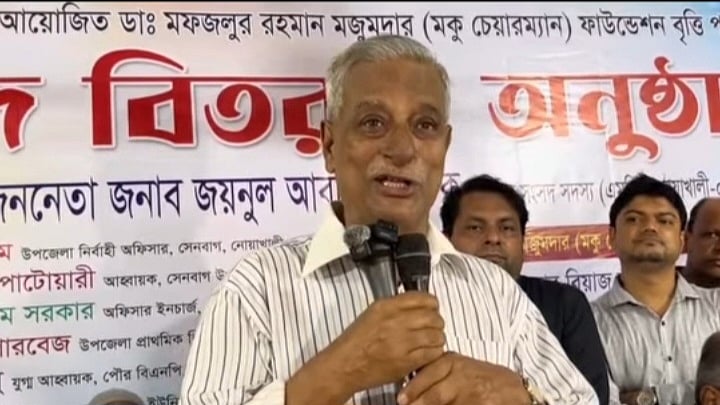
Zainul Abedin Farroque, an advisor to the BNP chairperson and a Member of Parliament, stated that the yaba (methamphetamine) trade, previously controlled by Awami League leaders, has now been taken over by some leaders within the BNP. He made these remarks on Friday at the prize distribution ceremony for the Mofazzal Rahman Smriti Medhabritti examination, held at Kankirhat Multipurpose High School in Senbag, Noakhali. Addressing local BNP leaders in Senbag, Noakhali, Farroque warned that strict action would be taken against anyone found involved in the yaba trade, regardless of their party affiliation. He noted that two leaders from Jubo Dal, the youth wing of the BNP, have already been imprisoned for engaging in this illicit business. Farroque asserted that individuals using the party's name for yaba trading would face legal consequences if they did not reform. He also expressed strong disapproval of illegal soil extraction that is damaging local roads. Farroque criticized individuals operating 20-ton trucks on rural roads designed for 1.5-ton vehicles, leading to their destruction. Regarding the upcoming election, he mentioned that with approximately four and a half years remaining, the BNP would be considered if their acting chairman, Tarique Rahman, could win the public's favor. Farroque emphasized that the BNP does not engage in politics of seizing power through force or occupying polling stations, unlike the Awami League.
This statement from a BNP leader alleges a significant shift in illicit drug trade control, framing it as a transfer from the ruling party to opposition figures. Such accusations, if substantiated, would highlight governance challenges and the potential for criminal elements to exploit political structures. The analysis of this claim requires examining law enforcement effectiveness, judicial processes, and the internal accountability mechanisms within both political parties. The broader implication concerns the integrity of political institutions and their capacity to combat organized crime, particularly in the context of electoral cycles where such issues can become politicized. Future considerations include the impact of such allegations on public trust and the potential for regulatory reforms aimed at enhancing transparency and accountability in political party funding and activities.
AI-generated to prompt reflection — not editorial opinion, not advice, not a statement of fact. How this works.