Body Recovery Missions on Pakistan's High Peaks Gain Momentum
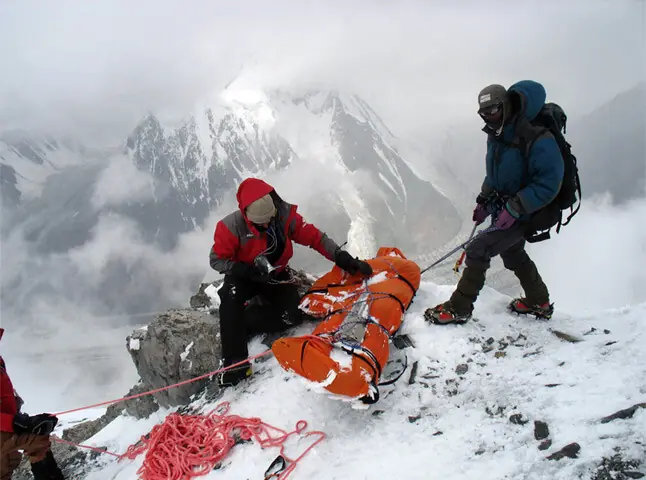
The growing accessibility of Pakistan's formidable mountains, driven by improved infrastructure and increased global exposure, has led to a surge in adventure tourism. However, this expansion has also brought tragic consequences, with fatal accidents becoming a recurring issue for climbers. While aerial and ground rescues are common for those still alive, retrieving bodies from extreme altitudes is an exceptionally arduous and dangerous task, often undertaken by a specialized group of Pakistani climbers. These individuals perform a critical, yet under-supported, role in recovering deceased mountaineers from elevations above 7,000 meters, providing a vital service for grieving families.
This challenging work was notably advanced by Austrian Georg Kronthaler, who, after his brother Markus's death on Broad Peak in 2006, defied the prevailing mountaineering belief that body recovery at high altitudes was impossible. In 2007, with the assistance of Pakistani climbers and tour operators like Asghar Ali Porik, Georg successfully recovered his brother's remains. This mission, documented in the film "Grab in eisigen Höhen," demonstrated the feasibility of such operations and inspired a shift in mindset within the mountaineering community. Kronthaler also later helped organize training programs for Pakistani mountaineers in high-altitude rescue techniques.
Inspired by such efforts, Pakistani climbers are increasingly taking on these recovery missions. Abid Sadpara, son of the renowned climber Hasan Sadpara, recently led a team to recover the body of Afghan climber Akbar Ali Sakhi from K2 at 7,200 meters. The tour operator had initially refused the recovery, deeming it impossible. Sadpara assembled a skilled team, including several members of the Sadpara family and others, who trained on Khosar Gang before undertaking the challenging retrieval from K2's Camp 3.
The increasing commercialization of high-altitude mountaineering in Pakistan presents a complex duality. While it fuels economic activity and showcases the country's natural grandeur, it also amplifies the risks associated with extreme environments. The emergence of specialized body recovery teams highlights a critical gap in institutional support for a dangerous but necessary service, often relying on the personal commitment of individuals and families. This trend underscores the evolving ethical considerations in adventure sports, where the pursuit of personal achievement intersects with the profound responsibility towards those who perish. Future developments may involve formalizing these recovery efforts, potentially through public-private partnerships or dedicated non-profit organizations, to ensure greater safety, standardization, and support for both climbers and their families in the face of tragedy.
AI-generated to prompt reflection — not editorial opinion, not advice, not a statement of fact. How this works.