Bolivian Aircraft Suspected of Clandestine Landing Lead to 500kg Drug Seizure in Brazil
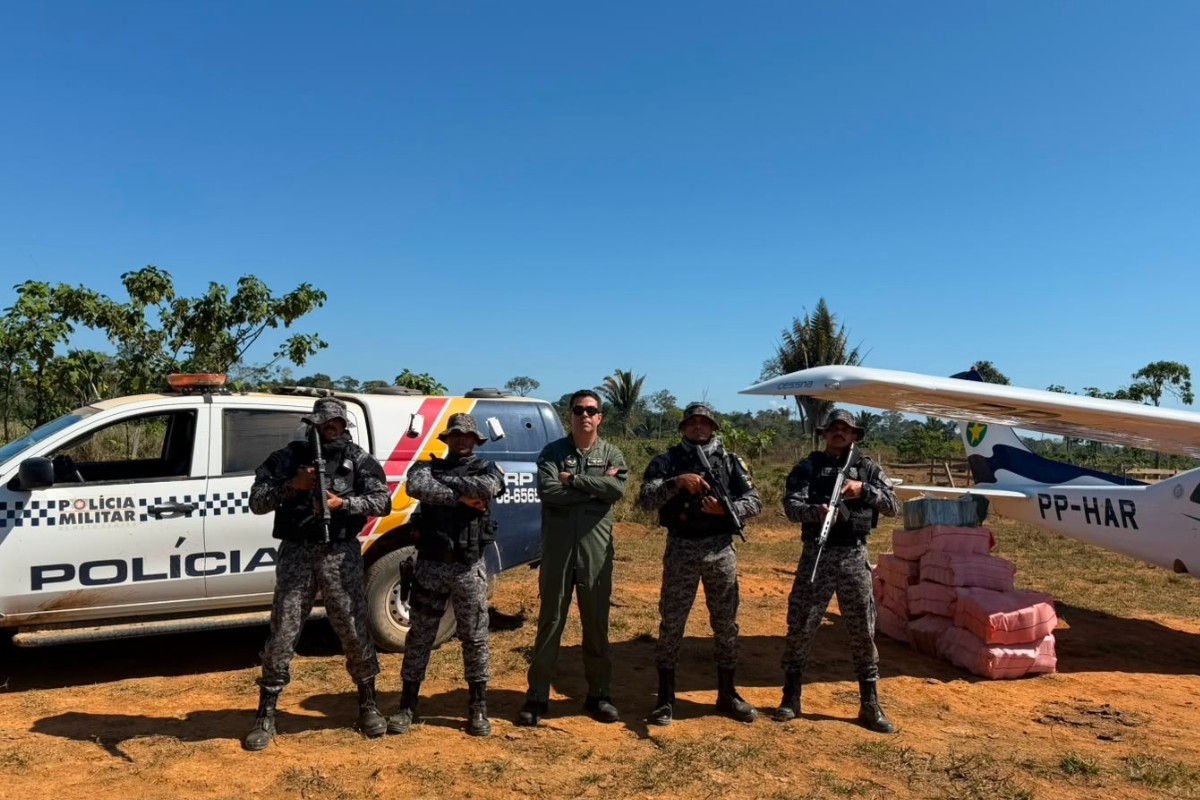
Authorities in Colniza, Mato Grosso, Brazil, have seized approximately 500 kilograms of marijuana following an investigation into suspected clandestine aircraft landings from Bolivia. The operation, which began on Sunday, March 26th, was prompted by intelligence suggesting two Bolivian aircraft used an illicit airstrip on the PMMT farm to unload drugs. During an initial search, police did not find the aircraft or the cargo but apprehended two farm employees, aged 24 and 30. A search of one employee's residence yielded two portions of marijuana, a shotgun, a communication cell phone, and other criminal paraphernalia. A third man, 32, was arrested upon arriving at the farm in a license plate-less pickup truck, found with a .38 caliber revolver and ammunition, and lacking a permit to carry firearms. Further searches on Wednesday, March 29th, led to the discovery of 12 semi-buried bales of marijuana, totaling about 500 kilograms. The integrated operation involved the Special Border Group (Gefron), Military Police, Integrated Center of Air Operations (Ciopaer), and the Federal Police. The seized drugs and the three arrested suspects were transferred to the Federal Police for further legal proceedings.
This incident highlights the persistent challenges in border security and drug interdiction, particularly concerning the use of clandestine airstrips for illicit trafficking. The operation demonstrates effective inter-agency cooperation between state and federal forces in Brazil. However, the reliance on intelligence regarding aircraft movements from neighboring countries underscores the need for enhanced aerial surveillance and cross-border information sharing. The seizure of substantial quantities of drugs and the arrest of individuals involved point to ongoing organized criminal activity. Future efforts may benefit from exploring technological solutions for detecting unauthorized airstrips and improving real-time monitoring of air traffic in remote border regions to disrupt such operations before they can deliver their cargo.
AI-generated to prompt reflection — not editorial opinion, not advice, not a statement of fact. How this works.