Bollywood Stars Protest Police Action Against NEET Protesters, Swara Bhasker's Husband Detained
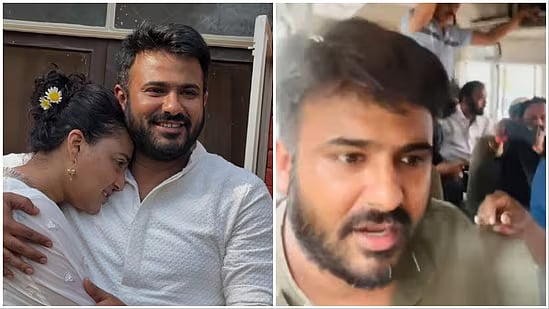
Protests erupted across India on Monday, July 20th, demanding a probe into alleged irregularities in the National Eligibility cum Entrance Test (NEET) and the resignation of Union Education Minister Dharmendra Pradhan. The protests, organized by the Chhatra Janata Party (CJP), led to clashes with police in Delhi and detentions in Mumbai. Among those detained in Mumbai was Fahad Ahmed, political activist and husband of Bollywood actress Swara Bhasker. Bhasker shared a video on Instagram alleging that Fahad was arrested by police in the Chaityabhumi area of Dadar, Mumbai, and taken to Mahim police station along with other protesters. She condemned the police action against peaceful demonstrators, calling it a 'disgrace to democracy.'
In Delhi, thousands participated in the CJP's 'March to Parliament' program, calling for an investigation into NEET irregularities and educational reforms. Police used lathis, tear gas, and water cannons to disperse the crowd, resulting in some injuries. Veteran actress Shabana Azmi reportedly fell ill while trying to join the protest. Several Bollywood celebrities, including Bhumi Pednekar, Huma Qureshi, Sonakshi Sinha, Dia Mirza, Sonu Sood, Vir Das, Aditi Rao Hydari, Sutapa Sarkar, Nandita Das, and Diljit Dosanjh, criticized the police's handling of the protesters. Ritesh Deshmukh and Genelia D'Souza also expressed solidarity with the movement. Huma Qureshi voiced her concern over the use of force against peaceful protesters, urging the government to engage in dialogue.
The events highlight the escalating tension between student activism, alleged systemic failures in educational testing, and state response. The detentions and police actions, while framed by protesters as suppression of dissent, are viewed by authorities as necessary measures to maintain public order during demonstrations. The involvement of prominent Bollywood figures amplifies the visibility of the protests, potentially influencing public opinion and pressuring governmental bodies for accountability. This situation underscores a broader trend of citizens utilizing digital platforms to mobilize and voice grievances, challenging traditional power structures. The core issue revolves around ensuring fairness and transparency in critical national examinations, a challenge that requires robust governance mechanisms and a commitment to addressing public concerns through dialogue rather than force, especially in an era where technological advancements can both facilitate and complicate such processes.
AI-generated to prompt reflection — not editorial opinion, not advice, not a statement of fact. How this works.