Book on Ordinary Chinese Lives Under Government Scrutiny Sparks Discussion
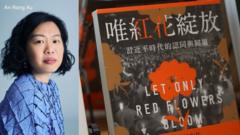
Feng Zheyun, author of "Where the Red Flowers Bloom," describes her book as "quite gentle" in its exploration of the lives of ordinary Chinese citizens and their struggles under government rule. She acknowledges that this theme is a "sensitive topic in China." The book's content, which delves into the everyday experiences of people navigating the complexities of living within a state-controlled environment, has drawn attention due to its sensitive nature. Feng Zheyun's perspective highlights the delicate balance individuals must strike between personal lives and the overarching governmental framework. The author's characterization of the book as "gentle" suggests an approach that avoids overt confrontation while still addressing significant societal challenges. The discussion around "Where the Red Flowers Bloom" underscores the ongoing dialogue about individual agency and societal constraints within contemporary China. The book's exploration of these themes positions it as a significant cultural artifact, reflecting the nuanced realities faced by many.
The book "Where the Red Flowers Bloom" by Feng Zheyun navigates the sensitive terrain of ordinary Chinese citizens' lives under state governance. While described as "gentle," its exploration of individual struggles within a controlled environment inherently highlights the tension between personal autonomy and state authority. This dynamic is a recurring theme in societies with strong centralized control, where the space for individual expression and action is often circumscribed. The book's reception and discussion, particularly in the context of its "sensitive" nature, invite reflection on how information and personal narratives are managed and consumed within such systems. Future societal developments will likely continue to test the boundaries of individual expression against evolving governance structures, making works like this valuable for understanding systemic pressures and potential adaptations.
AI-generated to prompt reflection — not editorial opinion, not advice, not a statement of fact. How this works.