Bosnia's Republika Srpska Introduces Prison Sentences for Glorifying WWII-Era State
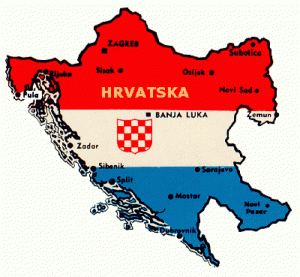
The government of Republika Srpska has adopted a proposal to amend its criminal code, introducing prison sentences for individuals who promote symbols or ideologies associated with the World War II-era Independent State of Croatia (NDH). The amendments also extend to the glorification of symbols related to the Army of the Republic of Bosnia and Herzegovina. This legislative change aims to penalize the public espousal of historical regimes and their associated emblems. The new provisions are set to take effect following their formal enactment. The decision was reported by Index.hr and published by Sloboden Pechat. This move signals a strong stance by the Republika Srpska government against the resurgence or promotion of historical ideologies deemed harmful or offensive. The scope of the law will likely be closely watched to ensure its application is consistent and fair, particularly concerning historical interpretation and freedom of expression.
This legislative action by Republika Srpska introduces criminal penalties for promoting symbols and ideologies of specific historical entities, including the NDH and the Army of the Republic of Bosnia and Herzegovina. From a governance perspective, such laws aim to manage collective memory and prevent the normalization of potentially divisive or harmful historical narratives. However, the implementation and interpretation of these laws will be critical. Defining 'promotion' and 'glorification' in a way that respects historical discourse while preventing incitement or offense presents a significant challenge. Future implications may involve navigating complex legal interpretations, potential international scrutiny regarding freedom of expression, and the ongoing efforts to reconcile historical legacies within the region. The effectiveness of such punitive measures in shaping public sentiment versus fostering deeper societal divisions remains a key consideration for the next decade.
AI-generated to prompt reflection — not editorial opinion, not advice, not a statement of fact. How this works.