BR-324 Section with Crater Remains Partially Closed; Traffic Flow Normal
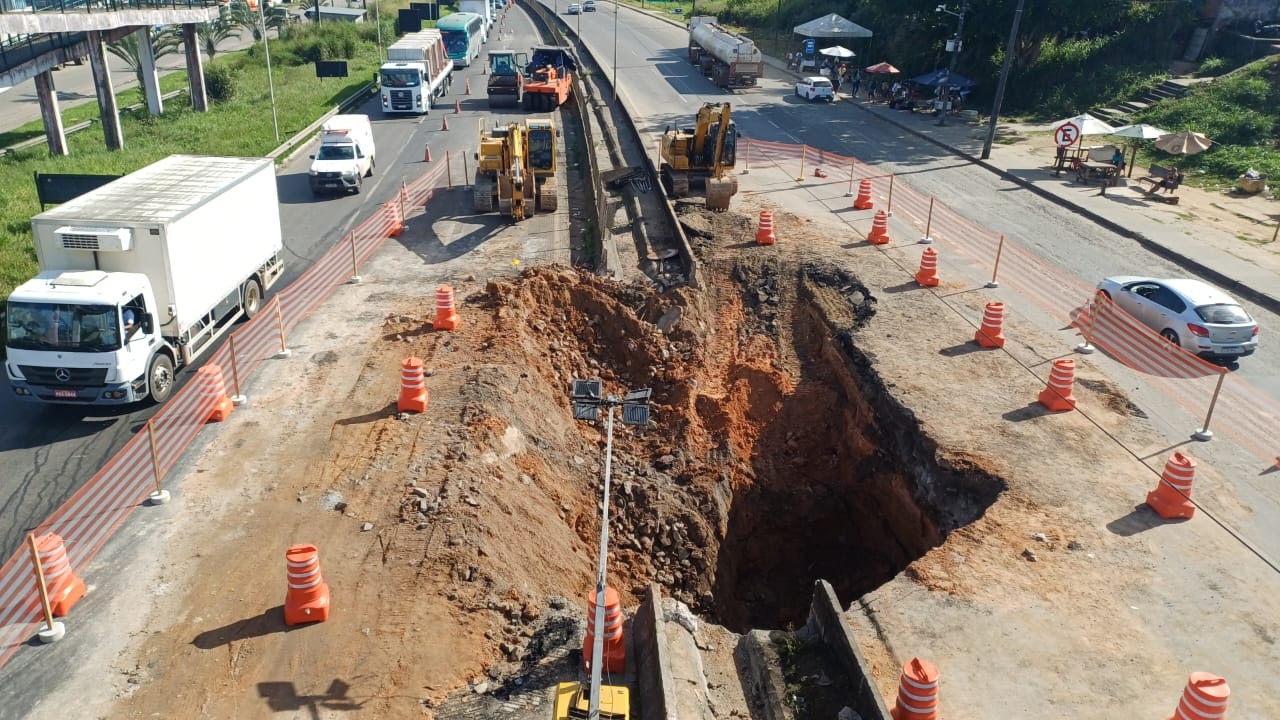
A section of BR-324 in Simões Filho, Bahia, near kilometer 604, remains partially closed following the opening of a crater last week. The left lanes in both directions are still interditado, according to the Federal Highway Police (PRF). Traffic is currently operating on the right lanes, which have been reopened, and the flow is described as normal with no significant congestion or delays reported. The Department of National Infrastructure of Transport (DNIT) is conducting recovery work on the affected stretch of the highway. The issue originated from a structural failure caused by a problem with an old culvert beneath the roadbed. Initially, the section towards Feira de Santana was interditado on Tuesday, November 7th, and reopened on Wednesday, November 8th. However, a new crater reappeared at the same spot on Thursday, November 9th, leading to a complete closure of that direction and causing traffic jams of up to 4 kilometers. This also impacted traffic in Simões Filho as drivers sought alternative urban routes. The DNIT has addressed a leak in the culvert that caused the initial subsidence and is now focused on repairing the structure and pavement. There is no estimated completion date for the full reopening of the BR-324 section.
The recurring structural failure on BR-324 highlights potential systemic issues in infrastructure maintenance and oversight. The DNIT's response, while addressing the immediate leak, faces the challenge of ensuring the long-term integrity of the roadbed, particularly given the history of the culvert. Future infrastructure projects and maintenance schedules may need to incorporate more robust geological surveys and predictive analytics to preemptively identify and mitigate risks associated with aging underground infrastructure, thereby preventing costly and disruptive closures. This situation underscores the critical need for proactive, data-driven asset management in transportation networks to ensure resilience against environmental factors and historical construction defects.
AI-generated to prompt reflection — not editorial opinion, not advice, not a statement of fact. How this works.