BR-365 Bridge Work in Ituiutaba Causes Traffic Disruptions for 60 Days
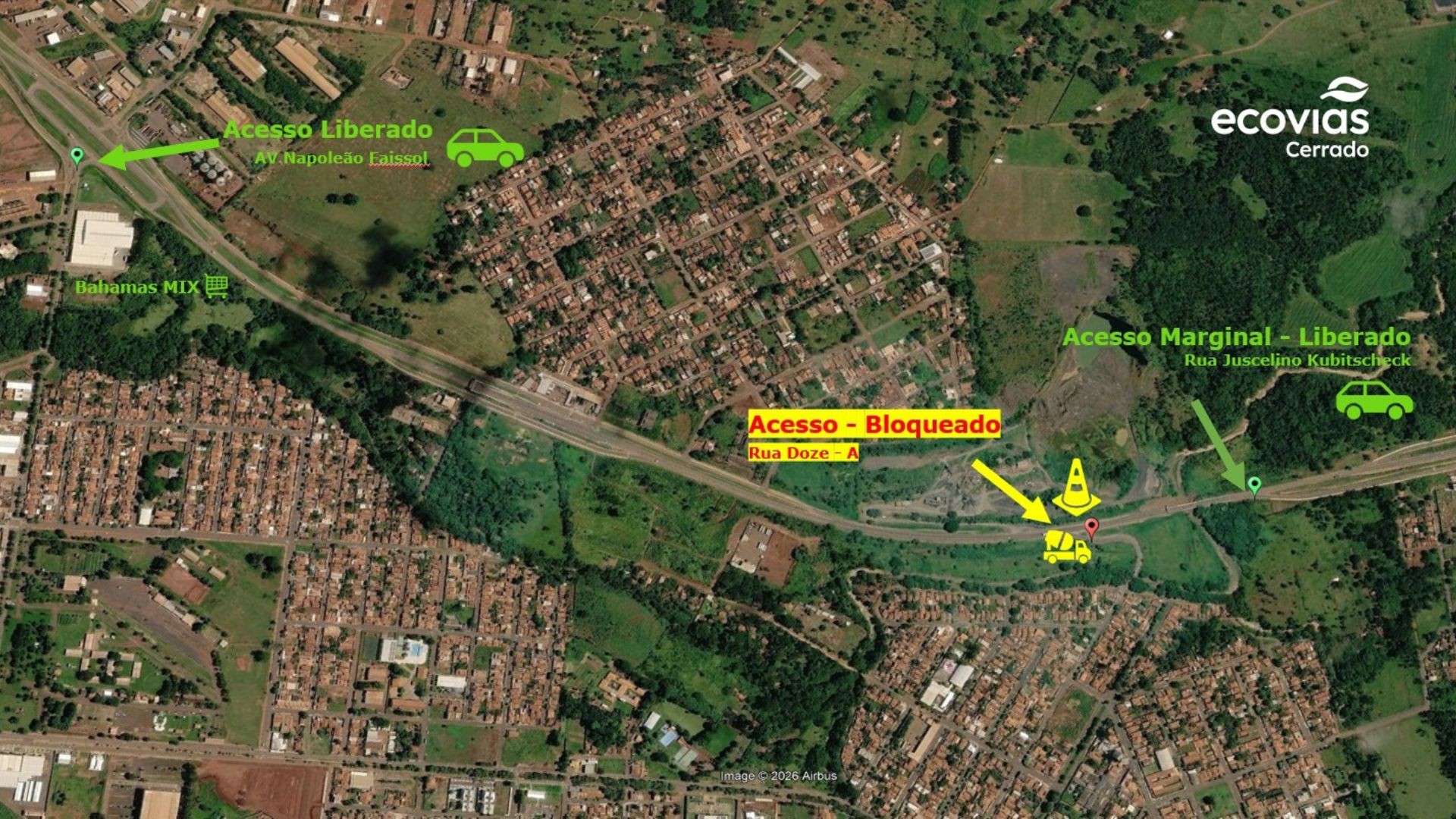
Traffic on BR-365 in Ituiutaba, Minas Gerais, will experience significant alterations starting Sunday, May 12th, due to ongoing construction on the bridge over Córrego Sujo at km 752. Ecovias Cerrado, the concessionaire, announced that traffic will operate under a "stop-and-go" system during the beam lifting operation. Two temporary stops, each lasting up to an hour, are scheduled for the morning to ensure worker safety. Additionally, access to the city via Rua Doze-A in the North Sector will remain temporarily closed. These interventions are part of a broader project to widen the bridge, which began on Thursday, May 9th, and is expected to take approximately 60 days to complete. Upon completion, the bridge will feature shoulders and a pedestrian walkway, enhancing safety and traffic flow. Motorists needing to access Ituiutaba during this period are advised to use alternative routes via Avenida Napoleão Faissol at km 754+800 or Rua Juscelino Kubitschek at km 752+200, after the bridge. The construction zone will be clearly marked with signage and attended by personnel to guide drivers. Drivers are urged to exercise caution, adhere to signage, and plan their journeys in advance. Work schedules may be adjusted due to weather or operational needs. For inquiries, Ecovias Cerrado can be reached 24/7 at 0800 0364 365.
The infrastructure upgrades on BR-365 aim to improve safety and capacity, addressing long-term traffic flow needs. However, the temporary disruptions highlight the inherent trade-offs between immediate construction impacts and future benefits. Managing public communication and providing clear, accessible alternative routes are critical for mitigating driver frustration and ensuring operational continuity. As Brazil continues to invest in its transportation networks, the efficiency and transparency of such projects will be key indicators of effective governance and resource allocation in the coming decade, particularly as increased automation in vehicles may necessitate redesigned road infrastructure.
AI-generated to prompt reflection — not editorial opinion, not advice, not a statement of fact. How this works.