Bratislava's D2 Highway Remains Congested Despite Recent Upgrades
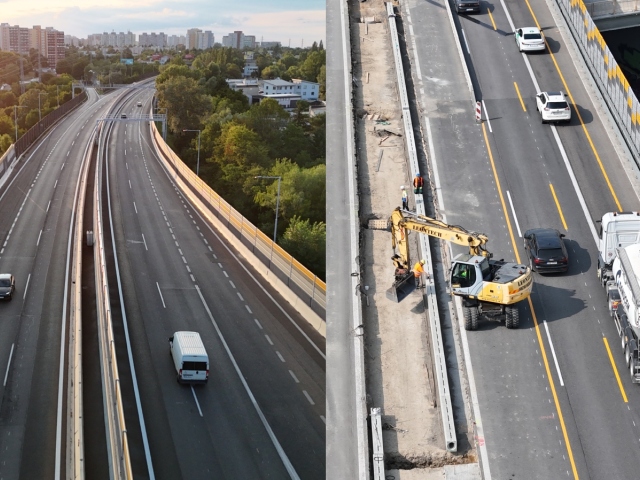
The critical three-kilometer section of the D2 highway in Bratislava, a persistent bottleneck causing traffic jams, has recently undergone modernization. However, drivers have not seen the expected improvement, as the much-anticipated expansion to six lanes has not materialized. While a central noise barrier and technical adjustments were made, the core issue of insufficient capacity remains unresolved. Despite these limitations, a new project for the Dúbravka interchange suggests that traffic organization near Sitina will eventually change. This implies that the highway will necessarily be widened in the future to accommodate traffic demands. The article seeks input from highway authorities and experts on the long-term plans and potential solutions for this crucial transportation artery.
The recent modernization of Bratislava's D2 highway, focused on a three-kilometer stretch, highlights a common infrastructure challenge: addressing immediate congestion with partial upgrades rather than comprehensive, long-term solutions. The failure to expand to six lanes, despite driver expectations, points to potential planning disconnects or funding constraints. The mention of future changes at the Dúbravka interchange suggests a reactive approach to traffic management. Over the next decade, as urban populations and vehicle ownership grow, such critical infrastructure will require strategic, forward-looking investment. A proactive plan for capacity expansion, integrated with smart traffic management systems and potentially alternative transport solutions, would be more effective than incremental, piecemeal improvements. This situation underscores the need for robust urban planning that anticipates future mobility needs and prioritizes sustainable, scalable infrastructure development.
AI-generated to prompt reflection — not editorial opinion, not advice, not a statement of fact. How this works.