Brazil Aims to Double Trade with South Korea Through New Strategic Agreements
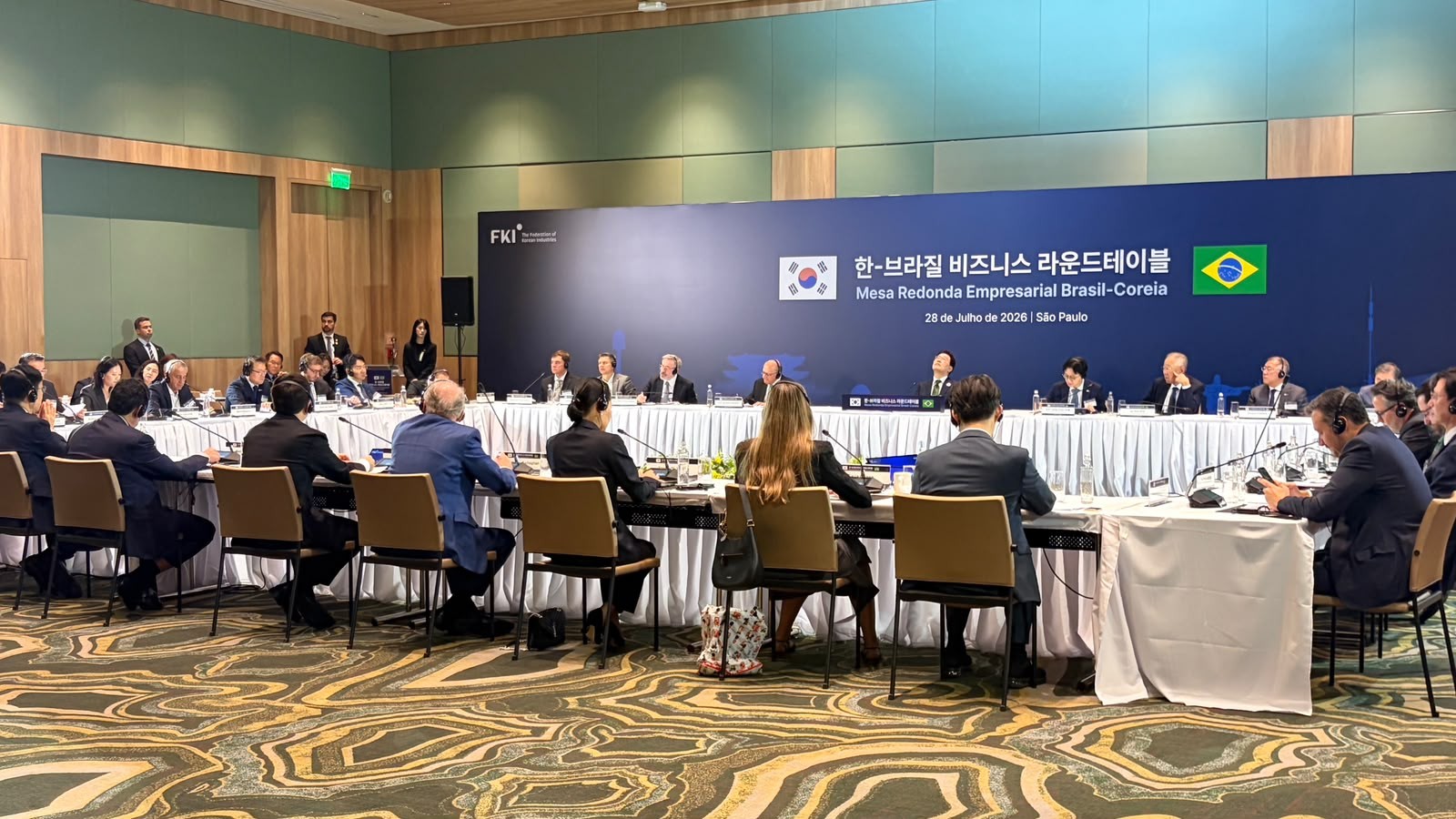
Brazil and South Korea have signed new cooperation agreements covering trade, technology, and investments, aiming to significantly deepen their economic partnership. Vice President Geraldo Alckmin emphasized that closer ties are a "strategic necessity," not merely a convenience, and expressed optimism about doubling the current bilateral trade volume, which reached $10.8 billion in 2025. South Korean investments in Brazil currently stand at $8.9 billion. The agreements, facilitated by ApexBrasil and the Federation of Korean Industries (FKI), were signed during the Brazil-Korea Business Roundtable in São Paulo and coincide with the official visit of South Korean President Lee Jae Myung. Seven memorandums of understanding were previously signed in Brasília, covering critical minerals, education, audiovisual production, sports, energy, industrial technology, space activities, and network security. Discussions also included South Korea's sanitary inspections for Brazilian meat producers, with Brazil confident in its sustainable livestock practices. Brazil seeks to move beyond raw material exports towards industrialization, technology transfer, and shared engineering, particularly in areas like artificial intelligence and data centers, leveraging its renewable energy matrix and regulatory stability. The countries are also exploring a potential Mercosur-South Korea trade agreement, with Brazil initiating internal consultations. Brazil's Minister of Development, Industry, Trade, and Services, Márcio Elias Rosa, highlighted existing partnerships with South Korean firms like Samsung and LG, and opportunities in AI, digital sovereignty, decarbonization, biofuels, and the cosmetics sector. The initiative is not a response to U.S. tariffs, with Alckmin stating that trade discussions with South Korea were separate from any U.S. trade issues.
The strategic alignment between Brazil and South Korea signals a proactive approach to diversifying global trade relationships amidst an increasingly fragmented international landscape. By focusing on technology transfer, industrialization, and critical minerals, both nations are positioning themselves to capitalize on future economic trends, particularly in AI and sustainable energy. The emphasis on moving beyond raw material exports reflects a broader ambition for value-added production and shared innovation, which could enhance Brazil's industrial capacity and South Korea's access to vital resources and markets. This partnership underscores a global shift towards regional blocs and bilateral agreements that prioritize predictability and mutual growth, offering a potential model for other developing economies seeking to enhance their competitive edge in the global economy over the next decade.
AI-generated to prompt reflection — not editorial opinion, not advice, not a statement of fact. How this works.