Brazil Experiences Rising Tornado Reports Amidst Climate Debates
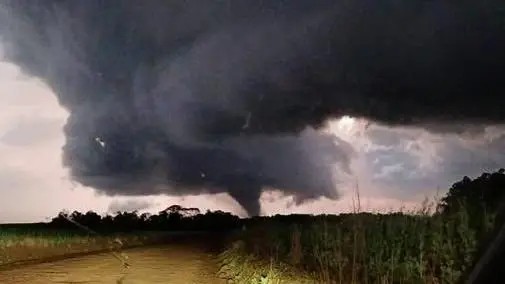
Brazil is experiencing a notable increase in reported tornadoes, with 81 recorded by July 2026, potentially surpassing the 2025 record of 92. This surge is partly attributed to a strong El Niño event, which fosters conditions for severe storms in the Southern region. The Prevots platform, a collaboration involving the Federal University of Santa Maria and the National Institute for Space Research (Inpe), has been documenting severe weather events in Brazil since 2018. Brazil ranks as the second country globally most prone to tornado formation, following only the United States, according to a 2012 study. A tornado is defined as a violently rotating column of air extending from a thunderstorm to the ground, capable of generating intense winds and causing significant damage. Its formation requires severe thunderstorms with strong updrafts, coupled with favorable conditions like wind shear at lower altitudes. Predicting the exact time and location of tornadoes remains impossible; however, atmospheric conditions conducive to their formation can be forecast hours in advance. Tornado alerts require confirmation of a supercell thunderstorm, a rotating storm system that provides the necessary intense updrafts. Warnings can typically be issued only 15 to 30 minutes before an event. The western parts of Brazil's Southern states and southern Mato Grosso are identified as the most tornado-prone areas, influenced by warm, moist air flowing from the Amazon and interacting with cold air masses from Patagonia, often accelerated by tropical cyclones off the Uruguay coast. Experts are divided on the primary reasons for the increased reporting frequency. Some, like Marcelo Seluchi from Cemaden, argue that the proliferation of camera-equipped mobile phones and increased population density are the main drivers, making it harder for tornadoes to go undocumented. Others, such as Francisco de Assis Diniz from Inmet, contend that climate change is indeed leading to more frequent and intense tornadoes due to a warming planet that fuels more severe weather events.
The increasing frequency of tornado reports in Brazil highlights a complex interplay between meteorological phenomena, technological advancements, and the ongoing debate surrounding climate change. While the enhanced documentation capabilities provided by mobile phones and greater population distribution undeniably contribute to a higher number of recorded events, the scientific community is divided on whether this reflects an actual increase in tornado occurrences or simply improved reporting. The influence of El Niño and regional atmospheric dynamics, such as the low-level jet stream, are established factors in severe weather formation. However, the potential exacerbation of these conditions by global warming remains a critical area of research. Understanding whether Brazil is experiencing a true rise in tornado intensity and frequency, or if current trends are primarily a result of better observation and reporting, is crucial for developing effective public safety strategies and informing climate policy. Future research should focus on long-term meteorological data analysis, independent of reporting biases, to ascertain the true impact of climate change on severe weather events in the region.
AI-generated to prompt reflection — not editorial opinion, not advice, not a statement of fact. How this works.