Brazil Federal Police Arrest Suspect in Massive Caatinga Deforestation Case
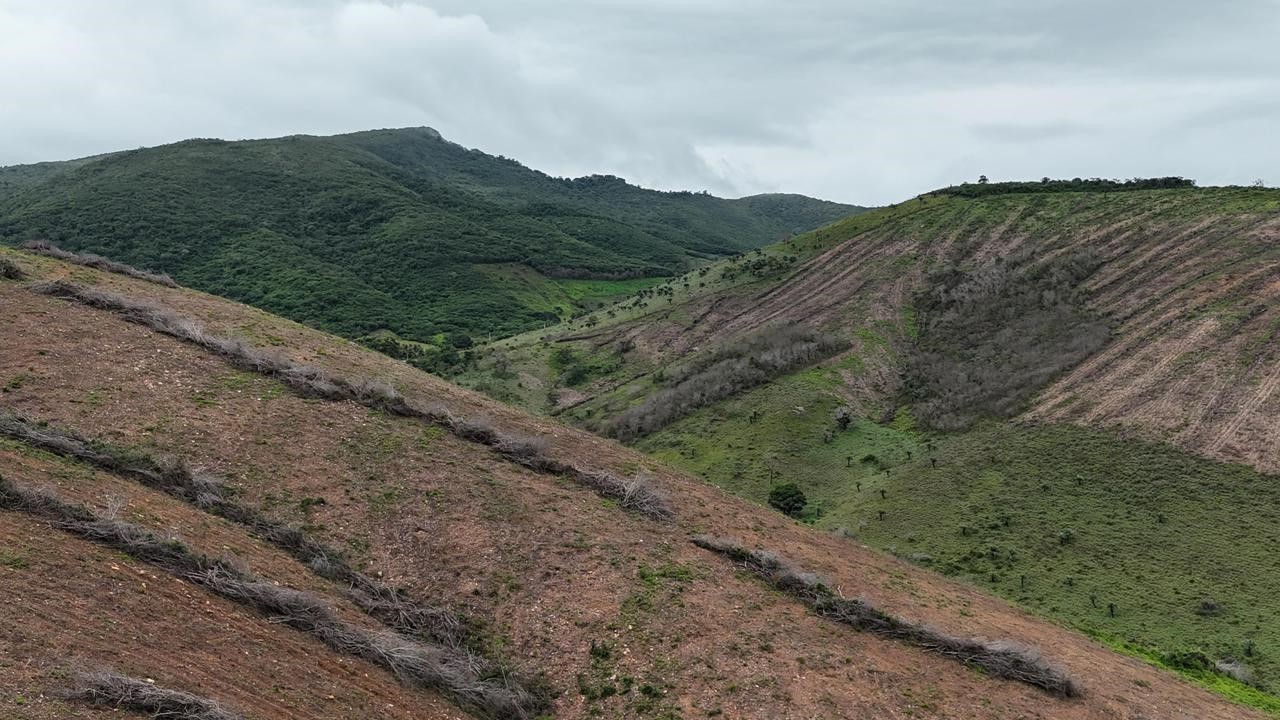
The Federal Police in Alagoas, Brazil, have arrested a man suspected of orchestrating the largest illegal deforestation of the Caatinga biome in the state. The suspect, whose name has not been released, is accused of clearing over a thousand hectares of native vegetation, an area equivalent to approximately 800 football fields. This action has led to a court-ordered freeze on his assets to ensure environmental damage compensation. The arrest followed a request from the Public Prosecutor's Office of Alagoas (MP-AL), specifically its Environmental Defense Nucleus (NUMA) and the Traipu Public Prosecutor's Office. The investigation was a collaborative effort involving the São Francisco River Integrated Preventive Inspection (FPI), coordinated by the MP-AL and the Federal Public Prosecutor's Office (MPF), with participation from environmental agencies like Ibama and the State Environmental Institute (IMA), along with the Environmental Police Battalion and Scientific Police.
Evidence, including satellite imagery and expert analysis, indicates the suspect operated an organized deforestation scheme. He allegedly used heavy machinery to clear large tracts of native vegetation and then set fire to the remnants to prepare the land for economic exploitation. Beyond the destruction of the Caatinga, experts identified the improper disposal of highly toxic pesticide containers, raising concerns about soil and water contamination, which the MP-AL considers a crime of pollution. Despite facing fines, embargoes, and orders to cease operations, the suspect reportedly continued his illegal activities, viewing penalties as mere operational costs.
His repeated disregard for environmental regulations and previous legal entanglements were cited as reasons for the preventive arrest. He is currently facing two civil lawsuits for the recovery of degraded areas and environmental damage compensation, with his assets already frozen to guarantee these measures. Furthermore, the suspect is involved in two criminal cases for deforestation in Alagoas and a separate case in Maranhão concerning qualified homicide and alleged participation in a criminal organization.
This case highlights the significant environmental and legal challenges posed by organized illegal deforestation, particularly within Brazil's unique Caatinga biome. The suspect's alleged persistence in clearing land despite multiple penalties and legal actions suggests a potential underestimation of enforcement mechanisms or a calculation that economic gains outweighed the risks. The involvement of multiple state and federal agencies underscores the complexity of environmental crime investigations and the need for coordinated efforts. Future efforts could focus on strengthening deterrents, exploring innovative restitution models beyond asset freezes, and addressing the underlying economic drivers that incentivize such destructive land-use practices. The suspect's broader criminal history also raises questions about the interconnectedness of environmental crimes and other illicit activities.
AI-generated to prompt reflection — not editorial opinion, not advice, not a statement of fact. How this works.