Brazil Issues Formal Apology for 1971 Disappearance of Student Leader During Dictatorship
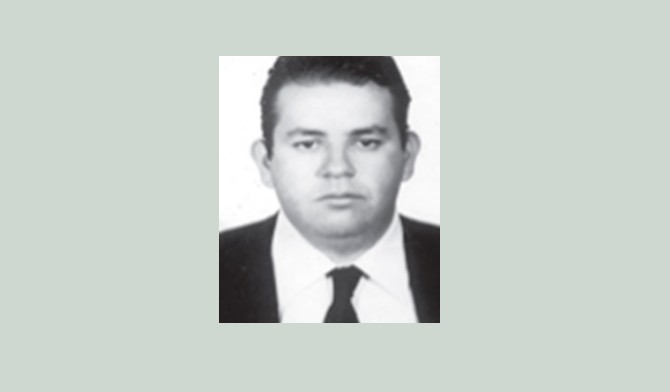
The Brazilian state has issued a formal apology for human rights violations committed over five decades ago against Paulo de Tarso Celestino da Silva, a former law student and prominent student leader at the University of Brasília (UnB). Silva was arrested in 1971 during the military dictatorship and taken to the "Casa da Morte" (House of Death), a clandestine detention, torture, and execution center operated by the Army Information Center (CIE) in Petrópolis, Rio de Janeiro. He was never seen again, and his death was only officially acknowledged in 1995 with the enactment of the Political Disappearances Law; his body has never been found. The apology ceremony took place at UnB, Silva's alma mater. This act is part of the memory, truth, and reparation efforts led by the Ministry of Human Rights and Citizenship (MDHC). Silva's nephew, João Paulo de Tavares, attended the ceremony, describing the moment as difficult for the family and noting that no apology can replace their loss. The ceremony also fulfills a directive from the Federal Justice system, which, in judging a public civil action filed by the Federal Public Ministry (MPF), deemed a formal apology a form of "symbolic reparation." The MPF stated that Silva's disappearance at the Casa da Morte constitutes a crime against humanity. The court also recognized the responsibility of two former members of the CIE for grave human rights violations related to Silva's disappearance. The Ministry emphasized that this initiative underscores the Brazilian State's commitment to memory, truth, and preventing future human rights violations, acknowledging that the traumas of state violence persist across generations.
The Brazilian government's formal apology for the 1971 disappearance of Paulo de Tarso Celestino da Silva represents a significant step in acknowledging past state-sponsored atrocities. This act, mandated by the judiciary, highlights the ongoing societal imperative to confront historical injustices and their lasting impact on victims' families and national reconciliation. The acknowledgment of responsibility by former military intelligence agents underscores systemic issues within authoritarian regimes that enable such violations. Moving forward, the challenge lies in ensuring that mechanisms for truth, justice, and reparation are robust and consistently applied, preventing the recurrence of state-sanctioned violence and fostering a more accountable governance framework in the digital age.
AI-generated to prompt reflection — not editorial opinion, not advice, not a statement of fact. How this works.