Brazil Nut Harvest Boosts Incomes and Sustainable Economy in Amaturá, Amazonas
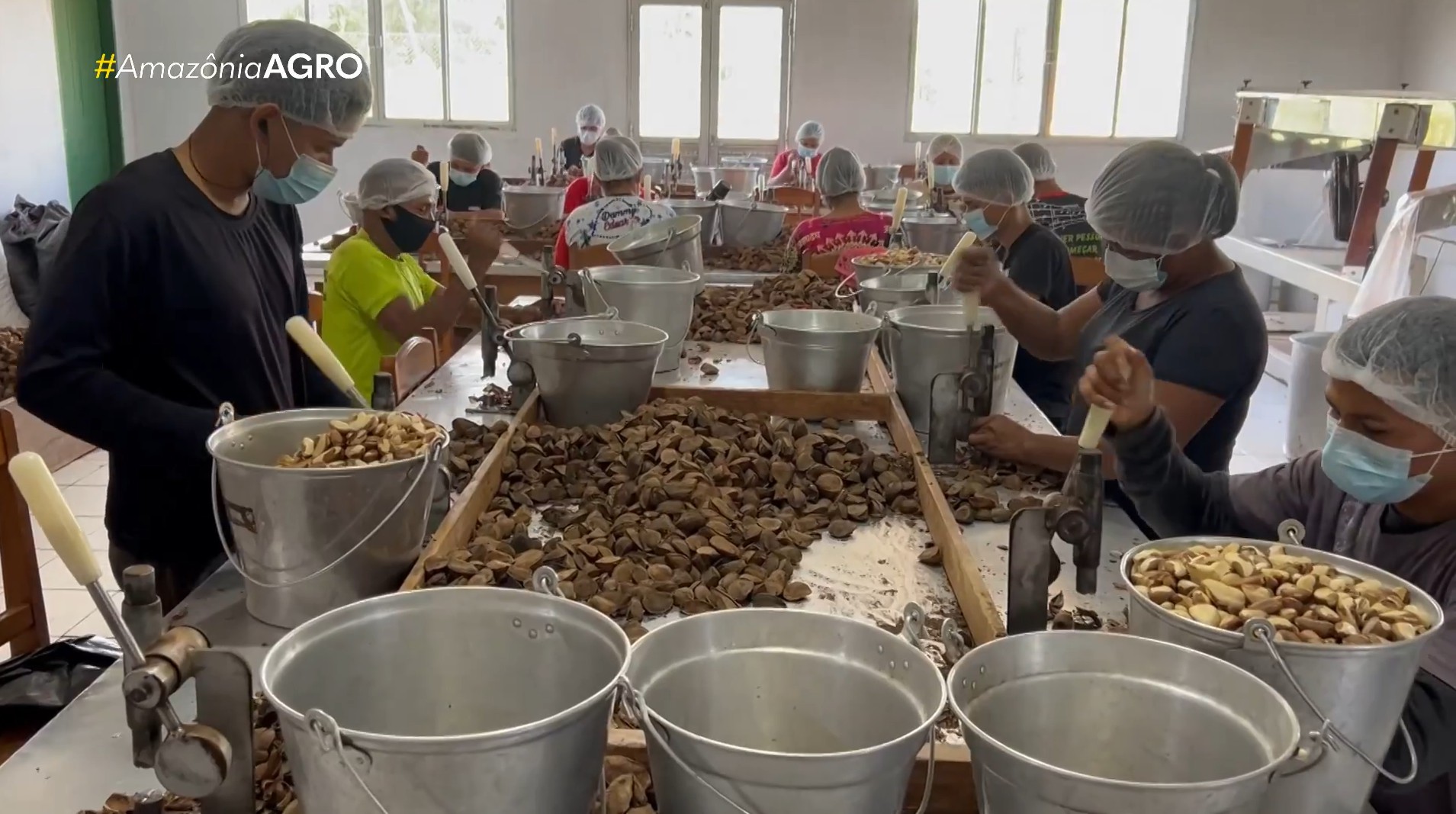
The Brazil nut harvest is significantly contributing to the income of numerous families and bolstering the sustainable economy in Amaturá, a municipality in the western Amazonian state of Amazonas. This activity encompasses the collection, processing, and sale of Brazil nuts, which are distributed both within and outside the state, establishing them as a primary source of livelihood for the local population. In 2024, Amazonas led Brazil in Brazil nut production, according to the Brazilian Institute of Geography and Statistics (IBGE). For approximately two decades, producers in Amaturá have been adding value to the nuts through processing before sale. The collection process begins in the forest and on local farms, where the Brazil nut trees, which can grow up to 60 meters tall, are found. Production levels are influenced by tree age and climate conditions, with a single harvest potentially yielding around 400 Brazil nut pods. The harvesting season typically runs from January to July, with collectors gathering pods that have naturally fallen to the ground; each pod can contain up to 20 nuts. These pods are transported using traditional baskets to processing facilities. Raimundo Ribeiro, a Brazil nut collector for five years, highlighted the activity's importance, stating he gathers approximately 200 Brazil nut pods daily during the season. After collection, the nuts are extracted from the pods and taken to the Association of Brazil Nut Producers and Processors of Amaturá (Aprocam). Aprocam currently employs about 60 individuals and collaborates with riverside families involved in collection and sales. Dulcinéia Andrade Franco, an Aprocam associate, emphasized the nut's crucial role, calling it "our daily bread" and expressing dedication to enhancing their production. At the agro-industry facility, nuts undergo drying to reduce moisture and prevent fungal growth. They are then sorted, shelled, and heat-treated in an autoclave before packaging and distribution. Aurélio Santos Lucas, president of Aprocam, noted that Brazil nut extraction generates income while promoting environmental preservation, as the activity does not require deforestation and is fully biodegradable. Tarciana de Carvalho Coutinho, director of the Alto Solimões Science and Technology Park at the Federal University of Amazonas (Ufam), pointed to Amaturá's model as an example of how technology and processing can increase the value of forest products without harming the environment. She suggested this model could be adapted by other Amazonian municipalities, considering their unique characteristics and potential, advocating for a transition from traditional methods to technology-driven value addition.
The Brazil nut industry in Amaturá exemplifies a sustainable economic model that leverages natural resources without necessitating deforestation, aligning with growing global demand for eco-friendly products. The integration of local collection, processing through Aprocam, and value-added activities, supported by institutions like Ufam, demonstrates a pathway to economic development that can coexist with environmental conservation. This approach not only provides vital income streams for local communities but also positions the region to capitalize on markets that increasingly prioritize sustainability. The success of this model suggests potential for replication in other biodiverse regions, provided local ecological conditions and community structures are carefully considered. Future challenges may involve scaling production, ensuring fair trade practices, and adapting to climate variability, all while maintaining the ecological integrity that underpins the industry's long-term viability.
AI-generated to prompt reflection — not editorial opinion, not advice, not a statement of fact. How this works.