Brazil Police Target Drug Trafficking Money Laundering Ring Linked to US Sanctions
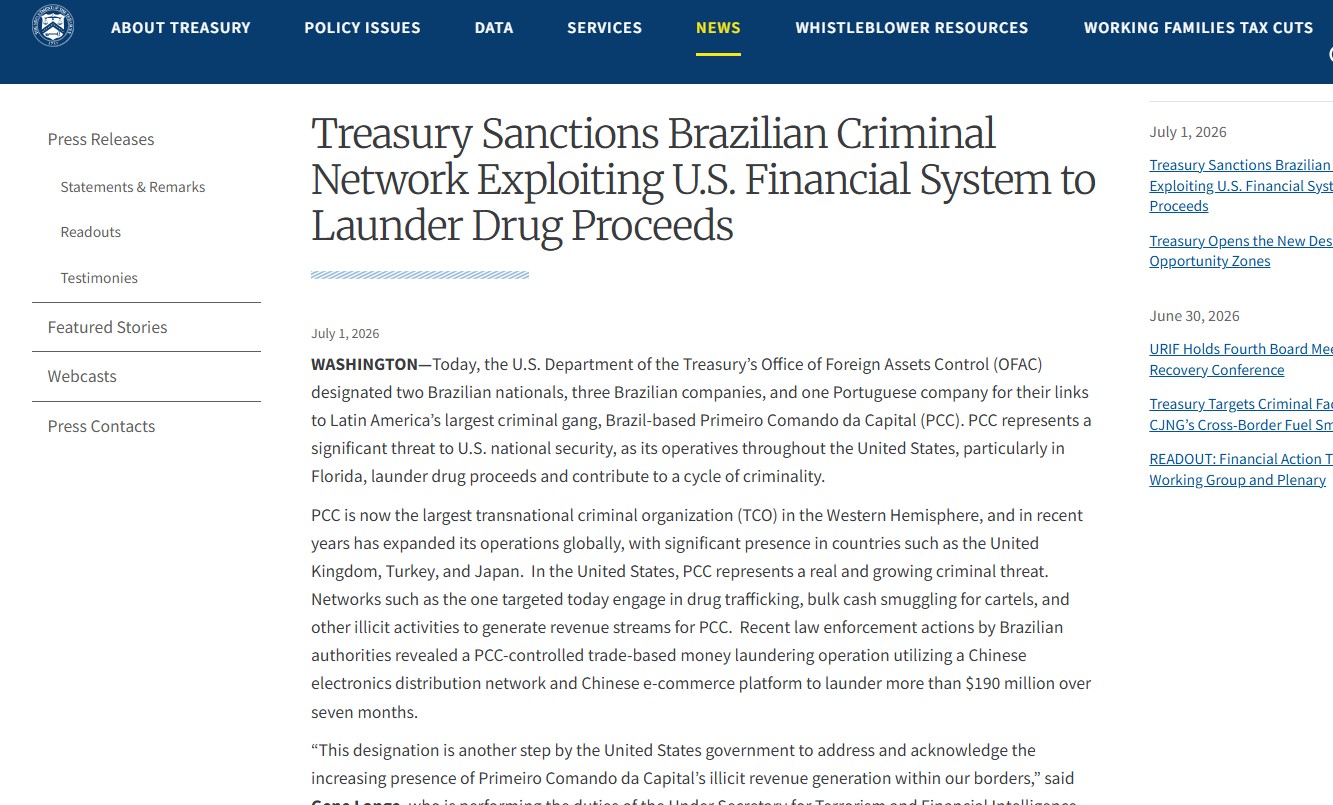
Brazilian Federal Police launched Operation Exchange on Friday, March 3rd, to dismantle a criminal organization specializing in laundering money from international drug trafficking. The operation aimed to arrest 11 individuals, with three currently at large: Victor Henrique de Oliveira Shimada, Romany Cutolo Bonente (known as "Roma"), and Diego Lameiro Diz. Shimada is identified as the leader of the money laundering scheme and has been sanctioned by the United States for suspected ties to the First Capital Command (PCC) drug cartel. Romany is believed to be a financial operator who facilitated payments directly with Shimada, while Diego allegedly supported the money laundering by establishing shell companies in the U.S. and Brazil. U.S. sanctions imposed on Wednesday, March 1st, prompted Brazilian authorities to expedite this operation. Shimada, an entrepreneur, was designated by the U.S. as a key link between PCC members in Florida and international drug traffickers, accused of laundering over $30 million using cryptocurrencies. He is also under investigation in Brazil for alleged involvement in money laundering related to the VaideBet case, concerning diverted funds from a sponsorship deal with the Corinthians football club. Romany, an attorney, is described as a high-level financial operator and intermediary for criminal organizations, managing financial operations and disputes for the group. Diego is accused of supporting the money laundering scheme through shell companies and potentially using garlic trading from Argentina to move illicit funds. Among those arrested is Stella Stefanie Nunes Henrique de Oliveira, also sanctioned by the U.S. for alleged links to the PCC. Authorities estimate the total value of assets and crypto assets to be seized amounts to R$10.4 billion.
This operation highlights the increasing global interconnectedness of financial crime, particularly concerning drug trafficking and money laundering networks that leverage international sanctions as a catalyst for law enforcement action. The U.S. designation of specific individuals and organizations, coupled with Brazil's subsequent law enforcement response, demonstrates a coordinated, albeit reactive, approach to combating transnational organized crime. The involvement of shell companies and cryptocurrency suggests sophisticated methods to obscure illicit financial flows, posing ongoing challenges for regulatory bodies and law enforcement agencies worldwide. Future efforts may need to focus on proactive intelligence sharing and the development of more agile regulatory frameworks to counter the evolving tactics of these criminal enterprises in the digital age.
AI-generated to prompt reflection — not editorial opinion, not advice, not a statement of fact. How this works.