Brazil President Lula Inaugurates São Francisco River Water Tunnel in Rio Grande do Norte
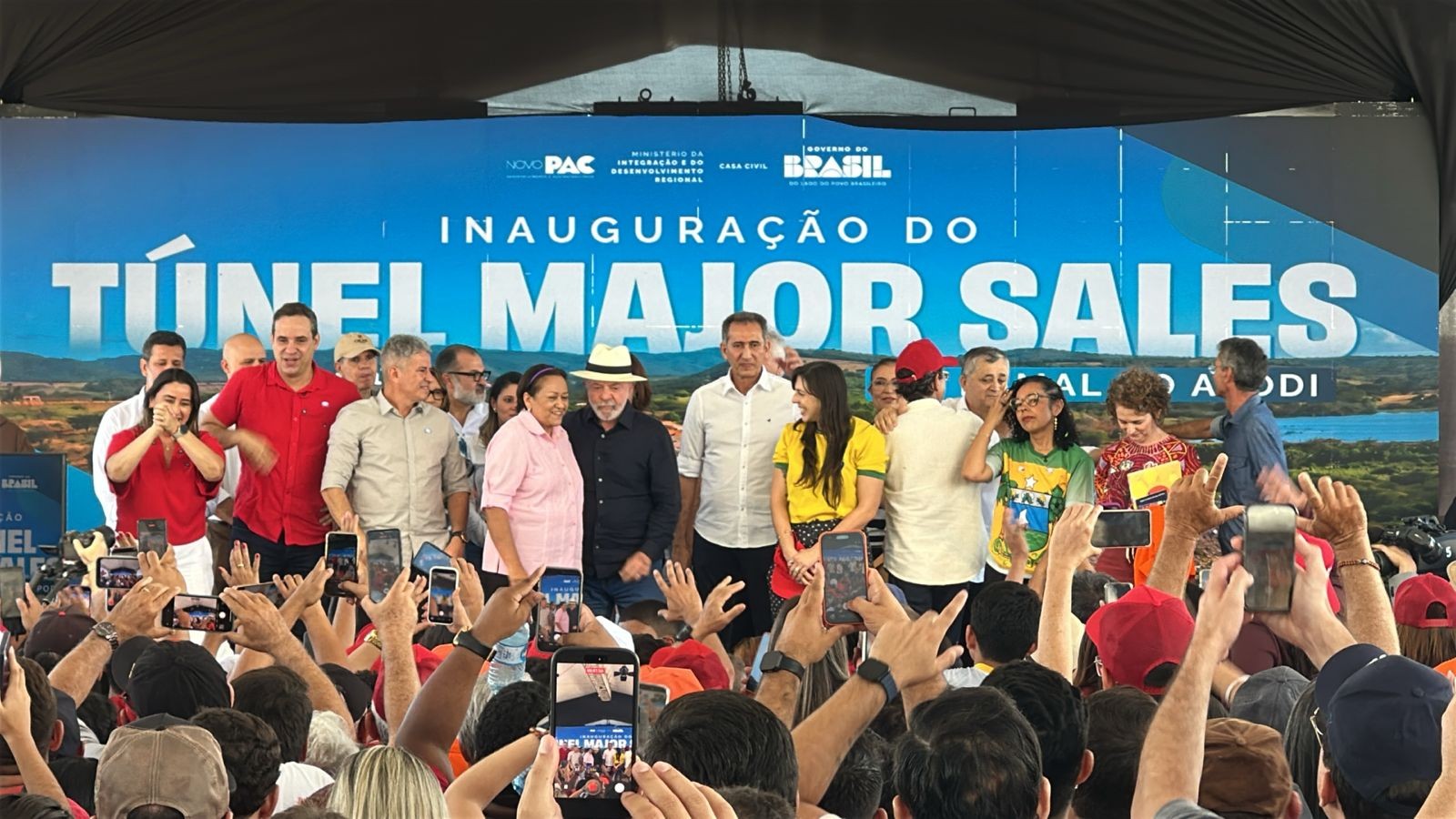
President Luiz Inácio Lula da Silva inaugurated the Major Sales Tunnel on Thursday, February 2nd, in Luís Gomes, Rio Grande do Norte. This significant infrastructure project, part of the São Francisco River Integration Project (PISF), extends the river's transposition waters to the western region of Rio Grande do Norte, establishing a connection with the neighboring state of Paraíba. The tunnel itself spans 6.5 kilometers and possesses the capacity to transport up to 20 cubic meters of water per second. This segment is recognized as the most complex within the broader project, aiming to bolster water security in the semi-arid Northeast region of Brazil. Governor Fátima Bezerra of Rio Grande do Norte also attended the inauguration. The Apodi branch, to which the tunnel belongs, measures 115.5 kilometers in length and is designed to benefit approximately 750,000 individuals across 54 municipalities in Rio Grande do Norte, Paraíba, and Ceará. In addition to the water infrastructure, the federal government also delivered 20 school buses under the "Caminho da Escola" program to municipalities in Rio Grande do Norte. These buses, acquired through the Growth Acceleration Program (Novo PAC), can transport around 1,030 students per trip, prioritizing rural areas to improve access and retention in public education. Rio Grande do Norte has received a total of 130 school buses across two program phases, with an investment of approximately R$ 62.5 million.
The inauguration of the Major Sales Tunnel represents a significant step in Brazil's long-term strategy to address water scarcity in its semi-arid Northeast region. This infrastructure project, part of the larger São Francisco River Integration Project, aims to enhance water security and support regional development by distributing vital resources. The concurrent delivery of school buses highlights a multi-faceted approach to improving living conditions, addressing both basic needs like water access and essential services such as education. From a systems perspective, such large-scale public works projects are critical for mitigating regional inequalities and fostering resilience against climate-related challenges. The success of these initiatives hinges on sustained investment, effective maintenance, and equitable distribution to ensure long-term benefits for the targeted populations and to realize the project's full potential in the coming decade.
AI-generated to prompt reflection — not editorial opinion, not advice, not a statement of fact. How this works.