Brazil Presidential Election: Lula Seeks Fourth Term in Potential Race Against Bolsonaro's Son
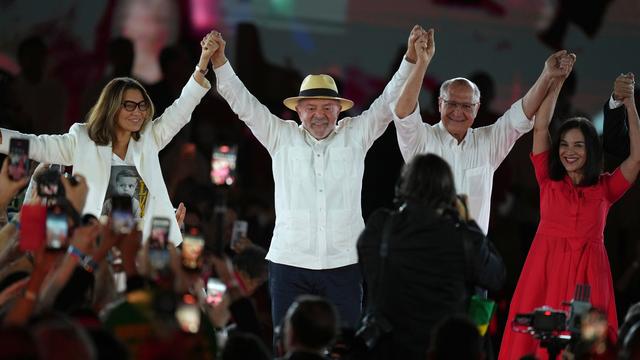
Brazil is gearing up for a presidential election where former President Luiz Inácio Lula da Silva, widely known as Lula, is reportedly aiming for a fourth term in office. His potential candidacy sets the stage for a significant political contest. Early indications suggest that a key opponent could be Eduardo Bolsonaro, the son of the current President Jair Bolsonaro. Eduardo Bolsonaro, who is also a federal deputy, represents a different political faction and ideology compared to Lula. The election is expected to be a closely watched event, reflecting the deep political divisions within Brazil. Lula's previous terms, from 2003 to 2010, were marked by significant social programs and economic growth, but also faced corruption allegations. The potential matchup between Lula and Eduardo Bolsonaro highlights the generational and ideological shifts occurring in Brazilian politics. The outcome will likely have substantial implications for the country's economic policies, social agenda, and international relations.
The upcoming Brazilian presidential election presents a critical juncture for the nation's political trajectory. The potential contest between Luiz Inácio Lula da Silva and Eduardo Bolsonaro, son of the incumbent, signifies a clash of distinct political eras and ideologies. Lula's platform, likely emphasizing social welfare and economic redistribution, contrasts with the conservative and nationalist stance associated with the Bolsonaro family. Voters will weigh past governance successes and controversies against future policy directions. The election's outcome will shape Brazil's approach to critical issues such as environmental protection, economic development, and social equity, influencing both domestic stability and its role on the global stage. The generational aspect of this potential matchup also invites reflection on the evolving leadership dynamics within Brazil.
AI-generated to prompt reflection — not editorial opinion, not advice, not a statement of fact. How this works.