Brazil's 1970 World Cup Victory Under Military Rule
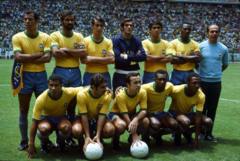
Brazil's triumph at the 1970 FIFA World Cup occurred while the nation was under a military dictatorship, a regime that significantly influenced the national team and Brazilian football. From its early years, the World Cup served as a platform where politics and sports became intertwined. The 1970 tournament in Mexico remains one of the most memorable in the competition's history. This victory was the culmination of three brilliant weeks, solidifying Brazil's status as a spiritual benchmark in global football, cementing Pelé's legacy as one of history's greatest players, and transforming the World Cup into the planet's grandest spectacle. Upon the team's return to Brazil, the military government organized extensive victory parades for the world champions. The question remains whether the regime exploited the team's success for political gain.
The 1970 World Cup victory for Brazil, achieved under a military regime, highlights the complex interplay between national sporting success and political governance. While the team's performance provided a moment of national pride and celebration, it is crucial to analyze the extent to which the ruling junta leveraged this achievement for its own legitimacy and propaganda. The event serves as a case study in how authoritarian states can utilize popular cultural moments to bolster public support and project an image of national strength, potentially overshadowing underlying political or social issues. Examining this historical instance prompts consideration of how sporting achievements can be co-opted by political powers and the long-term implications for both national identity and democratic discourse.
AI-generated to prompt reflection — not editorial opinion, not advice, not a statement of fact. How this works.