Brazil's 2026 Elections: Record 20.5 Million Voters Self-Identify as Black or Mixed-Race
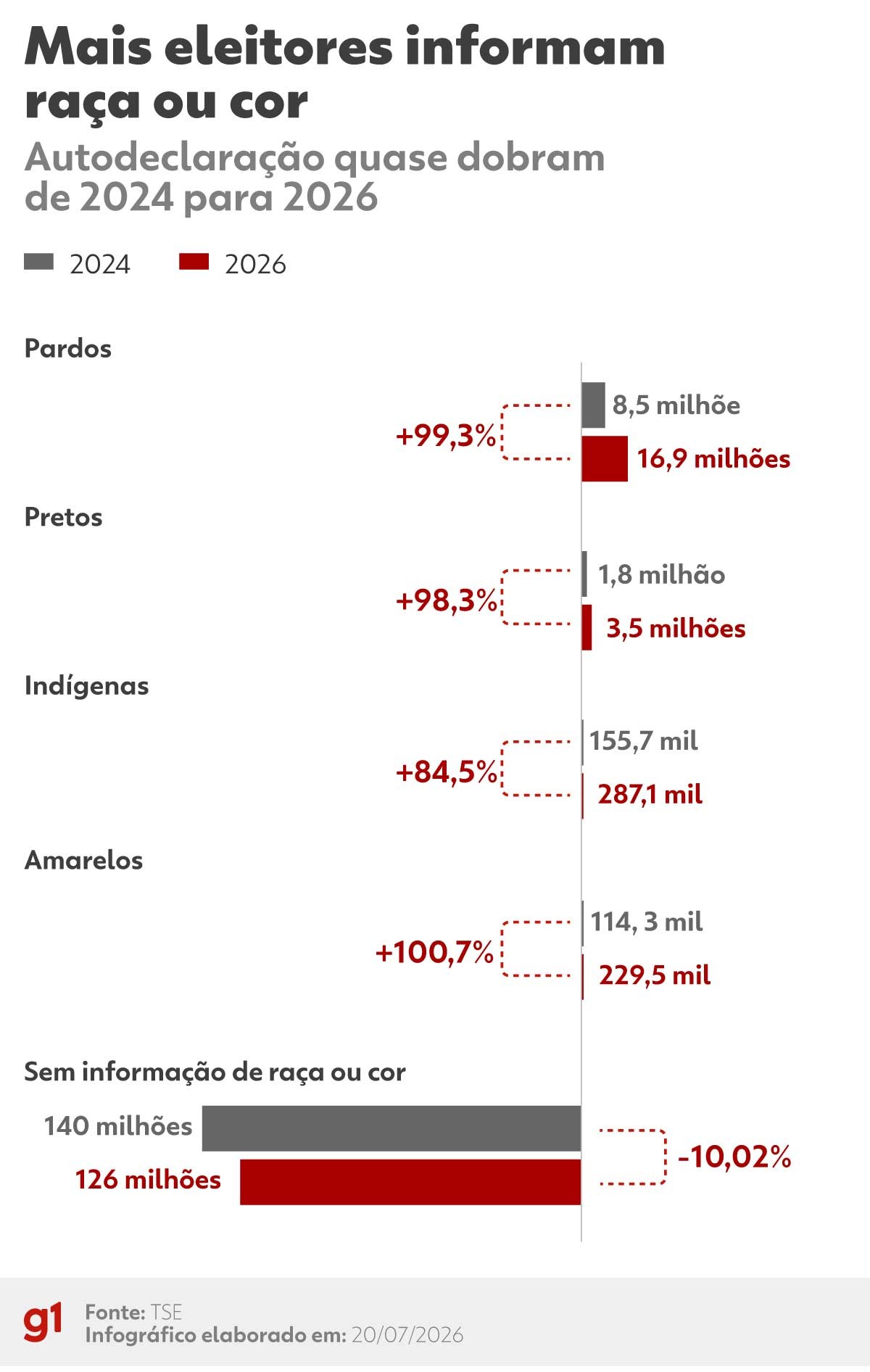
Brazil's Superior Electoral Court (TSE) announced that the upcoming 2026 general elections will feature the most diverse electorate ever recorded. A record 20.5 million voters have self-identified as Black (including 'pretos' and 'pardos'), representing nearly 13% of the 158.7 million eligible voters with regularized status. This figure marks a significant increase from previous elections, with the number of voters declaring themselves as 'pardos' nearly doubling from 8.5 million to 16.9 million, and 'pretos' rising from 1.8 million to 3.6 million. Other racial categories also saw substantial growth, with 'amarelos' more than doubling and 'indígenas' increasing by 84.47%. The number of voters without race or color information has decreased from 140 million to 126 million. According to the 2022 IBGE Census, Brazil's Black population constitutes 55.5% of the total population, numbering 112.7 million. The TSE began collecting race and color self-declaration data in 2014, with comparable data becoming available after the 2022 general elections. A former TSE minister, Vera Lúcia Santana Araújo, attributed the rise in self-declaration to policies combating racism and reducing racial inequality, as well as increased motivation within the Black community to embrace their identity. She highlighted the historical negative associations with Blackness in Brazil and the impact of affirmative actions and movements like the March of Black Women in fostering self-affirmation and visibility. Despite these gains, she noted that Black representation in institutions like Congress still lags behind the proportion of the Black population.
The substantial increase in voters self-identifying as Black or mixed-race in Brazil's upcoming elections reflects evolving societal attitudes and the impact of affirmative action policies. This demographic shift, coupled with increased visibility through social movements and representation efforts, suggests a growing embrace of racial identity. However, the persistent gap between the self-identified Black electorate and their representation in political bodies indicates ongoing systemic challenges. Future policy considerations might focus on enhancing electoral mechanisms to ensure political representation aligns more closely with demographic realities, thereby addressing historical underrepresentation and fostering more inclusive governance structures in the long term.
AI-generated to prompt reflection — not editorial opinion, not advice, not a statement of fact. How this works.