Brazil's Electoral College Shrinks for Under-18s, Grows for Seniors Ahead of October Elections
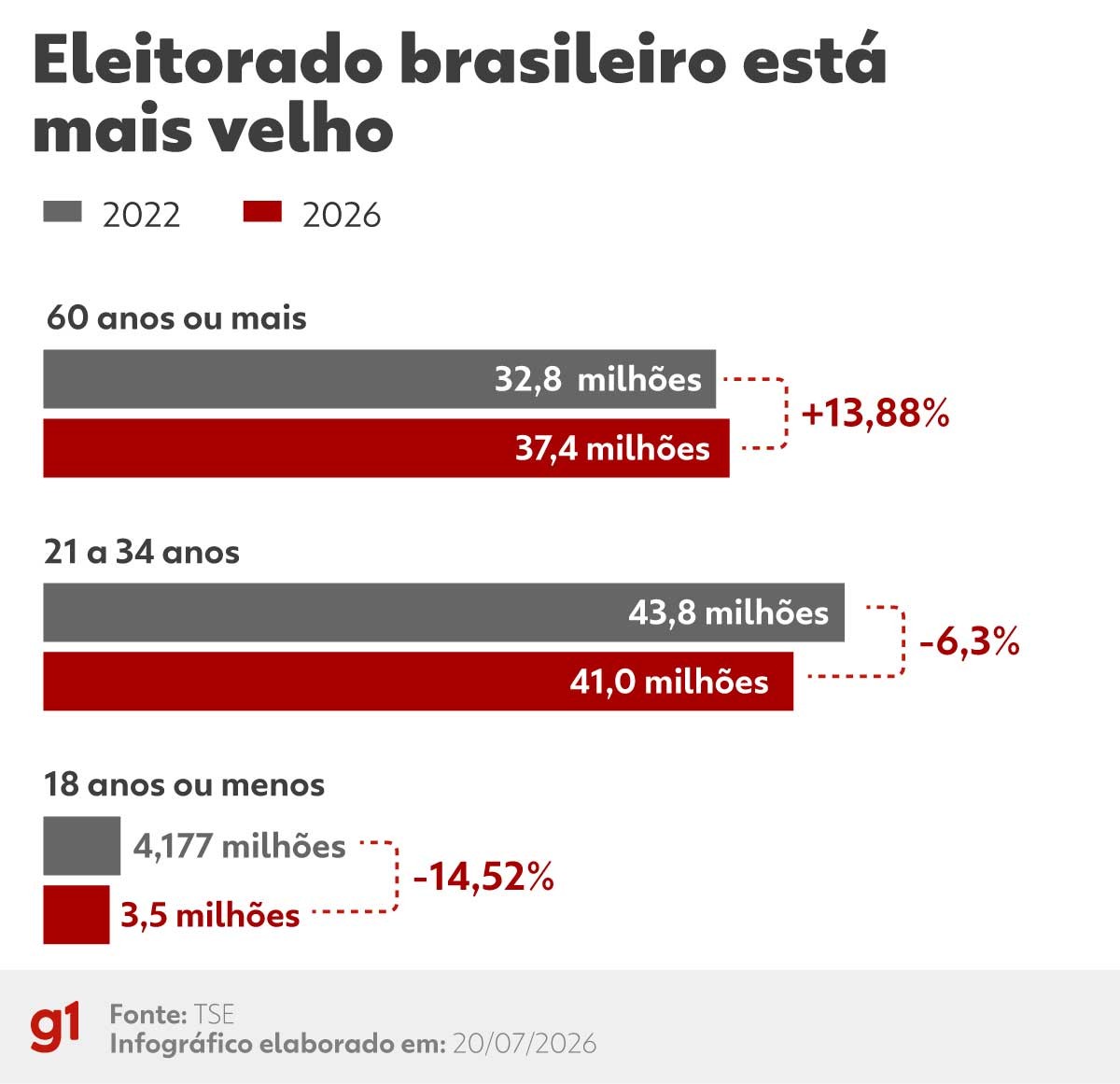
Brazil's Superior Electoral Court (TSE) has released data indicating a significant drop in the number of young voters eligible to participate in the upcoming October elections. The electorate aged 18 and under has decreased by 606,468 individuals, representing a 14.52% decline since the 2022 elections. This younger demographic now comprises 3,571,159 people, or 2.25% of the total electorate. The Northeast region has the largest concentration of these young voters, with 1,315,104 individuals, followed by the Southeast with 1,074,280. It is important to note that voting is optional for those between 16 and 18 years old.
Conversely, the number of voters aged 60 and over has seen a substantial increase of 13.9% since 2022. This demographic now stands at 37,457,537, an increase of approximately 4.6 million people. Their share of the total electorate has risen from 21.02% in 2022 to 23.60% in the current electoral cycle. The largest age group remains those between 40 and 44 years old, accounting for 10.08% of all voters. However, the segment of the electorate between 21 and 34 years old has also decreased, falling from 28.01% in 2022 to 25.85% currently. A total of 158.7 million citizens are eligible to vote in the elections, where Brazilians will choose presidents, governors, senators, and federal, state, and district deputies. The first round of voting is scheduled for October 4th, with a potential second round on October 25th.
The reported demographic shifts in Brazil's electorate, particularly the decline in young voters and the rise in older voters, highlight evolving societal engagement with the electoral process. This trend may reflect various factors, including differing levels of civic education, economic pressures impacting youth participation, and the increasing political influence of senior demographics. Understanding the underlying incentives for these shifts is crucial for political parties and policymakers aiming to engage diverse age groups. The data suggests a potential recalibration of electoral strategies may be necessary to address the changing composition of the voting population, ensuring broader representation and participation in the democratic process over the next decade.
AI-generated to prompt reflection — not editorial opinion, not advice, not a statement of fact. How this works.