Brazil's Energy Council Backs Angra 3 Nuclear Plant's Debt Payment Suspension Request
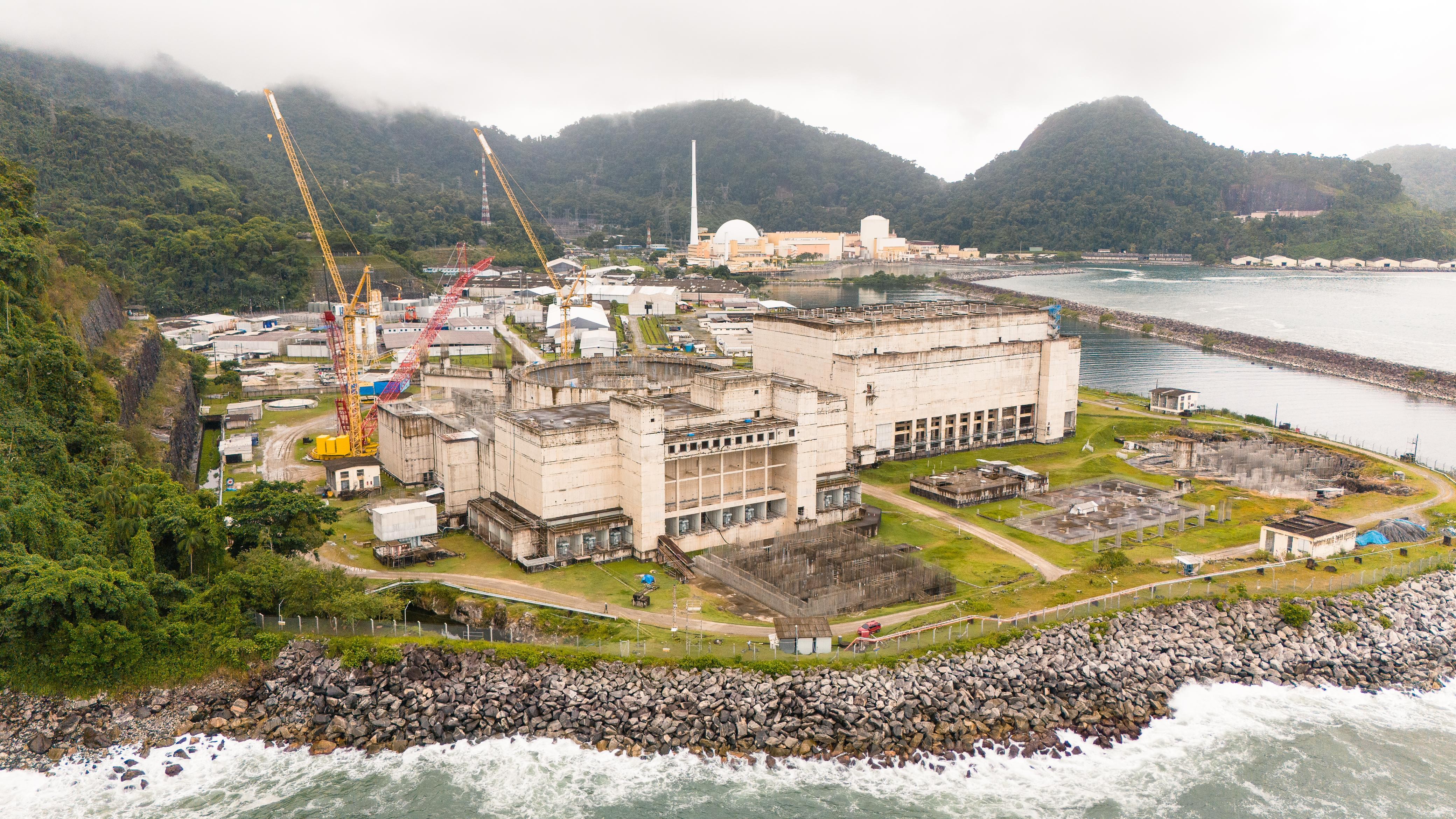
Brazil's National Energy Policy Council (CNPE) has recognized the "public interest" in Eletronuclear's request for a temporary suspension of debt payments related to the Angra 3 Nuclear Power Plant construction. This "stand still" measure allows the state-owned company to negotiate temporary cash flow relief with its creditor banks. The CNPE resolution authorizes Eletronuclear to formally present its request to the National Bank for Economic and Social Development (BNDES) and Caixa Econômica Federal (CEF). These institutions will then assess the viability of a temporary payment suspension based on their internal regulations, credit operation laws, and guarantee rules. The decision provides institutional backing for Eletronuclear's request but does not alter existing financing contracts or compel the banks to grant the suspension. The "stand still" ultimately depends on the technical analysis and individual decisions of BNDES and CEF. Eletronuclear is seeking to defer nearly R$ 7 billion in debt payments until the CNPE decides the plant's future. Previously, Eletronuclear's interim president, Alexandre Caporal, warned the company risked financial collapse without debt renegotiation, comparing its situation to the past struggles of the Brazilian Post Office. Caporal emphasized that a payment suspension is crucial for the company's financial sustainability. This measure, already granted for six months in 2024, would provide breathing room until the CNPE resolves the fate of Angra 3, whose construction has been halted for approximately a decade. The debt service alone amounts to R$ 800 million in 2026, with total annual costs for Angra 3, including maintenance, exceeding R$ 1 billion.
The Brazilian government's recognition of public interest in Eletronuclear's debt standstill request for Angra 3 highlights the complex interplay between energy infrastructure investment, state-owned enterprise financial health, and long-term national energy policy. The "stand still" mechanism, while offering temporary financial relief, shifts the burden of decision-making to the public financial institutions, BNDES and CEF, necessitating a rigorous assessment of financial viability and risk. This situation underscores the systemic challenges of large-scale, long-delayed infrastructure projects, where escalating costs and prolonged construction periods can create significant financial liabilities. The CNPE's endorsement provides a framework for negotiation, but the ultimate success hinges on the banks' risk appetite and the clarity of the future operational and financial plan for Angra 3. Looking ahead, such events prompt consideration of more robust project governance, risk mitigation strategies, and transparent decision-making processes in major public works to avoid future financial distress and ensure energy security.
AI-generated to prompt reflection — not editorial opinion, not advice, not a statement of fact. How this works.