Brazil's Exports Hit by US Tariffs: 47.3% Affected, Government Estimates
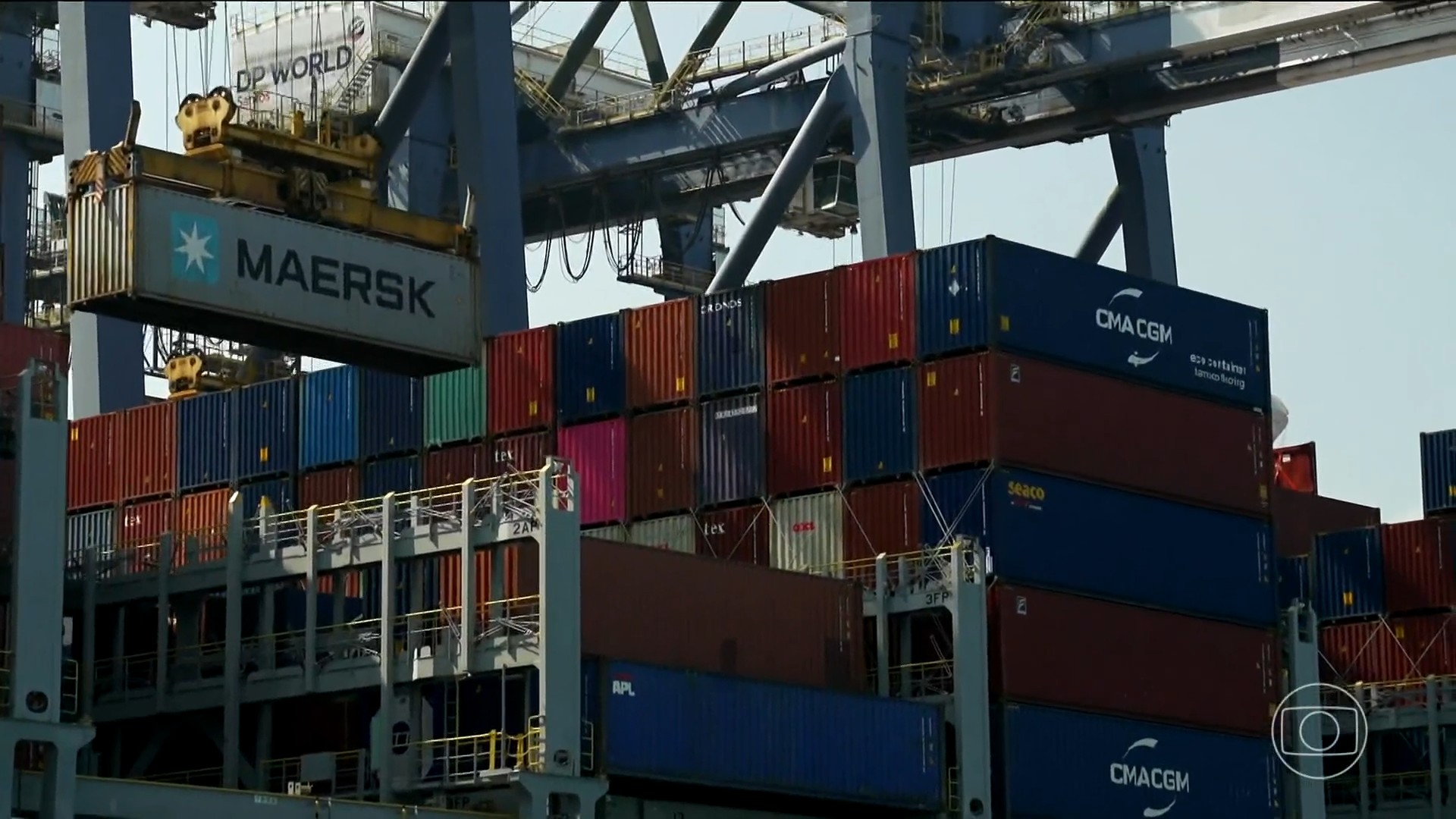
The Brazilian federal government estimates that 47.3% of the country's exports are impacted by tariffs imposed by the United States. This calculation encompasses a 12.5% tariff announced on May 23rd, a 25% tariff from the previous week, and surcharges on steel and aluminum introduced last year. The Ministry of Development, Industry, and Commerce (MDIC) calculates that these new U.S. measures affect 23.1% of Brazilian exports, while 52.7% remain free from sector-specific or targeted tariffs. Specifically, 4.7% of exports face only the 12.5% surcharge, including items like stone products, essential oils, and fish. Another 1.9% are exclusively affected by the 25% surcharge, such as sugar. A significant 16.5% of exports face both measures, resulting in a combined 37.5% surcharge, impacting goods like machinery, wood products, fats and oils, footwear, and furniture. The U.S. announced these new tariffs on imports from approximately 60 trading partners, including Brazil, citing failures to prohibit and monitor goods produced with forced labor. The 12.5% tariff became effective on May 24th. In June of the previous year, the U.S. increased rates on steel and aluminum by 25%, bringing the total to 50%. During the first half of 2026, Brazilian exports to the U.S. totaled $17.4 billion, a 13% decrease from the prior year, while Brazilian imports from the U.S. also fell by 12.8%. The Brazilian government has deemed the U.S. measures "completely arbitrary and unjustified" and plans to initiate proceedings under the Law of Reciprocity and bring the matter to the World Trade Organization (WTO). This law allows Brazil to impose equivalent measures on nations that apply unfair unilateral sanctions or barriers. However, some business entities have advocated for continued negotiations rather than retaliation to avoid escalating tensions with the U.S. administration.
The U.S. imposition of tariffs on Brazilian exports, framed by the U.S. as a measure against forced labor, presents a complex trade dynamic. Brazil's response, invoking the Law of Reciprocity and considering the WTO, highlights the tension between national economic interests and international trade norms. The differing perspectives from business entities, suggesting negotiation over retaliation, underscore the potential for trade disputes to escalate, impacting bilateral economic relations and global supply chains. As trade policy becomes increasingly intertwined with geopolitical considerations and domestic priorities, such measures can create significant uncertainty for exporters and importers, potentially reshaping trade patterns and investment decisions over the next decade. The effectiveness and fairness of using tariffs as a tool for enforcing labor standards, versus the potential for economic protectionism, remain a critical area for ongoing scrutiny.
AI-generated to prompt reflection — not editorial opinion, not advice, not a statement of fact. How this works.