Brazil's Federal Public Ministry Seeks $1.57 Billion for Illegal Mining Damages in Amazon
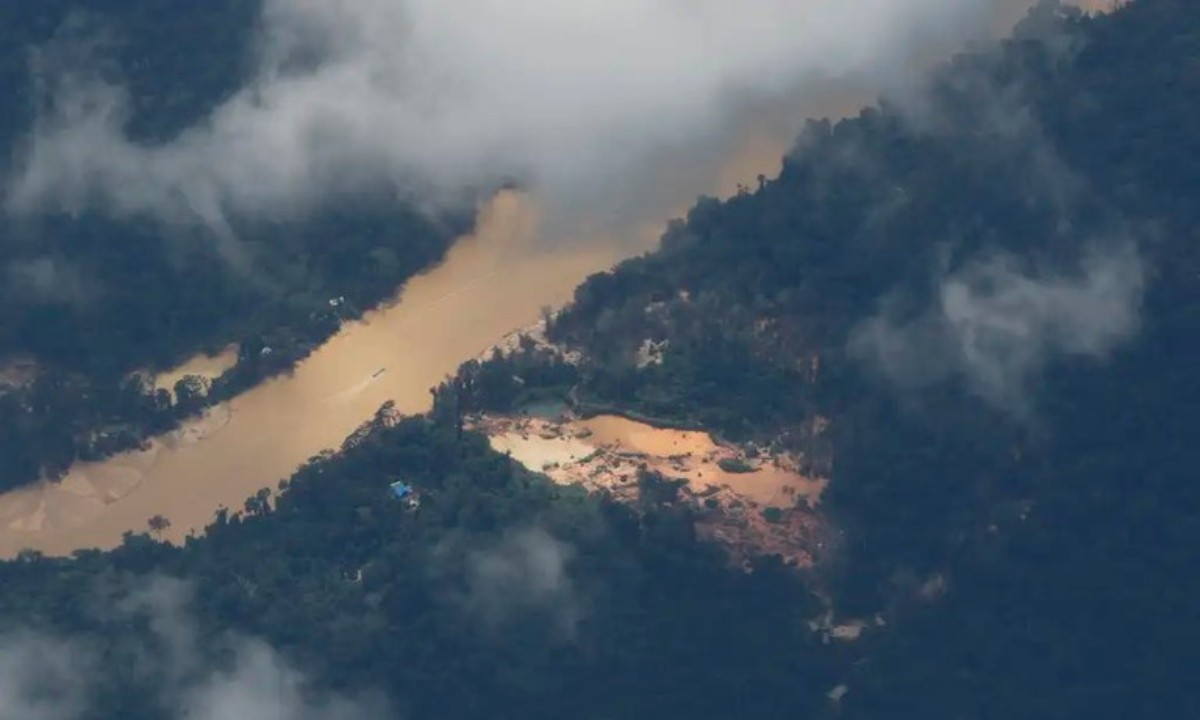
The Federal Public Ministry (MPF) in Brazil has filed a civil lawsuit seeking R$1.567 billion (approximately $300 million USD) in compensation for environmental and collective moral damages caused by illegal gold mining. The lawsuit targets 13 individuals accused of operating an illegal mining scheme for approximately three years within the Urupadi National Forest in Maués, Amazonas. The MPF alleges that the illegal activity, which occurred without authorization from the National Mining Agency (ANM) or environmental licensing, ran from April 2023 to August 2025 in an area known as "Filão do Abacaxis." Investigations indicate that the group illegally extracted around 71.1 kilograms of gold, valued at approximately R$56.8 million. This operation resulted in deforestation for roads and clandestine airstrips, as well as contamination of watercourses in the Abacaxis River basin with mercury and cyanide. The MPF's complaint details an organized and continuous operation with a division of labor, armed security, and a canteen, highlighting the scale of the clandestine enterprise. A technical report estimates environmental damages at R$210.2 million, including the devastation of 3.72 hectares of native vegetation and the silting of approximately 1 million cubic meters of soil. The MPF is demanding that the defendants compensate for material damages, return the value of the illegally extracted gold, and each pay R$100 million for collective moral damages, citing the severity of the environmental degradation and the continuous nature of the activity. Additionally, the MPF requires the defendants to fully restore the degraded area through an approved recovery plan, and they are also facing criminal charges for crimes including usurpation of federal assets and illegal mining.
This legal action highlights the persistent challenge of illegal mining in protected Amazonian regions and the significant environmental and social costs associated. The substantial compensation sought by the MPF underscores the perceived scale of damage and the state's intent to deter future illicit activities through financial penalties. The case also points to the complex governance required to protect natural resources, involving multiple federal agencies and demanding robust enforcement mechanisms. Future efforts to combat such operations will likely need to integrate technological monitoring, community engagement, and potentially explore alternative economic opportunities for local populations to address the root causes of illegal resource extraction.
AI-generated to prompt reflection — not editorial opinion, not advice, not a statement of fact. How this works.