Brazil's Finance Minister Calls Argentina's President Milei a 'Clown'
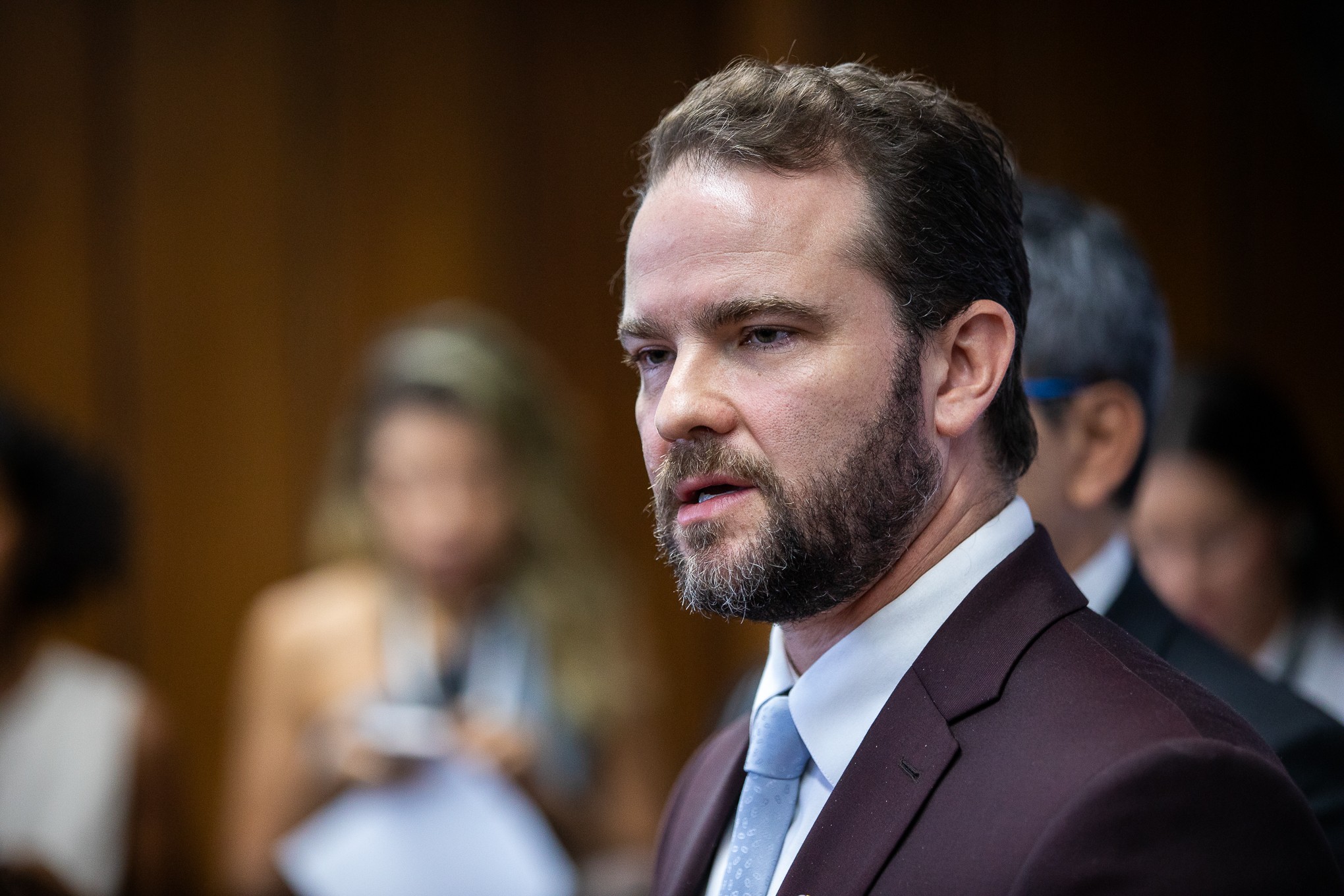
Brazil's Finance Minister, Dario Durigan, stated on Monday, May 27th, that Brazil's economy is performing better than Argentina's. He referred to Argentine President Javier Milei as a "clown" during an interview with Rádio Jornal in Pernambuco. Durigan highlighted that Brazil's country risk is lower than Argentina's, and that Brazil is experiencing record low unemployment and inflation, alongside strong trade balance figures, a significant harvest, and declining deforestation rates. He contrasted this with Argentina's higher country risk, public debt, and inflation. President Milei visited Brazil over the weekend to attend the launch of Flávio Bolsonaro's presidential candidacy, an opponent of President Luiz Inácio Lula da Silva. The Brazilian Ministry of Foreign Affairs summoned the Argentine ambassador to express displeasure over Milei's remarks. Durigan also addressed concerns about high interest rates, acknowledging their impact on citizens and businesses, and stated that reducing them requires controlling mandatory spending, adhering to the fiscal framework, potentially strengthening it, and modernizing the state. He dismissed the possibility of a recession in Brazil in 2027, projecting 2% GDP growth, and described talk of recession as an exaggeration, attributing the economic slowdown to high interest rates. During his visit, Milei also criticized Supreme Federal Court Minister Alexandre de Moraes and aligned Flávio Bolsonaro's candidacy with a regional political shift towards the right.
This exchange highlights the intersection of domestic economic policy and international diplomacy, particularly in the context of regional political realignments. Minister Durigan's remarks, while critical of President Milei, serve to bolster the current Brazilian government's economic narrative by contrasting it with perceived challenges in Argentina. This framing aims to reassure domestic audiences and potentially influence regional perceptions. The incident also underscores the volatile nature of diplomatic relations when personal rhetoric intersects with political events, such as election campaigning. From a systems perspective, such public commentary can create reputational risks and complicate future bilateral engagements, irrespective of underlying economic fundamentals. The focus on economic indicators like country risk, unemployment, and inflation provides a data-driven basis for Durigan's claims, but the personal attack on Milei injects an element of political theater that may distract from substantive policy discussions. Future policy decisions in both nations will likely be shaped by domestic economic pressures, geopolitical considerations, and the ongoing ideological competition within Latin America.
AI-generated to prompt reflection — not editorial opinion, not advice, not a statement of fact. How this works.