Brazil's Foreign Minister Calls US Official's Remarks 'Offensive' and 'Unacceptable'
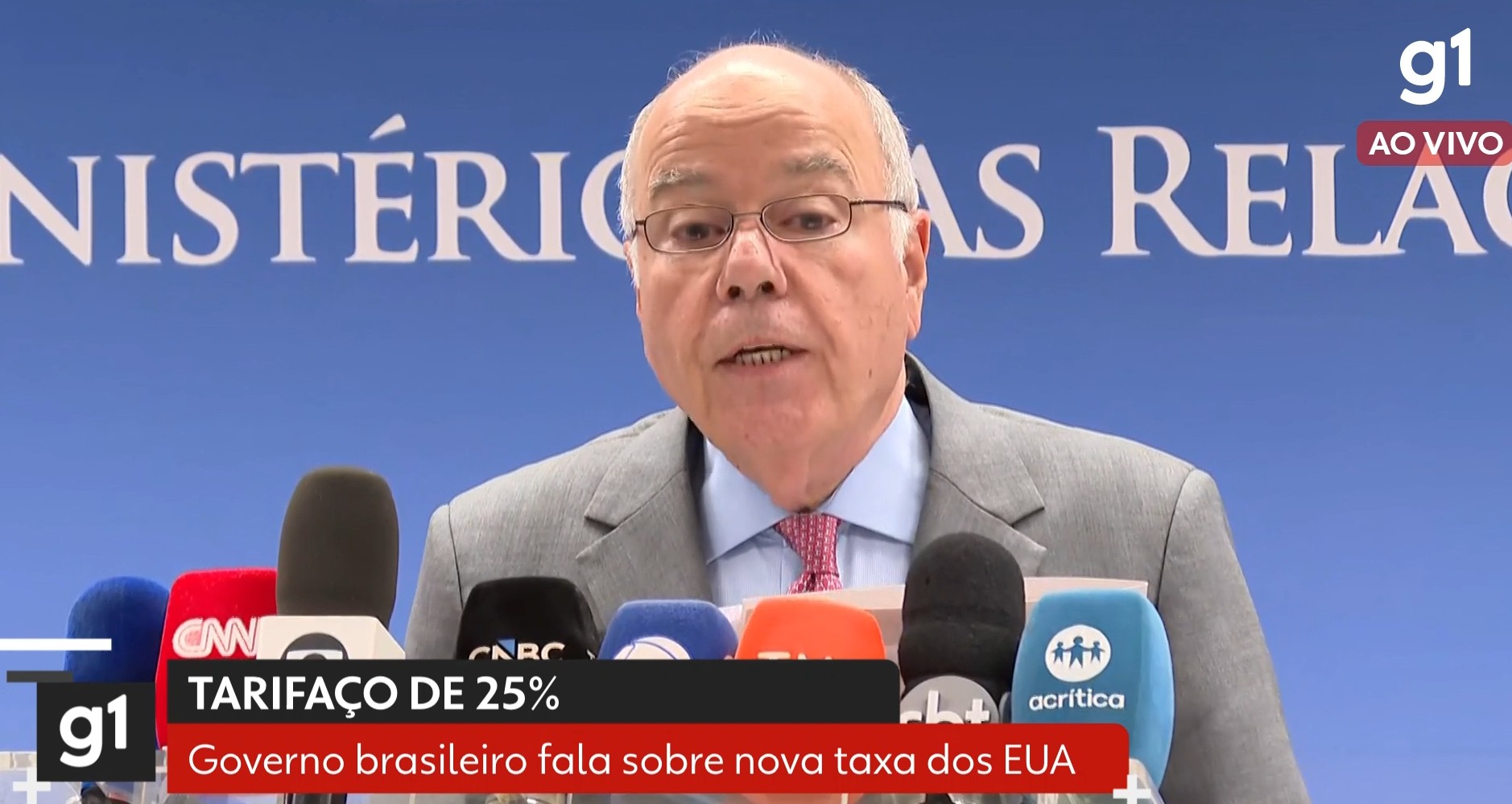
Brazilian Foreign Minister Mauro Vieira has strongly condemned recent statements made by U.S. Secretary of State Marco Rubio, describing them as "unacceptable" and "offensive to the Brazilian people." Vieira asserted that Rubio attacked the head of state of a friendly nation, President Luiz Inácio Lula da Silva, with "grossness and arrogance." These remarks came shortly after the United States announced new tariffs of 25% on Brazilian products. Rubio had claimed that Lula's economic policies were detrimental to both Americans and Brazilians and accused Lula of not negotiating in good faith. Vieira countered that the U.S. government's actions stem from Brazil's refusal to yield to "excessive pretensions and unreasonable demands" during negotiations. He further stated that there is no justification or factual basis for the imposition of these new tariffs, labeling the motivation as "political." Vieira also alleged an "attempted U.S. interference in the Brazilian judiciary." He highlighted that Brazil has engaged in over 30 meetings since March 2025 at various levels, including 11 contacts with Rubio and Jamieson Greer, emphasizing that Brazil has been negotiating on this issue since before the original tariffs were imposed.
The exchange between Brazil's Foreign Minister Mauro Vieira and U.S. Secretary of State Marco Rubio reveals a significant diplomatic rift, exacerbated by new U.S. tariffs on Brazilian goods. Vieira's characterization of Rubio's comments as "offensive" and "unacceptable" signals Brazil's perception of disrespect and unwarranted interference. The core of the dispute appears to be a clash over trade policy and negotiation dynamics, with Brazil accusing the U.S. of imposing unreasonable demands and political motivations behind its trade actions. The allegation of U.S. interference in Brazil's judiciary, if substantiated, points to a deeper concern about national sovereignty. This situation underscores the complex interplay of economic interests, political posturing, and international relations, particularly in a global landscape increasingly shaped by protectionist tendencies and the pursuit of national advantage. Future diplomatic engagement will likely hinge on finding a balance between U.S. trade objectives and Brazil's assertion of its economic and judicial independence.
AI-generated to prompt reflection — not editorial opinion, not advice, not a statement of fact. How this works.