Brazil's Foreign Minister Rejects US Tariffs as Politically Motivated
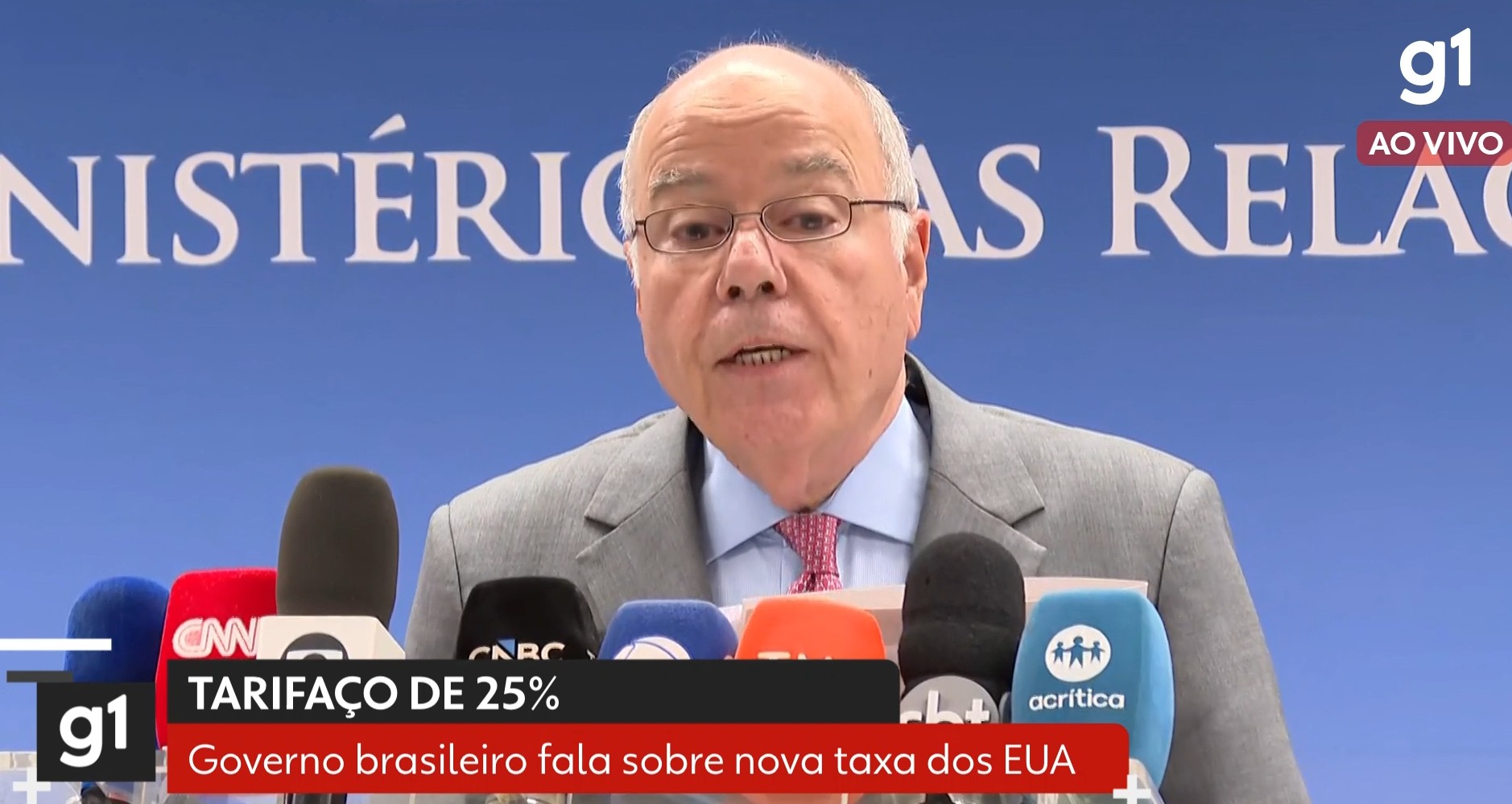
Brazil's Minister of Foreign Affairs, Mauro Vieira, stated on Thursday, May 16th, that the new 25% tariffs announced by the United States on Brazilian products lack justification and a basis in reality, attributing the measure to political motivations. Vieira emphasized that the US Section 301 investigations are unilateral procedures, and there is no valid reason for imposing tariffs on Brazilian goods. He highlighted that since March 2025, the Brazilian government has engaged in over 30 meetings, both in person and virtually, with US authorities at presidential, ministerial, and technical levels. Specifically, Vieira mentioned 11 contacts with US Secretary of State Marco Rubio and US Trade Representative Jamieson Greer. He recalled a phone conversation with Greer on April 2nd, when the tariff applied to Brazil was 10%, the lowest rate imposed by the US on other nations. Vieira also referenced a letter from Donald Trump threatening new tariffs and initiating the investigation against Brazil, asserting that President Lula has consistently sought dialogue and shown willingness to negotiate. The minister deemed the US measures "unacceptable" and criticized Rubio's "gross" remarks against a friendly nation's head of state. Vieira suggested that US dissatisfaction stems from Brazil's refusal to yield to what Brazil considers unreasonable demands, such as exclusively opening national economic sectors to American interests. The US Trade Representative's office confirmed the proposed tariffs, which are set to take effect on July 22nd, following a year-long investigation under Section 301 of the Trade Act of 1974.
The imposition of tariffs by the United States on Brazilian products, framed by Brazil's Foreign Minister as politically motivated, highlights a recurring tension in international trade relations. Such measures, often justified under national security or trade fairness provisions like Section 301, can reflect underlying geopolitical strategies or domestic economic pressures within the imposing nation. Brazil's response, emphasizing dialogue and rejecting the tariffs' justification, points to a strategic effort to maintain economic sovereignty and avoid concessions perceived as disadvantageous. The situation underscores the complex interplay between national interests, trade law, and diplomatic negotiation, where perceived slights or unfulfilled demands can escalate into trade disputes. Looking ahead, the increasing reliance on unilateral trade enforcement mechanisms by major economies may necessitate a re-evaluation of global trade governance frameworks to ensure more equitable and predictable dispute resolution, particularly in an era of evolving economic power dynamics and technological advancements.
AI-generated to prompt reflection — not editorial opinion, not advice, not a statement of fact. How this works.