Brazil's Foreign Ministry Cites US Military Force Risk After Terrorist Designations
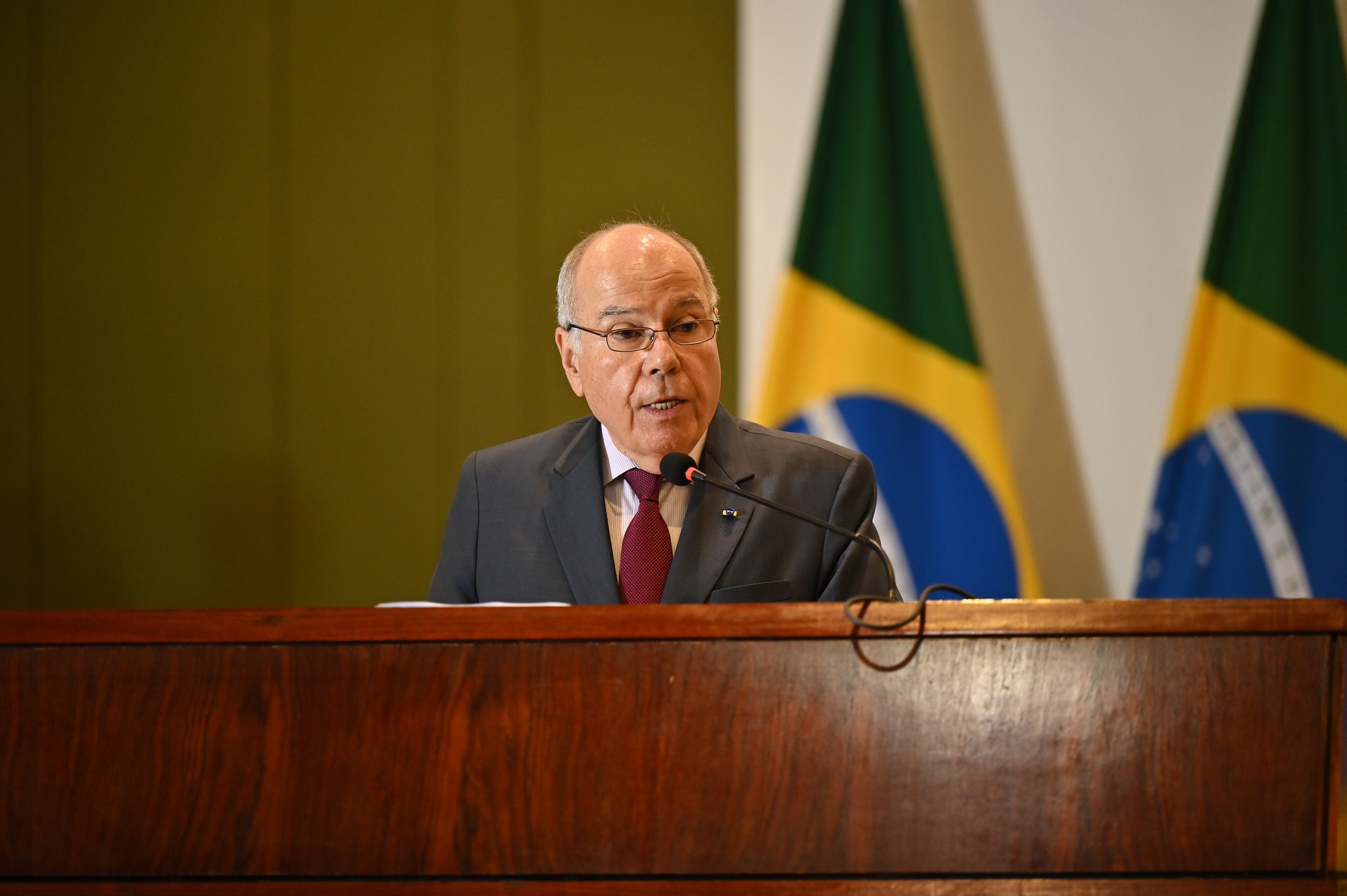
Brazil's Ministry of Foreign Affairs (Itamaraty) has expressed concern over a potential "risk of use of military force" by the United States within Brazilian territory. This concern was raised by Foreign Minister Mauro Vieira in a document sent to the Chamber of Deputies, following the U.S. government's classification of Brazilian criminal factions Primeiro Comando da Capital (PCC) and Comando Vermelho (CV) as foreign terrorist organizations. The designation was made by the Donald Trump administration in late May, reportedly without prior formal consultation with Brazil. Itamaraty argues that this classification does not aid in dismantling the factions or combating international organized crime and could negatively impact individuals and businesses unrelated to criminal activities. Minister Vieira cited recent regional incidents as precedents for potential U.S. military action. These include a January operation in Caracas, Venezuela, leading to the arrest of Nicolás Maduro, described as the first direct U.S. military intervention in Latin America since the removal of Panama's Manuel Noriega. Another example cited is the October 2025 U.S. attacks on boats near Colombia's coast, which the Trump administration claimed were operated by drug traffickers, though without providing proof. Additionally, the minister referenced threats made by then-President Trump suggesting Cuba could be next, following U.S. pressure and accusations against Raúl Castro. Brazil has formally criticized the U.S. decision, stating it poses concrete risks to national sovereignty and that unilateral classifications may justify extraterritorial actions. Brazil has proposed bilateral cooperation to the U.S. on combating organized crime but has not yet received a response. Itamaraty emphasizes that Brazil's opposition is not a defense of the criminal factions but a defense of Brazilian legislation and international law regarding national sovereignty.
The Brazilian government's apprehension regarding potential U.S. military action, triggered by the designation of domestic criminal groups as foreign terrorists, highlights a critical tension between national sovereignty and international security cooperation. While the U.S. asserts its right to designate foreign terrorist organizations, Brazil views this as a potential overreach that could undermine its sovereign authority and invite extraterritorial intervention. The cited historical examples, though presented by Brazil as cautionary tales, underscore the complexities of U.S. foreign policy in Latin America and the varying justifications for military or quasi-military actions. From a systemic perspective, this dispute reflects differing interpretations of international law and the evolving landscape of transnational crime, where the lines between criminal activity and state-level threats can become blurred, potentially creating leverage for unilateral actions by powerful states. The situation prompts consideration of how international cooperation frameworks can be strengthened to address shared security challenges without compromising the sovereign integrity of member states, particularly in an era where non-state actors and state-sponsored illicit activities pose significant global risks.
AI-generated to prompt reflection — not editorial opinion, not advice, not a statement of fact. How this works.