Brazil's Industry Faces Labor Shortage Amidst High Employment, Hindering Productivity
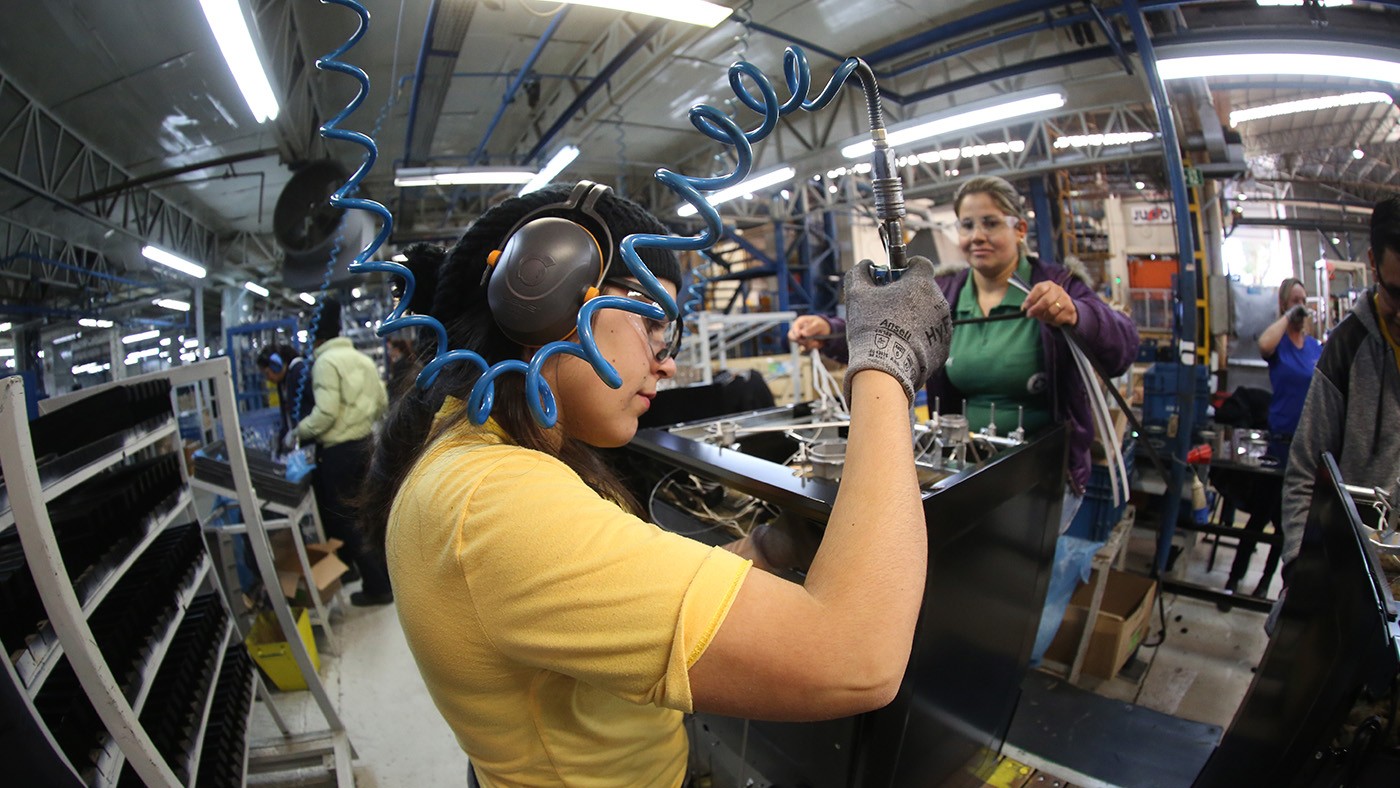
Brazil's industrial sector is experiencing a significant paradox: despite a labor market near full employment, companies are struggling to find qualified professionals. This "labor blackout" is negatively impacting productivity, diminishing corporate competitiveness, and accelerating the need for investments in automation, innovation, and workforce development. These critical issues will be at the forefront of discussions at the Expo+ Indústria fair, organized by the Federation of Industries of Paraná (Fiep) and co-realized by Sesi, Senai, and IEL, taking place from August 25-27 in Expotrade Pinhais. The event aims to bring together experts, business leaders, technology providers, and industry representatives to devise solutions for preparing the sector for a new development cycle centered on automated systems.
Data from the International Labour Organization (ILO) highlights Brazil's productivity gap, showing it generates approximately US$21 per hour worked, significantly lower than leading nations like Ireland (US$167.3 per hour). This disparity underscores that Brazil's challenge lies not just in job creation but in generating greater value from its workforce. Experts suggest that boosting productivity requires training professionals for new technologies, modernizing factories, and digitally transforming industrial processes. While awareness of automation investment is high among industrialists, with 76% planning process and product improvements, access to affordable credit for technological modernization, especially for imported machinery, remains a major hurdle. Companies view modernization as essential for survival, not just a competitive edge, as it reduces costs, enhances quality, improves energy and water efficiency, and strengthens global competitiveness.
Despite a slowdown in job creation in May 2026, with Paraná's industry adding 1,006 formal jobs (a 48% decrease from the previous month), many positions remain unfilled due to a lack of candidates with the necessary skills for modern industry. Automation is not seen as a job eliminator but as a means to reallocate workers to areas with labor shortages. The digital transformation necessitates new competencies, including operating robots, AI, data analysis, and predictive maintenance. The Expo+ Indústria fair is designed to foster connections between industry, technology, education, and innovation, emphasizing that investing in people is as crucial as investing in machinery for sustainable growth and competitiveness in the global market.
The Brazilian industrial sector's struggle with a qualified labor shortage, despite high overall employment, reveals a systemic mismatch between the evolving demands of Industry 4.0 and the existing workforce's skill sets. While companies express a strong intent to invest in automation and modernization, citing a 76% planned investment rate, the primary constraint appears to be financing, particularly for imported technology. This suggests a need for policy interventions to improve access to credit at competitive rates, thereby enabling firms to bridge the productivity gap. The data indicates that Brazil's productivity is significantly lower than global leaders, emphasizing that simply creating jobs is insufficient; value generation per worker must increase. This necessitates a strategic focus on upskilling and reskilling programs, aligning educational outputs with the competencies required for advanced manufacturing, such as AI, robotics, and data analytics. The Expo+ Indústria event's focus on integrating technology, education, and innovation is a positive step, but its long-term impact will depend on translating discussions into tangible investments in human capital and facilitating access to capital for technological adoption. The next decade will likely see an acceleration of automation; therefore, proactive, large-scale workforce development initiatives are critical for Brazil to maintain competitiveness and avoid further divergence from global productivity leaders.
AI-generated to prompt reflection — not editorial opinion, not advice, not a statement of fact. How this works.