Brazil's Inmet Issues Gale and Low Humidity Alerts for Rio Grande do Norte
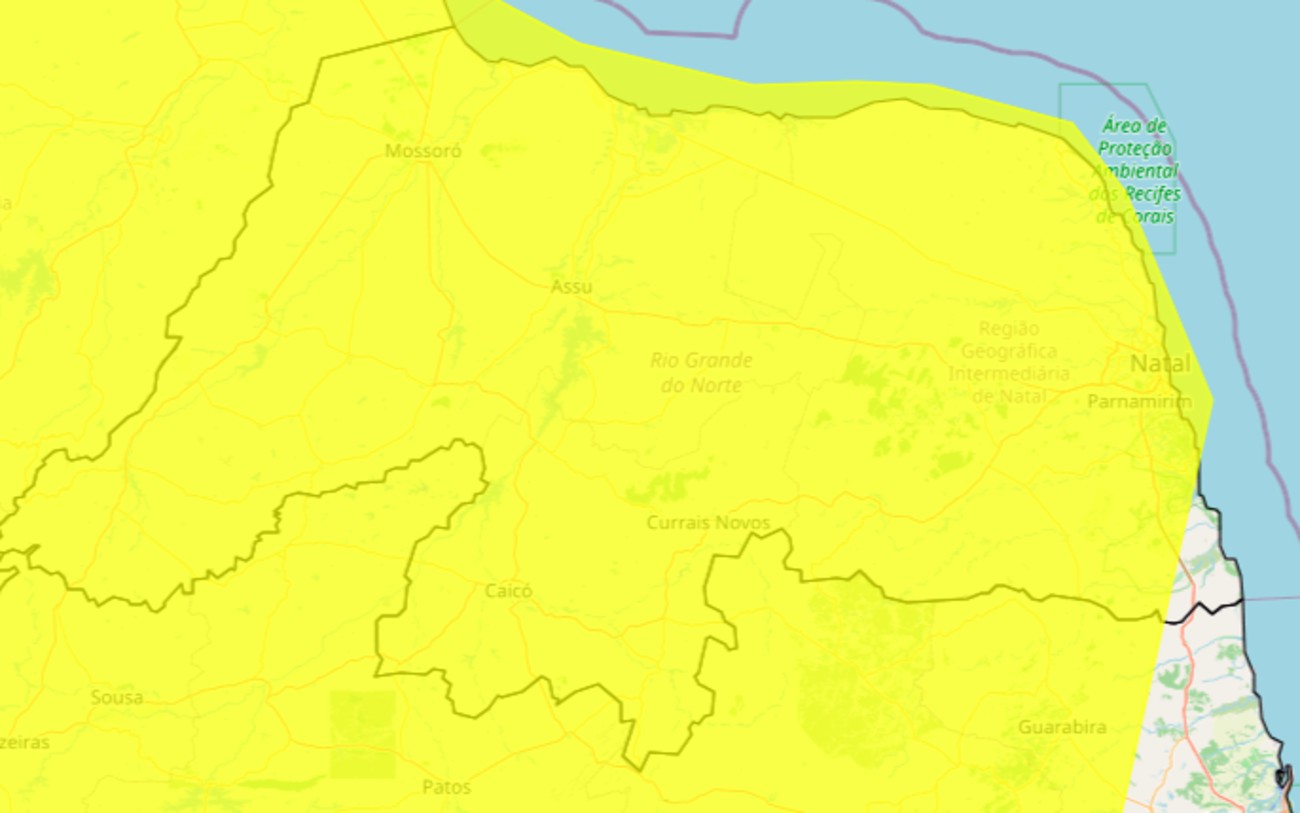
The National Institute of Meteorology (Inmet) in Brazil has issued two potential danger alerts for the state of Rio Grande do Norte on Sunday, the 2nd. One alert warns of gales, effective until 11:59 PM, while the other addresses low air humidity, lasting until 10:00 PM. Both alerts are classified as yellow, indicating a "potential danger" and the lowest severity level from the institute. The gale alert encompasses all 167 municipalities within the state, predicting winds between 40 km/h and 60 km/h, with a low risk of tree branches falling. Inmet advises against sheltering under trees due to potential falling branches and electrical discharge, and recommends parking vehicles away from transmission towers and billboards. The low humidity alert applies to 80 cities, primarily in the western, Seridó, and Alto Oeste regions. This alert forecasts relative humidity levels between 20% and 30%, considered a level of attention, with a low risk of forest fires and health impacts. Residents are advised to drink plenty of fluids, avoid strenuous physical activity during the driest hours, and limit sun exposure during peak heat. Emergency services, including Civil Defense (199) and the Fire Department (193), are available for assistance.
The issuance of gale and low humidity alerts by Inmet highlights the dynamic meteorological conditions affecting Rio Grande do Norte. These advisories, classified at the lowest severity level, aim to inform the public and mitigate potential risks. The gale warning's focus on wind speed and potential for falling debris, alongside the low humidity alert's emphasis on health and fire prevention, demonstrates a proactive approach to public safety. From a systemic perspective, such alerts are crucial for preparedness in regions susceptible to varied weather patterns. The dual nature of the warnings—one addressing atmospheric forces and the other atmospheric conditions—underscores the interconnectedness of environmental factors and their impact on daily life, infrastructure, and public well-being. This serves as a reminder of the importance of robust meteorological monitoring and communication systems in adapting to climate variability.
AI-generated to prompt reflection — not editorial opinion, not advice, not a statement of fact. How this works.