Brazil's Inmet Issues Heavy Rain Alert for 57 Municipalities in Pernambuco
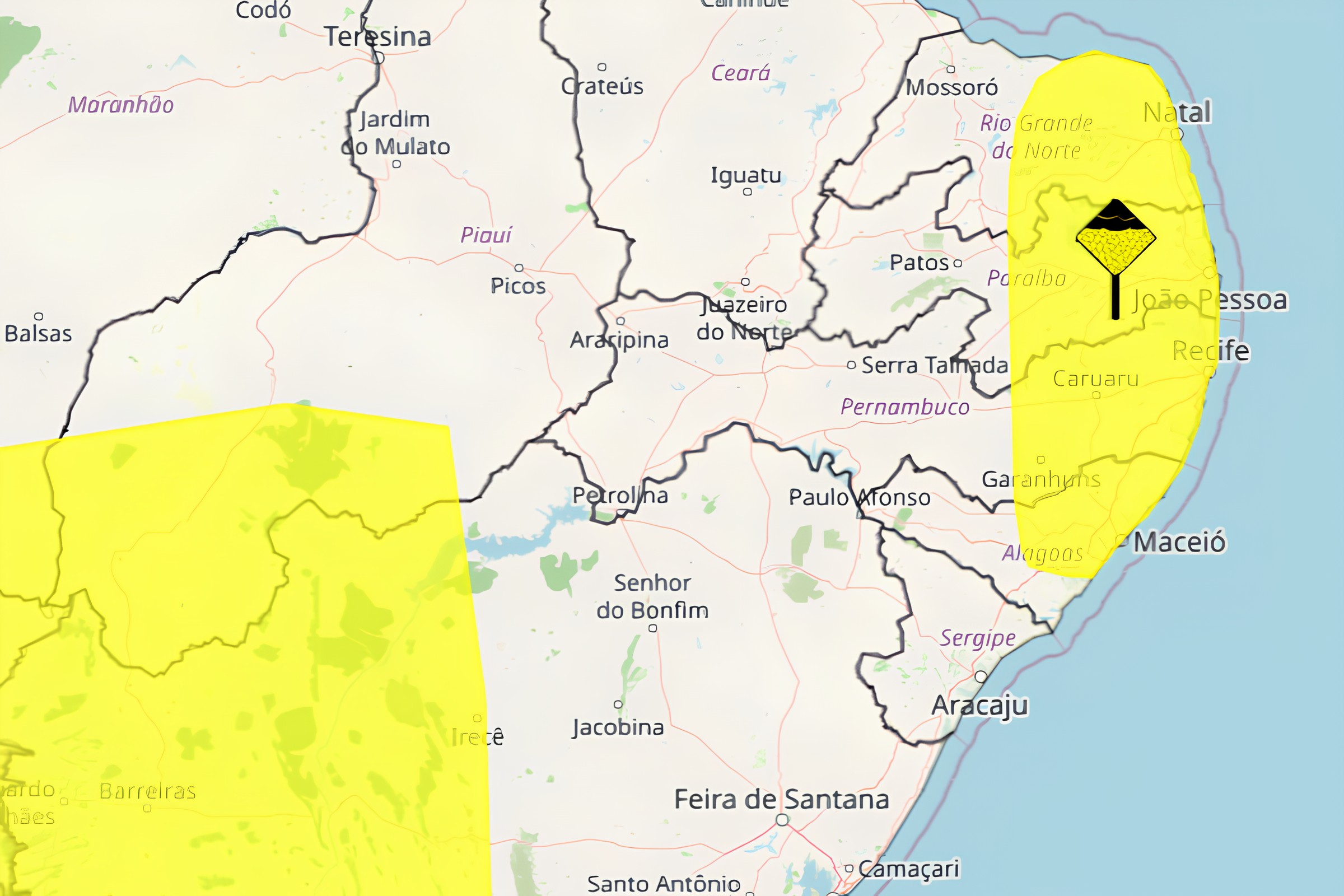
The National Institute of Meteorology (Inmet) in Brazil has issued a yellow alert for potential heavy rainfall in 57 municipalities located in the interior of Pernambuco. This alert is in effect from Thursday, February 23rd, until Friday, February 24th, at 11:59 PM. The warning signifies a potential for rainfall between 20 to 30 mm per hour or up to 50 mm per day, accompanied by intense winds ranging from 40 to 60 km/h. Inmet has indicated a low risk of associated hazards such as power outages, falling tree branches, flooding, and electrical discharges. However, the institute strongly advises against seeking shelter under trees during wind or rain due to the risk of falling debris and electrical shocks. Residents are also cautioned to avoid parking vehicles near transmission towers and advertising signs. Furthermore, Inmet recommends refraining from using electronic devices plugged into outlets while in the affected areas. The alert encompasses a significant number of towns, including but not limited to Caruaru, Garanhuns, and Santa Cruz do Capibaribe, highlighting the widespread nature of the potential weather event across the region.
The issuance of a yellow alert by Inmet underscores the dynamic nature of weather patterns and the importance of meteorological forecasting for public safety and infrastructure preparedness. While the alert specifies a low risk of severe impacts, the proactive communication serves to mitigate potential disruptions. From a systems perspective, such alerts are critical feedback loops, enabling communities and authorities to adjust activities and resource allocation in anticipation of adverse conditions. In the context of an increasingly climate-sensitive world, the accuracy and timeliness of these warnings become paramount, influencing everything from agricultural planning to urban resilience strategies. The focus on individual protective actions, such as avoiding trees and unplugged electronics, highlights the interplay between institutional guidance and personal responsibility in managing environmental risks.
AI-generated to prompt reflection — not editorial opinion, not advice, not a statement of fact. How this works.