Brazil's 'King of the River' Fish Remains Under Strict Fishing Ban in Mato Grosso do Sul
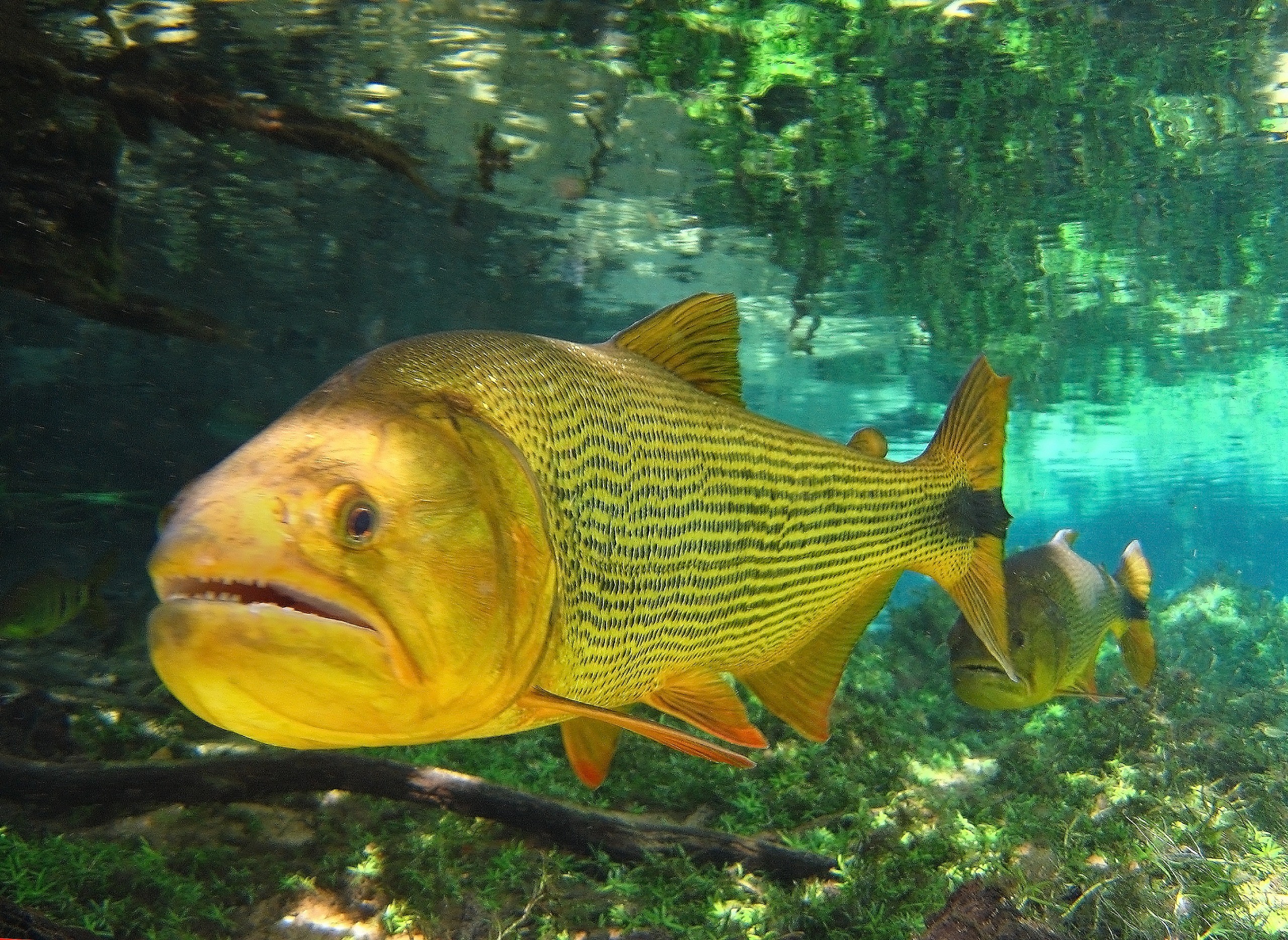
The golden dorado, known as the 'King of the River' by anglers, is subject to a fishing ban in Mato Grosso do Sul, Brazil, which has been in effect for six years and will continue until March 31, 2027. This prohibition aims to preserve the species and carries significant penalties for illegal fishing. Recently, a man was fined R$ 5,547 for transporting a dorado, highlighting the strict enforcement of the law. State Law No. 5.321 prohibits the capture, transport, commercialization, processing, and industrialization of the golden dorado within the state's rivers. Exceptions include catch-and-release fishing, consumption by professional and riverside fishermen, and the sale of farmed specimens. The minimum fine for violating the ban is approximately R$ 2,700, equivalent to 100 Uferms, with potential fines reaching R$ 100,000 plus R$ 20 per kilogram of illegally caught fish. In addition to fines, predatory fishing can lead to detention for one to three years. The extended ban allows for technical, scientific, and economic studies to assess the species' population balance, with results due by February 28, 2027, for public review. The golden dorado (Salminus brasiliensis), found in the Paraná and Paraguay river basins, is highly valued in sport fishing for its golden scales, aggressive nature, and large size. Protection measures for the species began in Corumbá in 2011 and now apply statewide.
The extended ban on golden dorado fishing in Mato Grosso do Sul reflects a growing global trend of implementing stringent conservation measures for commercially or recreationally significant species facing population pressures. While the law aims to ensure ecological balance and facilitate scientific study, its strict enforcement and substantial penalties underscore the economic and cultural value placed on the species. Future sustainability will likely depend on the successful integration of scientific findings into policy, balancing conservation goals with the livelihoods of local communities and the economic interests of the sport fishing industry. The state's approach highlights the complex interplay between environmental regulation, economic activity, and the long-term viability of natural resources in the face of evolving ecological and societal demands.
AI-generated to prompt reflection — not editorial opinion, not advice, not a statement of fact. How this works.