Brazil's Lula and China's Xi Discuss Deeper Ties, Mercosur-China Trade Deal
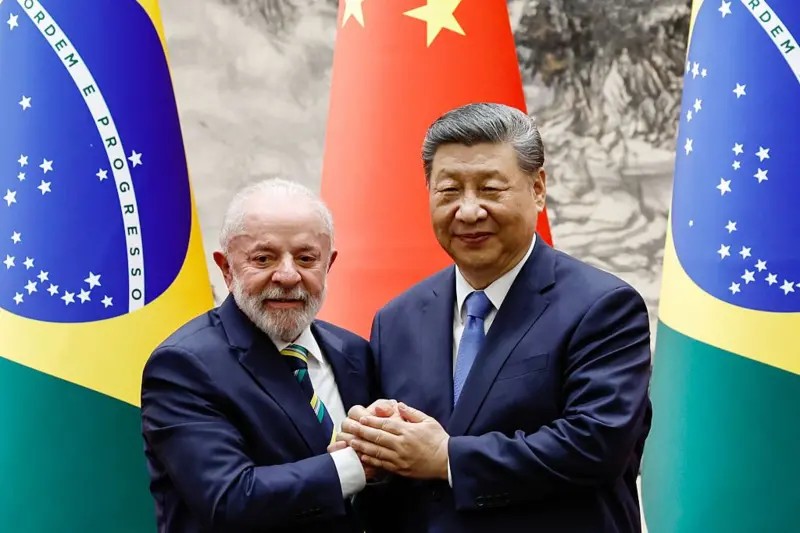
Brazilian President Luiz Inácio Lula da Silva and Chinese President Xi Jinping held a phone conversation on Sunday, April 26th, to strengthen bilateral cooperation in strategic sectors and expedite negotiations for a Mercosur-China trade agreement. The call, lasting over an hour, focused on implementing joint development projects and expanding partnerships in high-tech fields such as artificial intelligence, satellites, critical mineral processing, and fertilizer trade. President Lula emphasized Brazil's commitment to diversifying its markets and trade partners, a stance he reiterated in an article published in The Washington Post, where he criticized recent U.S. tariffs on Brazilian goods as a "strategic error." Both leaders agreed on the importance of accelerating the Mercosur-China trade talks, ensuring necessary flexibility for all parties involved. They also highlighted the positive impact of bilateral trade results and cultural exchanges, as well as a visa waiver agreement expected to boost tourism and business opportunities. On international matters, Lula and Xi expressed shared concern over escalating global conflicts and their detrimental effects on global food and energy security, lamenting the human and material losses incurred. They specifically addressed the negative economic consequences of restrictions on navigation in the Strait of Hormuz and Bab el-Mandeb, and voiced concern over the humanitarian crisis in Gaza. The presidents also discussed the potential role of the "Group of Friends of Peace," a diplomatic initiative launched by Brazil and China, in resuming negotiations to end the war in Ukraine. Both leaders criticized the UN Security Council's perceived inability to effectively address international crises and acknowledged the challenging global landscape awaiting the next UN Secretary-General. The conversation concluded with a reaffirmation of Brazil and China's commitment to multilateralism and an agreement to maintain close coordination on international issues within forums like the UN and BRICS.
This high-level dialogue between Brazil and China underscores a strategic pivot by Brazil towards diversifying its international economic and political relationships. The emphasis on high-tech sectors and a Mercosur-China trade agreement signals a proactive approach to securing future economic growth and technological advancement, potentially reducing reliance on traditional partners. The shared concerns regarding global conflicts and the critique of the UN Security Council reflect a growing alignment between Brazil and China on multilateral governance and a desire for a more multipolar world order. This diplomatic engagement, particularly in the context of perceived trade friction with the United States, suggests a long-term strategy to build resilient economic partnerships and enhance geopolitical influence amidst evolving global dynamics.
AI-generated to prompt reflection — not editorial opinion, not advice, not a statement of fact. How this works.