Brazil's Murder Rate Hits Lowest Since 2012; Feminicides Reach Record High
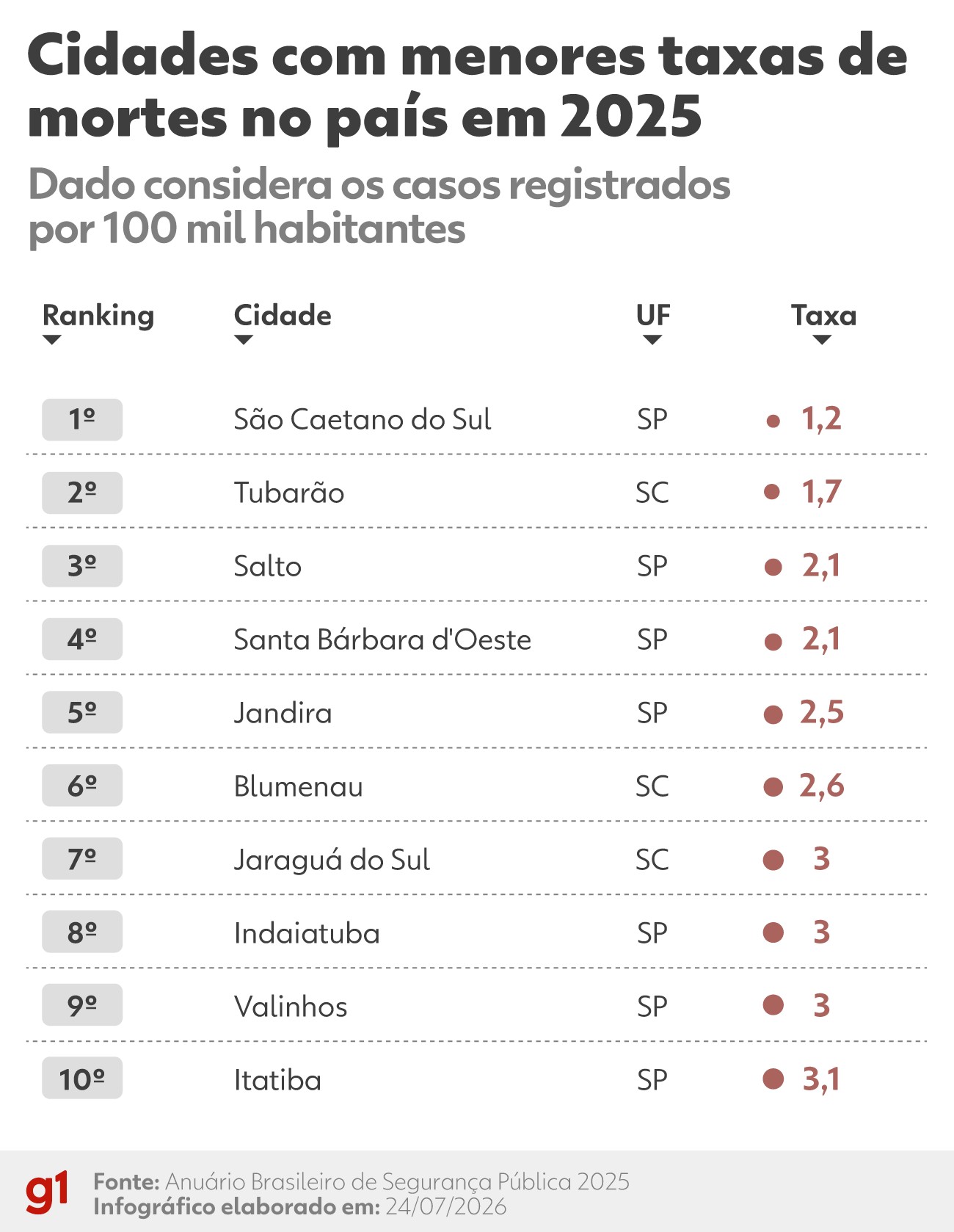
The 2026 Public Security Yearbook, released on Thursday (23), reveals that Brazil's intentional violent death rate has reached its lowest point since 2012. The report, compiled by the Brazilian Public Security Forum (FBSP), highlights São Paulo and Santa Catarina as the states with the fewest violent deaths per 100,000 inhabitants. São Caetano do Sul in São Paulo leads with 1.2 deaths per 100,000, followed by Tubarão in Santa Catarina with 1.7. Seven municipalities from São Paulo and three from Santa Catarina are among the top ten with the lowest rates.
Conversely, the ten cities with the highest rates of intentional violent deaths are all located in the Northeast region, with Maranguape, Ceará, recording the highest rate at 100.3 deaths per 100,000 inhabitants. Santa Catarina has become the state with the lowest violent death rate at 7.6 per 100,000, surpassing São Paulo. However, the report also notes a concerning record in feminicides, with an average of four women killed daily in 2025. Other indicators of violence against women, such as psychological abuse, stalking, and non-compliance with protective measures, also saw increases. The total number of intentional violent deaths in Brazil fell by 8% to 40,775 in 2025, resulting in a national rate of 19.1 deaths per 100,000, the lowest ever recorded by the FBSP.
The report presents a complex picture of public security in Brazil, with a notable decline in overall intentional violent deaths contrasting sharply with a record high in feminicides and increased violence against women. While states like São Paulo and Santa Catarina demonstrate effective strategies for reducing violent crime, the persistent concentration of high-violence rates in Northeastern municipalities and the alarming rise in gender-based violence indicate deep-seated systemic issues. The FBSP's data provides crucial insights into the effectiveness of various public policies and the need for targeted interventions, particularly concerning gender-based violence and regional disparities. Future policy evaluations should consider the interplay between broad crime reduction efforts and specific programs addressing feminicide and other forms of violence against women, alongside regional development and socio-economic factors that may influence crime rates.
AI-generated to prompt reflection — not editorial opinion, not advice, not a statement of fact. How this works.