Brazil's National Meteorology Institute Extends High Wind and Low Humidity Alerts for Paraíba
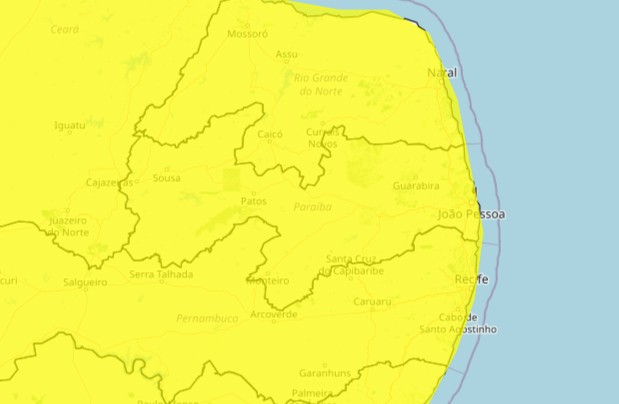
The National Institute of Meteorology (Inmet) has extended its yellow alert for potential high winds across all 223 municipalities in the Brazilian state of Paraíba. Originally set to expire on Saturday, June 1st, the alert is now in effect until 11:59 PM on Sunday, June 2nd. During this period, winds are expected to range between 40 km/h and 60 km/h, with a low risk of tree branches falling.
In addition to the wind advisory, Inmet also issued a separate yellow alert for low humidity, affecting 105 cities in Paraíba. This alert will be active from 10:30 AM to 10:00 PM on Sunday, June 2nd. The relative humidity is predicted to drop between 30% and 20%. While the risk of forest fires and health impacts is low, residents are advised to take precautions against dry weather effects. Inmet recommends staying hydrated and avoiding strenuous outdoor activities during the hottest parts of the day for areas under the low humidity alert. For those in high wind zones, it is advised to stay away from trees due to the slight risk of falling branches and electrical discharges, and to avoid parking vehicles near transmission towers or billboards. Emergency services can be contacted via 199 for Civil Defense or 193 for the Fire Department.
The issuance of dual weather alerts by Inmet highlights the complex and often interconnected meteorological challenges faced by regions like Paraíba. The extended wind advisory and concurrent low humidity warning underscore the need for robust public preparedness infrastructure. From a systems perspective, these events stress the importance of predictive modeling accuracy and timely communication to mitigate potential disruptions and ensure public safety. As climate patterns evolve, such alerts may become more frequent, necessitating ongoing investment in meteorological forecasting and community resilience programs. The advice to avoid specific activities and locations reflects a reactive approach to immediate risks, but a more proactive strategy might involve long-term urban planning and land management to reduce vulnerability to extreme weather events.
AI-generated to prompt reflection — not editorial opinion, not advice, not a statement of fact. How this works.