Brazil's National Meteorology Institute Issues Major Storm Warning for 549 Municipalities
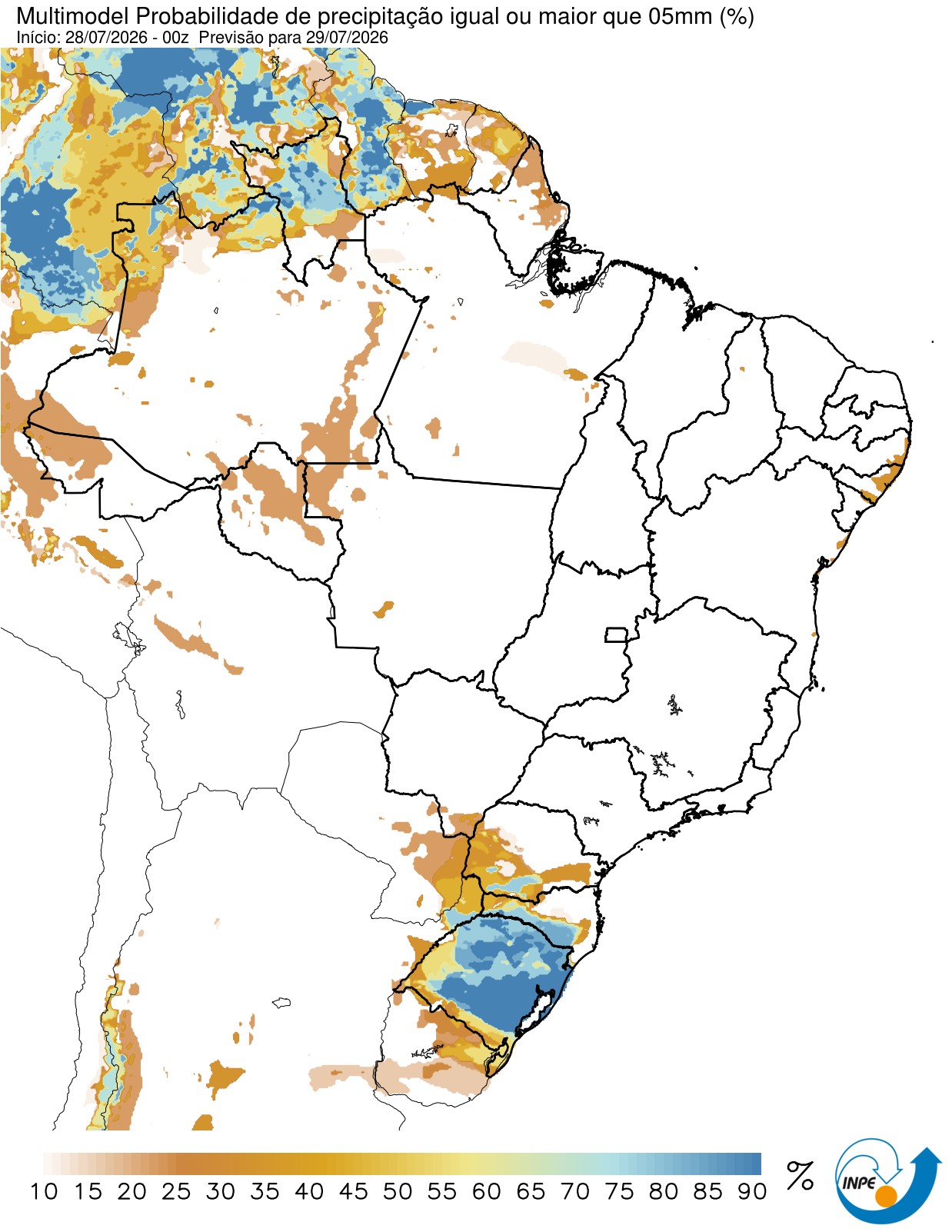
Brazil's National Meteorology Institute (Inmet) has issued a "red alert," signifying a major danger warning for severe thunderstorms affecting 549 municipalities across the southern states of Rio Grande do Sul and Santa Catarina. This warning commenced at 10 AM on Tuesday, May 28th, and is scheduled to remain in effect until noon on Wednesday, May 29th. Residents in the affected regions can expect rainfall exceeding 60 millimeters per hour or over 100 millimeters in a 24-hour period. Additionally, the storms may bring winds gusting over 100 km/h and hail. The red alert is the highest level on Inmet's scale, indicating a significant risk. In Rio Grande do Sul, the warning covers the Northwest, Central-West, Central-East, Northeast, Southeast, and Southwest regions, as well as the Serra and Metropolitan Region of Porto Alegre. Santa Catarina's western, southern, and mountainous areas are primarily included. Inmet forecasts substantial risks of damage to homes and properties, power outages, crop destruction, fallen trees, flooding, and disruptions to road transportation. The institute advises immediate actions such as unplugging electrical appliances, securing important documents against potential flash floods, and seeking safe shelter during the storms. Emergency services can be reached at 199 (Civil Defense) and 193 (Fire Department).
The issuance of a "red alert" by Inmet highlights the critical role of meteorological agencies in public safety and infrastructure resilience. This event underscores the increasing frequency and intensity of extreme weather events, potentially linked to broader climate shifts. The warning system, with its tiered alert levels, aims to provide actionable information to mitigate risks, yet its effectiveness relies on public adherence and robust emergency response capabilities. The potential for widespread damage to property, agriculture, and transportation infrastructure points to significant economic implications. This situation prompts consideration of long-term adaptation strategies, including improved urban planning, climate-resilient infrastructure, and enhanced early warning systems, especially as weather patterns become more unpredictable in the coming decade.
AI-generated to prompt reflection — not editorial opinion, not advice, not a statement of fact. How this works.