Brazil's President Lula Asks for Votes at PT Convention in Bahia Ahead of Official Campaigning
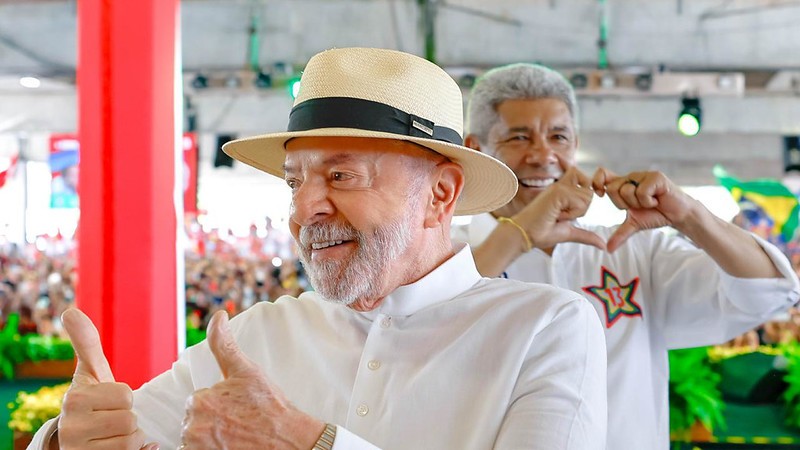
President Luiz Inácio Lula da Silva, also known as Lula, made explicit requests for votes during a state convention of his Workers' Party (PT) in Bahia on Saturday, July 1st. Speaking to mayors and political leaders, Lula urged supporters to prioritize allied candidates before voting for him, and later asked for votes for his own re-election, referencing his previous three presidential terms. He specifically mentioned voting for state and federal deputies, senators, and Jerônimo, before asking for his own vote, stating, "If there are a few votes left, vote for me, and I will thank you all for remembering.". He also invoked his past electoral successes, asking supporters not to tire of voting for him to secure a fourth term and "definitively make this country work.".
This occurred during the PT's state convention in Bahia, a key electoral stronghold for the party, which is part of the broader process of formalizing candidacies for the October elections. Party conventions began on July 20th and conclude on August 5th, with candidate registrations due by August 15th. Brazilian electoral law stipulates that official campaigning and explicit vote requests are only permitted from August 16th onwards. Prior to this date, such requests can be considered premature electoral propaganda, though pre-campaign activities like expressing political stances and personal qualities are allowed. The Superior Electoral Court will determine if any statements constitute illegal early campaigning.
Lula's participation in Salvador is part of the PT's strategy for the upcoming elections. He is scheduled to attend another event in São Paulo on Sunday, August 2nd, which is expected to formalize his re-election bid. His running mate will again be Vice President Geraldo Alckmin. Lula has previously served three terms as president, first elected in 2002, re-elected in 2006, and again in 2022.
The event highlights a recurring tension in electoral systems between pre-campaign political engagement and the formal start of electioneering. President Lula's explicit vote requests, while framed within party convention activities, skirt the legal boundaries of early campaigning. This practice, common across various political actors, raises questions about the equitable application of electoral laws and the potential for incumbents or well-resourced candidates to gain an undue advantage. The legal framework attempts to balance freedom of expression with the need for a level playing field, placing the onus on electoral courts to interpret specific instances. Looking ahead, as digital platforms accelerate information dissemination, the definition and enforcement of campaign timelines will likely become even more complex, necessitating a continuous re-evaluation of regulations to ensure fairness and transparency in democratic processes.
AI-generated to prompt reflection — not editorial opinion, not advice, not a statement of fact. How this works.