Brazil's President Lula Convenes Ministers to Discuss US Tariff Hikes
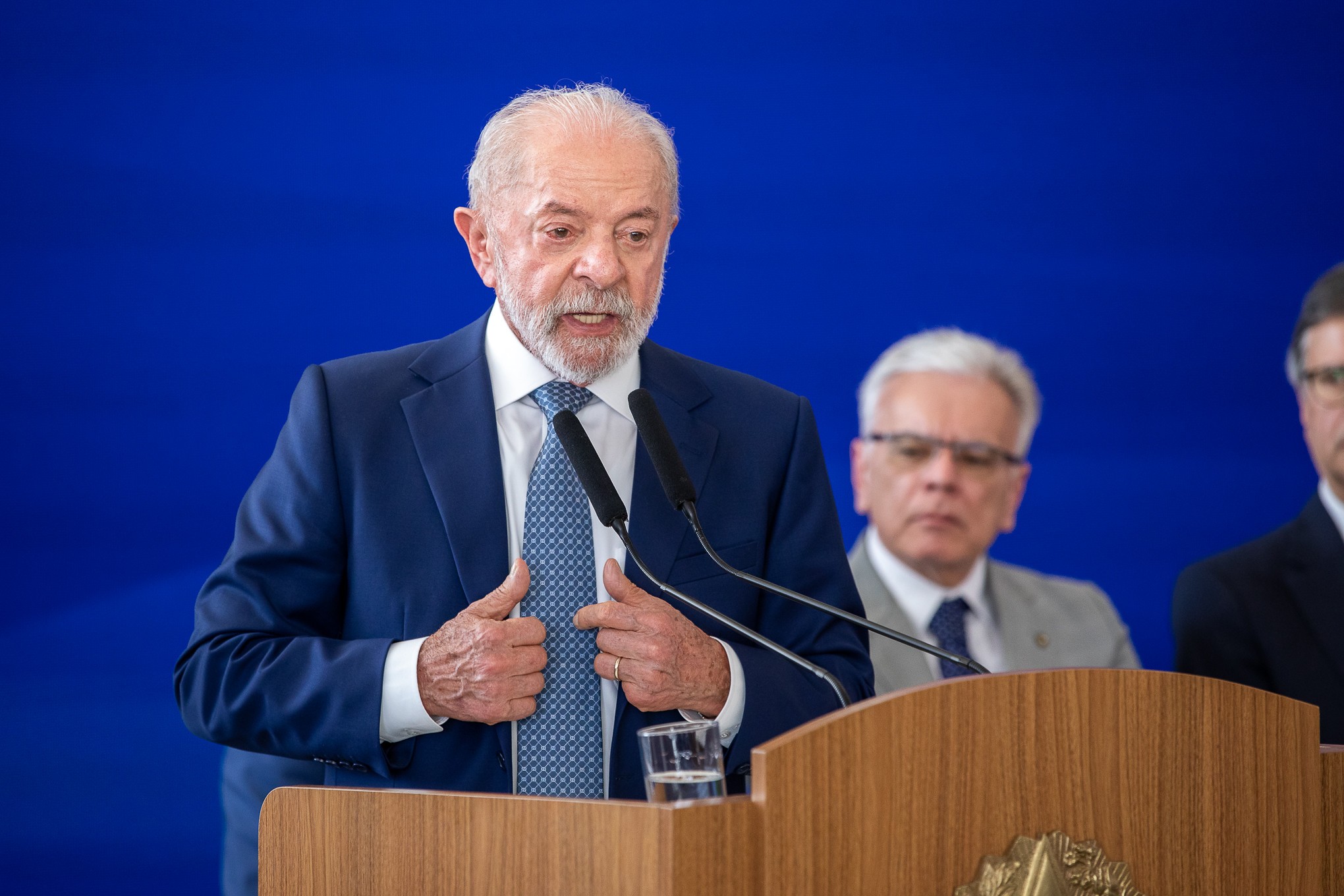
Brazilian President Luiz Inácio Lula da Silva convened a meeting with key ministers on Thursday, May 16th, to address the United States' decision to impose a new 25% tariff on Brazilian products. The ministers present included Finance Minister Dario Durigan, Chief of Staff Miriam Belchior, Industry, Development, and Trade Minister Márcio Elias Rosa, and Foreign Minister Mauro Vieira. The meeting took place at the Planalto Palace. Following the discussion, the government planned two public statements on the matter: one at the Ministry of Foreign Affairs (Itamaraty) and another at the Ministry of Industry, Development, and Trade (MDIC). The U.S. Trade Representative's Office (USTR) confirmed the proposed tariff increase, which will take effect on July 22nd. Notably, essential Brazilian exports such as oil, coffee, and beef will be exempt from this new tariff. This measure stems from a year-long USTR trade investigation under Section 301 of the Trade Act of 1974, designed to address alleged trade barriers. While the USTR cited economic, legal, and environmental factors, the Brazilian government perceives the tariff as politically and ideologically motivated. The U.S. administration, under the Trump government's framework, has also suggested the measure has political undertones, with Secretary of State Marco Rubio accusing the Lula administration of not negotiating in good faith. The Brazilian government has formally repudiated the decision, calling it a "regrettable milestone" in bilateral relations and highlighting a significant U.S. trade surplus of $424.5 billion with Brazil over the past 15 years. President Lula announced intentions to invoke the Law of Reciprocity in response to the unilateral U.S. action.
The U.S. imposition of a 25% tariff on select Brazilian goods, effective July 22nd, introduces a significant point of contention in bilateral trade relations. While framed by the U.S. Trade Representative's Office (USTR) as a response to trade barriers under Section 301, Brazil's government views the action as politically motivated, potentially leveraging trade policy for geopolitical or domestic objectives. The selective exemption of key commodities like oil, coffee, and beef suggests a targeted approach rather than a broad economic sanction. Brazil's threat to invoke the Law of Reciprocity indicates a potential for escalating retaliatory measures, which could disrupt established trade flows and create uncertainty for businesses operating in both markets. The differing interpretations of the tariffs' intent—economic versus political—highlight the complex interplay of national interests, legal frameworks, and diplomatic maneuvering in international trade. Future developments will likely depend on the efficacy of Brazil's response and the U.S. administration's willingness to engage in further negotiation or de-escalation, with implications for regional economic stability and the broader global trade order.
AI-generated to prompt reflection — not editorial opinion, not advice, not a statement of fact. How this works.