Brazil's President Lula Officially Nominated for Eighth Presidential Run
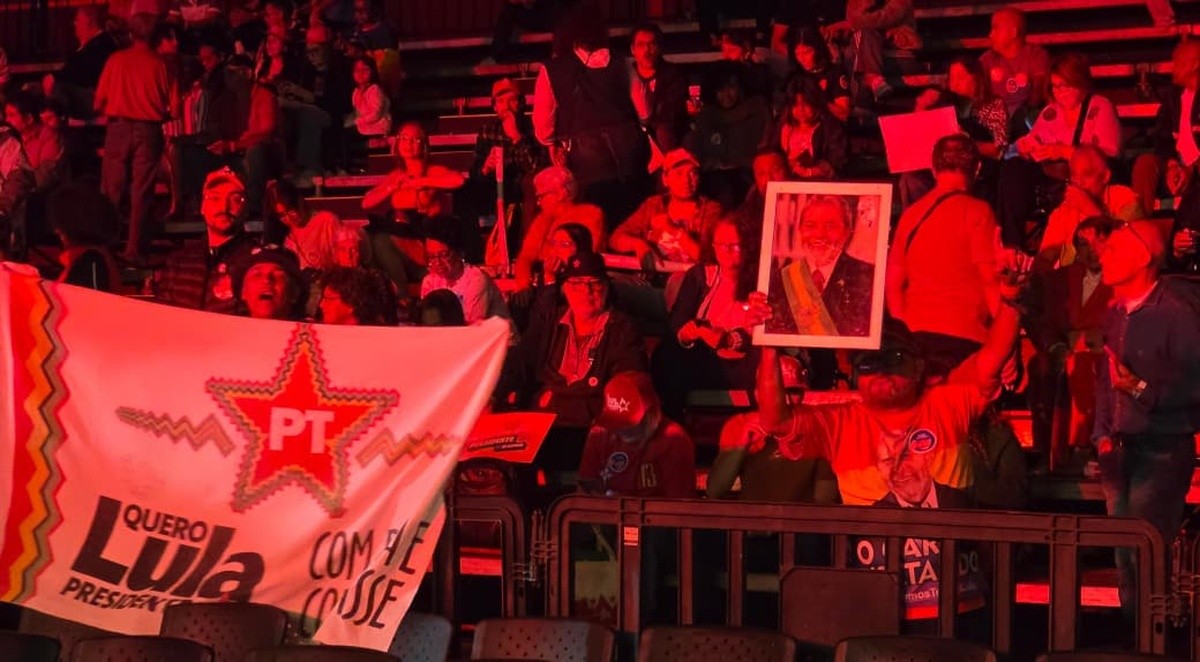
The Workers' Party (PT) has officially nominated President Luiz Inácio Lula da Silva for his eighth presidential bid during a national convention held at Expo Center Norte in São Paulo. PT chairman Edinho Silva confirmed that Lula's candidacy, along with that of his running mate Geraldo Alckmin, has been submitted to the Superior Electoral Court (TSE). The event was attended by prominent party figures, including federal deputy Benedita da Silva and state PT president Kiko Celeguim. At 80 years old, Lula is seeking his fourth term, having previously been elected in 2002, 2006, and 2022, and having run unsuccessfully in 1989, 1994, and 1998. If re-elected, he would serve a total of 16 years, second only to Getúlio Vargas's tenure. Lula will once again run with Geraldo Alckmin, who also serves as Minister of Development, Industry, Trade, and Services, bridging the government and business sectors. The PT's coalition for the 2026 election includes the PSB, PCdoB, PV, PDT, PSOL, and Rede, with the PDT being the first to formally endorse Lula's candidacy. Lula's nomination occurs amidst ongoing investigations into his eldest son, Fábio Luís Lula da Silva, concerning alleged influence peddling and corruption. President Lula stated that his son will face any accusations like any other citizen, without privilege, and acknowledged the personal toll of public scrutiny. Other major candidates, including Flávio Bolsonaro, Ronaldo Caiado, Romeu Zema, and Renan Santos, have already held their respective conventions.
The formalization of President Lula's candidacy marks a significant step in Brazil's electoral landscape, highlighting the enduring appeal of established political figures. The strategic alliance with Geraldo Alckmin, a former rival, underscores a pragmatic approach to coalition building, aiming to consolidate support across diverse political factions. The inclusion of multiple parties in the Lula-Alckmin ticket reflects a broad-based effort to counter opposition and secure electoral advantage. Simultaneously, the investigations into Lula's son introduce a complex dynamic, potentially influencing public perception and campaign narratives. This situation presents a challenge for the campaign, requiring careful management of legal and ethical considerations. The electoral process, as it unfolds, will test the resilience of Brazil's democratic institutions and the electorate's engagement with issues of governance, economic policy, and social justice.
AI-generated to prompt reflection — not editorial opinion, not advice, not a statement of fact. How this works.