Brazil's PT Party Forgoes State Governor Bids in 14 States to Bolster Alliances
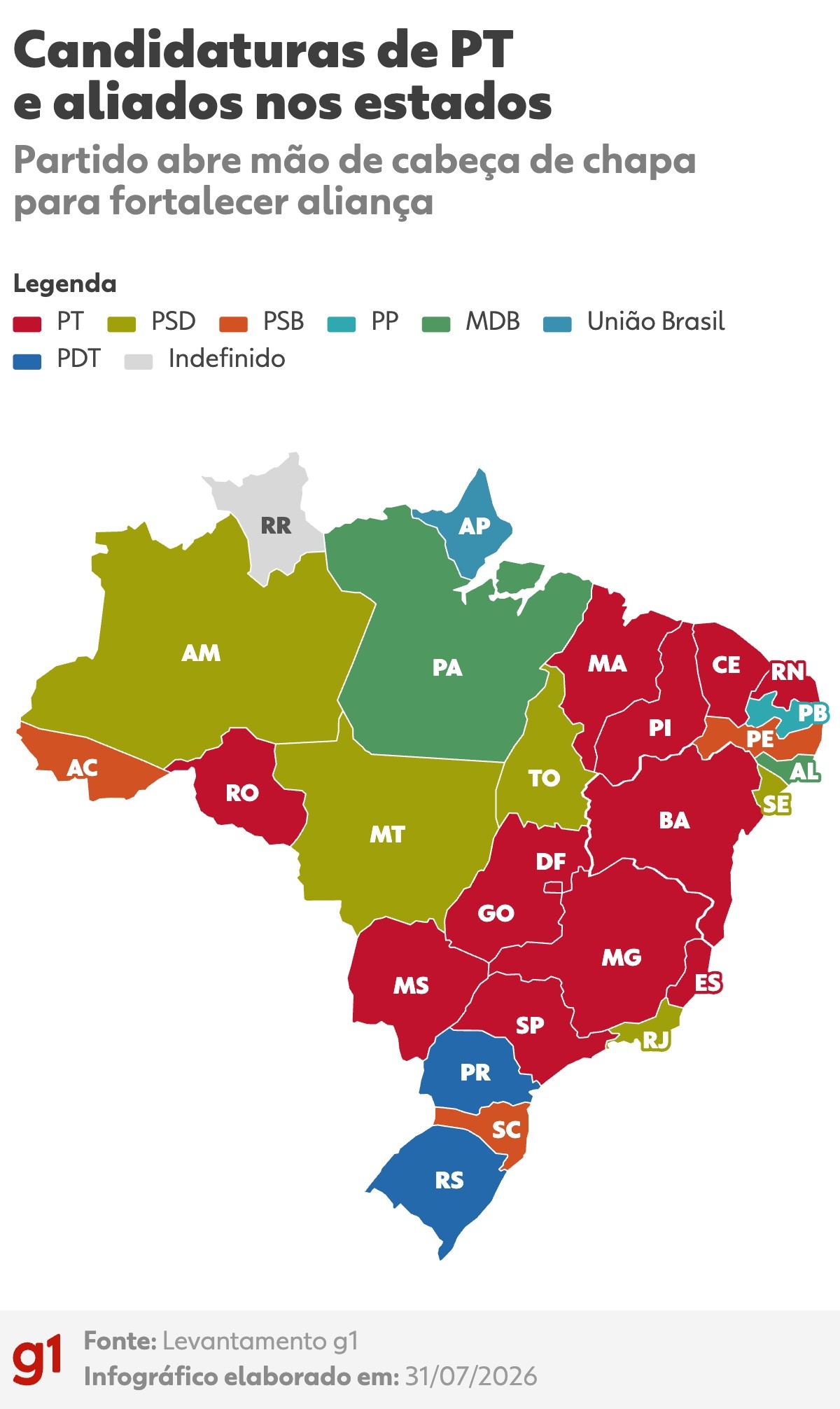
The Workers' Party (PT) has strategically decided to forgo its own gubernatorial candidacies in 2026 in at least 14 Brazilian states. This move aims to strengthen alliances by supporting stronger local candidates. In these 14 states – Acre, Alagoas, Amapá, Amazonas, Mato Grosso, Pará, Paraíba, Pernambuco, Paraná, Rio de Janeiro, Rio Grande do Sul, Santa Catarina, Sergipe, and Tocantins – the PT will back allied candidates for governor. For the remaining 12 states, the PT will lead the gubernatorial tickets, with allies taking the vice-governor positions and Senate races. Roraima remains undecided, with a local convention scheduled for August 4th. This strategy represents a significant shift, particularly in states like Rio Grande do Sul, where the PT will not field its own candidate for governor for the first time since redemocratization in 1990. In Rio de Janeiro, the PT is supporting incumbent Mayor Eduardo Paes, who leads gubernatorial polls, in exchange for Benedita da Silva running for the Senate on the allied ticket. This approach is seen by political scientists as a pragmatic effort to consolidate support for President Lula's re-election campaign, ensuring a stronger national presidential 'platform' by leveraging local allies. Experts suggest this pragmatic approach, prioritizing presidential viability and broad coalitions, has been a growing tendency since 2022, diverging from the party's historical focus on leading state-level tickets to maintain its own base and identity. This strategy is viewed as a continuation of past PT tactics during periods when Lula and Dilma Rousseff were strong presidential contenders, prioritizing national coalition building over expanding the number of PT governors.
The PT's strategic decision to cede gubernatorial nominations in 14 states reflects a pragmatic adaptation to Brazil's complex political landscape, prioritizing presidential coalition strength over state-level party expansion. This approach acknowledges the necessity of broad alliances to secure national electoral success, particularly for President Lula's campaign, by ensuring allied support across diverse regions. The move suggests a calculated assessment that maximizing presidential votes through unified regional platforms may outweigh the benefits of independent state-level candidacies, which could dilute resources and fracture alliances. This pragmatic calculus, driven by electoral incentives and the dynamics of presidentialism, highlights a potential tension between consolidating national power and fostering independent party identity at the sub-national level. The long-term implications for party structure and regional political influence warrant consideration as Brazil navigates future electoral cycles.
AI-generated to prompt reflection — not editorial opinion, not advice, not a statement of fact. How this works.