Brazil's Rio Grande do Sul braces for severe storms with heavy rain and 100 km/h winds
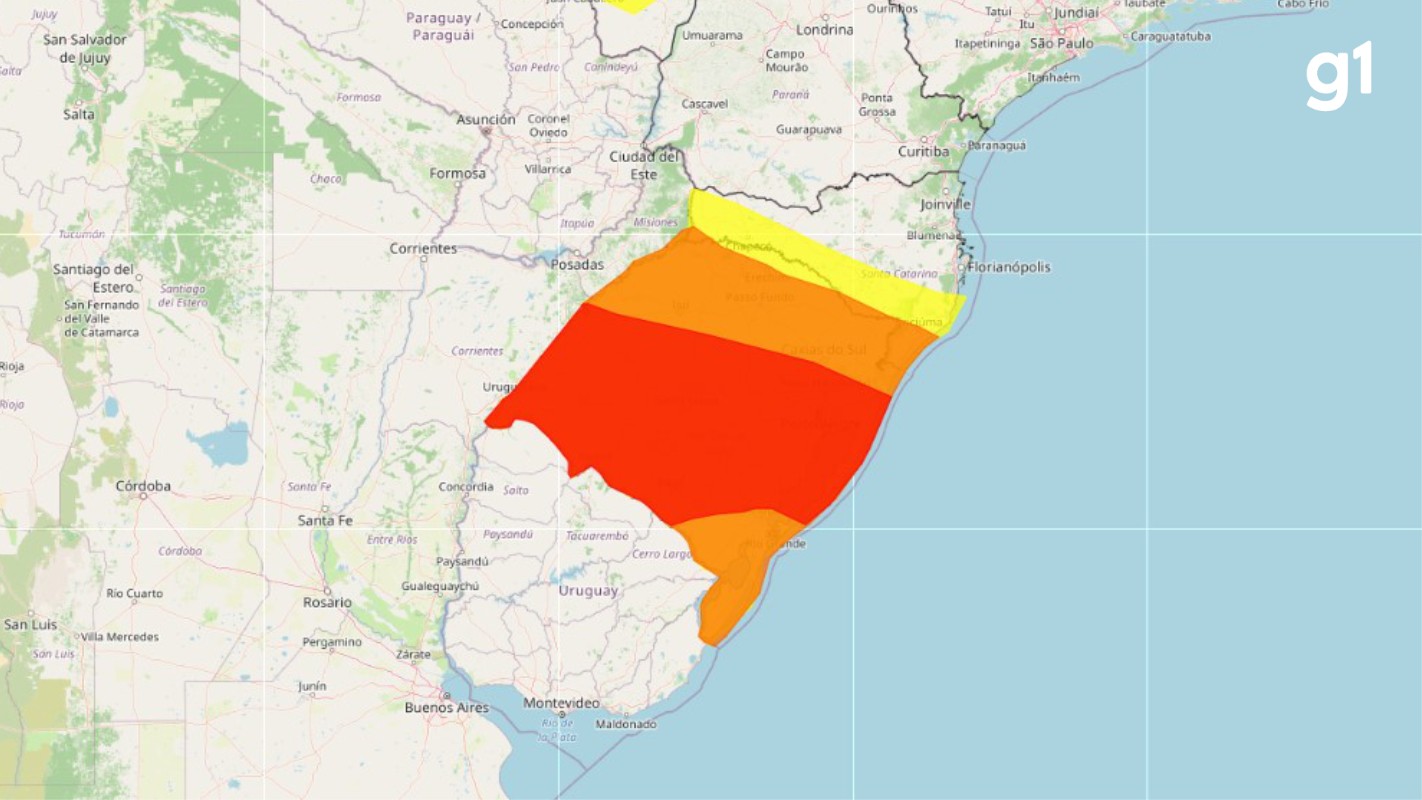
The Brazilian state of Rio Grande do Sul is facing a severe weather event from Monday, May 27, to Tuesday, May 28, with forecasts of intense storms, winds up to 100 km/h, and significant flooding. The National Institute of Meteorology (Inmet) has issued a "great danger" alert for accumulated rainfall, predicting over 60 millimeters per hour or 100 millimeters per day. This poses a high risk of floods, river overflows, and landslides across multiple regions, including the Metropolitan area of Porto Alegre. The state's Civil Defense has also issued red alerts for the Sinos and Uruguay rivers, with specific concerns for São Leopoldo on the Sinos River and Itaqui and Uruguaiana on the Uruguay River, both valid until Tuesday morning. Inmet has additionally issued warnings for potential storms with intense winds ranging from 40 to 100 km/h, and the possibility of hail. According to Climatempo Meteorologia, the adverse weather is caused by a low-pressure system linked to a cold front, with rain advancing eastward across the state. The instability is expected to bring a high risk of electrical discharges, hail, and wind gusts potentially exceeding 90 km/h locally, with an isolated tornado not ruled out. Authorities are advising the public to avoid flooded areas, seek shelter away from trees and transmission towers, disconnect main power, and secure belongings in case of flooding. Emergency services can be reached at 190, 193, or 199.
This severe weather event highlights the increasing vulnerability of regions like Rio Grande do Sul to extreme meteorological phenomena, likely exacerbated by broader climate shifts. The issuance of multiple high-level alerts by national meteorological and civil defense agencies underscores the severity of the situation and the potential for widespread disruption. The focus on river levels and potential landslides points to the complex interplay between heavy rainfall and existing geographical conditions. Future urban planning and infrastructure development in such at-risk areas will need to increasingly integrate advanced climate modeling and resilient design principles to mitigate the impact of such events. The coordinated response from Inmet and Civil Defense demonstrates established protocols for managing such crises, but the recurring nature of these events suggests a need for ongoing investment in early warning systems and public preparedness education.
AI-generated to prompt reflection — not editorial opinion, not advice, not a statement of fact. How this works.