Brazil's Santos-Guarujá underwater tunnel project secures R$ 2.6 billion in federal funds
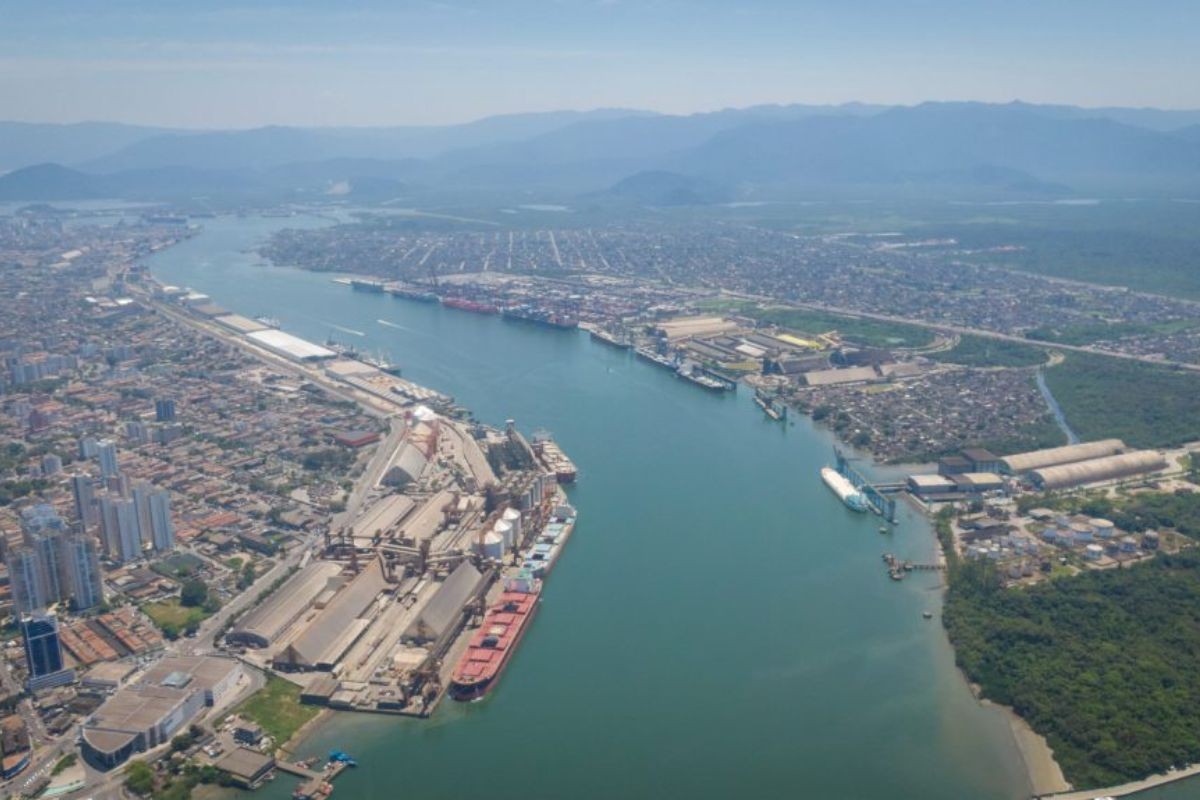
The Port Authority of Santos (APS) and the Government of São Paulo have signed a commitment agreement outlining the rules for depositing R$ 2.6 billion in federal funds for the Santos-Guarujá Underwater Tunnel project. This agreement, finalized on Tuesday, May 14th, was a requirement from the Federal Court of Accounts (TCU) to release the pending funds. The pact was signed between APS and the Secretariat of Partnerships and Investments (SPI), aiming to provide the necessary legal and financial security for the project's progression. A Technical Committee, comprising members from the state, APS, and the Regulatory Agency for Delegated Public Transport Services (Artesp), will be established to monitor the project's physical and financial execution and risk management. The National Waterway Transport Agency (Antaq) and the Ministry of Ports and Airports (MPor) may also participate. Funds will be disbursed according to the progress of executed phases, held in a 'guarantee account' at Banco do Brasil. The TCU had previously suspended the federal contribution in March due to a lack of a transparent legal instrument for fund management, but lifted the suspension in May following advancements in negotiations between the State and APS. The impasse arose because APS was excluded from the initial contract signed with Portuguese company Mota-Engil on January 28th. The R$ 6.8 billion tunnel project, a long-standing demand for the São Paulo coast, will be Brazil's first immersed tunnel, spanning 1.5 km with approximately 870 meters underwater. Of the total cost, R$ 5.1 billion comes from São Paulo state and federal resources, with the remainder from the concessionaire. Construction is slated to begin in 2027, following project development and environmental licensing in 2026, with completion anticipated by 2030.
The signing of this commitment term represents a significant step towards unlocking federal funding for a critical infrastructure project, addressing a long-standing public demand. The involvement of the TCU highlights the importance of robust governance and transparent financial mechanisms in large-scale public works. Establishing a multi-agency technical committee demonstrates a structured approach to project oversight, risk mitigation, and financial accountability. This formalized process, while causing delays, aims to ensure the responsible allocation of public funds and build confidence among stakeholders. The project's success will depend on efficient execution within the stipulated timelines and budget, navigating potential complexities inherent in pioneering infrastructure development within Brazil's regulatory landscape.
AI-generated to prompt reflection — not editorial opinion, not advice, not a statement of fact. How this works.