Brazil's Speaker of the House Advocates Retaliation Against US Tariffs
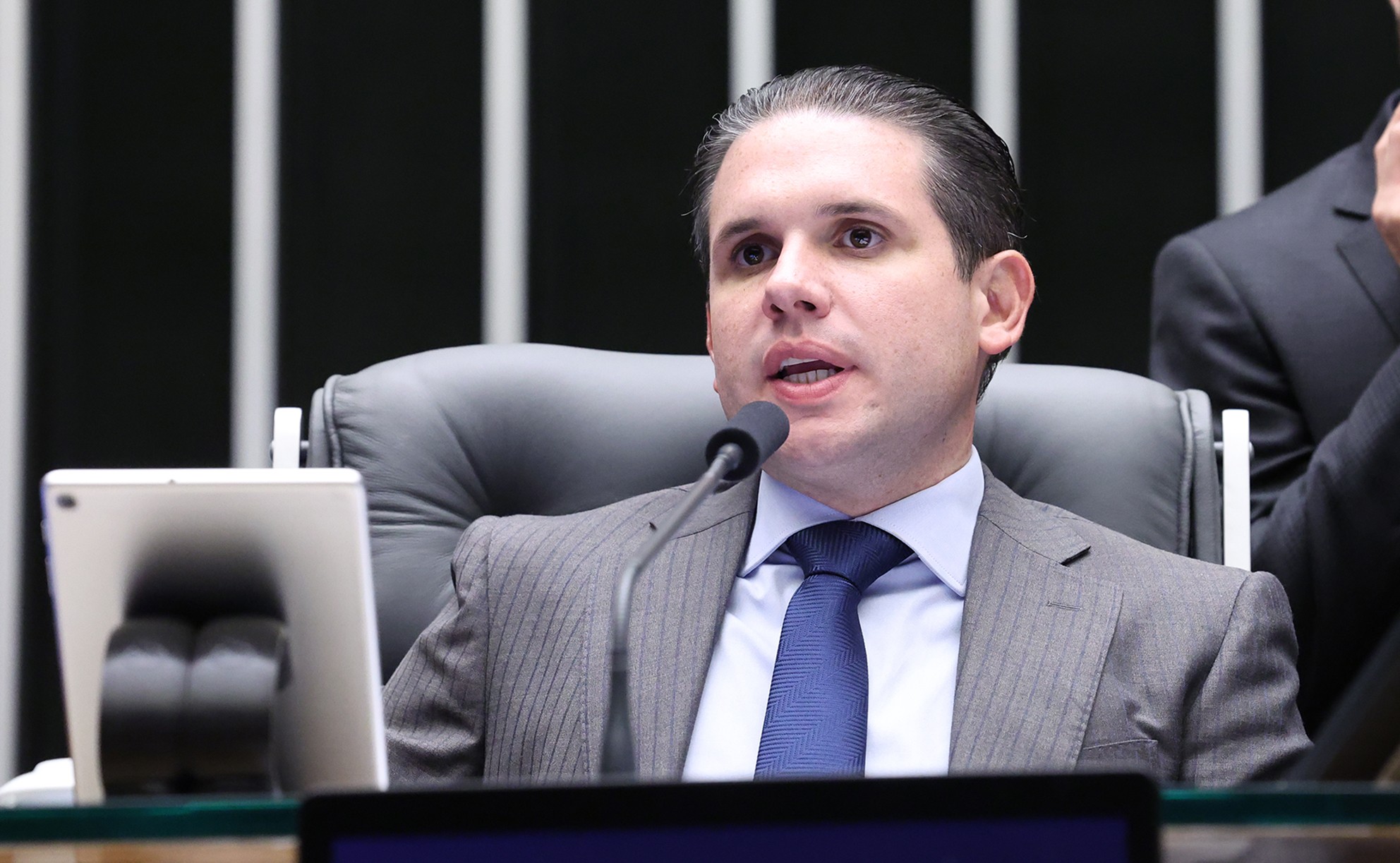
Hugo Motta, President of the Chamber of Deputies, has criticized the United States' decision to impose new tariffs on Brazilian products, advocating for the use of the Economic Reciprocity Law as a response. Motta, representing the REPUBLICANOS party from Paraíba, stated on Thursday, May 16th, that while Parliament supports dialogue between sovereign nations, it rejects the use of trade barriers for political pressure. The US government confirmed a 25% tariff on Brazilian goods, citing a trade investigation by the Office of the US Trade Representative (USTR) under Section 301 of the Trade Act of 1974, with the measure set to take effect on July 22nd. Motta described the tariffs as a unilateral and protectionist action threatening jobs and impacting strategic sectors of the Brazilian economy. The Brazilian Economic Reciprocity Law, sanctioned by President Lula in 2025, permits retaliatory measures against countries or economic blocs imposing trade, legal, or political barriers on Brazil. Motta asserted there is no technical or commercial justification for the tariffs, calling them an aggression against free trade and national sovereignty. The Chamber of Deputies will monitor developments and defend Brazilian producers, exporters, and jobs. According to the USTR, the tariffs stem from an investigation concluding that "several practices by Brazil are considered unjustifiable and discriminatory, restricting the competitiveness of American farmers, workers, innovators, and exporters." Minister Márcio Elias Rosa of Development, Industry, and Trade stated that 18% of Brazilian exports to the US, valued at $7.4 billion based on 2024 figures, will be affected. If 2025 data is considered, this percentage drops to 15%, or $5.8 billion. Rosa noted that 57% of products will remain tariff-free, while 24% will face tariffs up to 50%, including items like steel, aluminum, and automotive components.
The imposition of tariffs by the United States on Brazilian goods, and Brazil's subsequent consideration of retaliatory measures under its Economic Reciprocity Law, highlights a recurring tension in international trade relations. Such actions, often framed as necessary for national economic protection, can escalate into trade disputes that negatively impact global supply chains and consumer prices. The USTR's justification, citing "unjustifiable and discriminatory practices" by Brazil, suggests a divergence in how each nation interprets fair trade principles and national competitiveness. Brazil's response, emphasizing sovereignty and the defense of its productive sectors, reflects a strategic imperative to safeguard its economy from external pressures. Looking ahead, the increasing use of such trade instruments by major economies may signal a shift away from multilateral trade agreements towards more bilateral or unilateral approaches, potentially fragmenting global markets and necessitating a re-evaluation of international trade governance frameworks to ensure stability and equitable competition.
AI-generated to prompt reflection — not editorial opinion, not advice, not a statement of fact. How this works.