Brazil's Supreme Court Condemns Argentina President Milei's Insult to Justice Minister
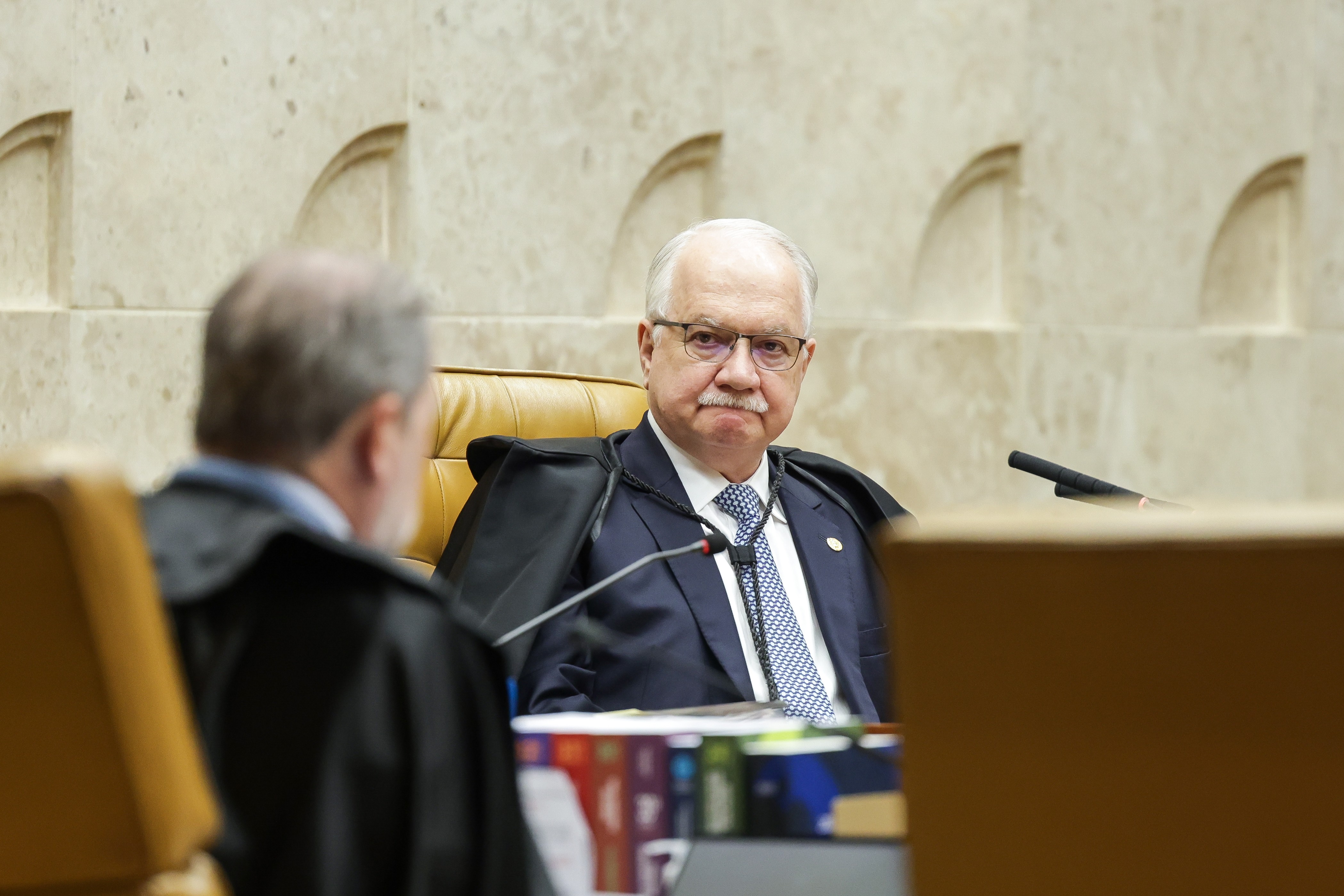
Brazil's Supreme Federal Court (STF) President, Minister Edson Fachin, has condemned remarks made by Argentinian President Javier Milei directed at STF Minister Alexandre de Moraes. Fachin stated that Milei's comments, calling Moraes "bald trash," were a disrespectful reference to a magistrate of Brazil's highest court, made on Brazilian soil. The STF "deplores manifestations incompatible with the civility that should characterize relations between states," according to a statement from Fachin. Milei made these remarks during his speech at a convention of the Liberal Party (PL) in São Paulo on Saturday, February 25th, which officially announced Flávio Bolsonaro's candidacy for President. Milei's insult followed the denial of his request to visit former President Jair Bolsonaro. The STF President emphasized the full autonomy of the Brazilian judiciary in his statement. Milei had expressed his intention to visit Bolsonaro, whom he referred to as "unjustly incarcerated," and contrasted this with visits received by foreign leaders during Lula's past imprisonment. He characterized the denial as a demonstration of injustice and the vindictive nature of those responsible.
This incident highlights the intersection of international diplomacy, domestic politics, and judicial independence. President Milei's inflammatory language, while potentially resonating with his domestic base, risks undermining diplomatic norms and the principle of non-interference in sovereign judicial processes. The STF's firm response underscores the importance of respecting judicial institutions, particularly when actions occur within a nation's borders. The situation reveals a potential tension between populist rhetoric, which often challenges established institutions, and the need for stable international relations governed by mutual respect. Future interactions may require careful navigation of these competing pressures, balancing national sovereignty with the imperative of civil discourse between heads of state and their judicial branches.
AI-generated to prompt reflection — not editorial opinion, not advice, not a statement of fact. How this works.