Brazil's Supreme Court Denies Milei's Visit to Bolsonaro in House Arrest
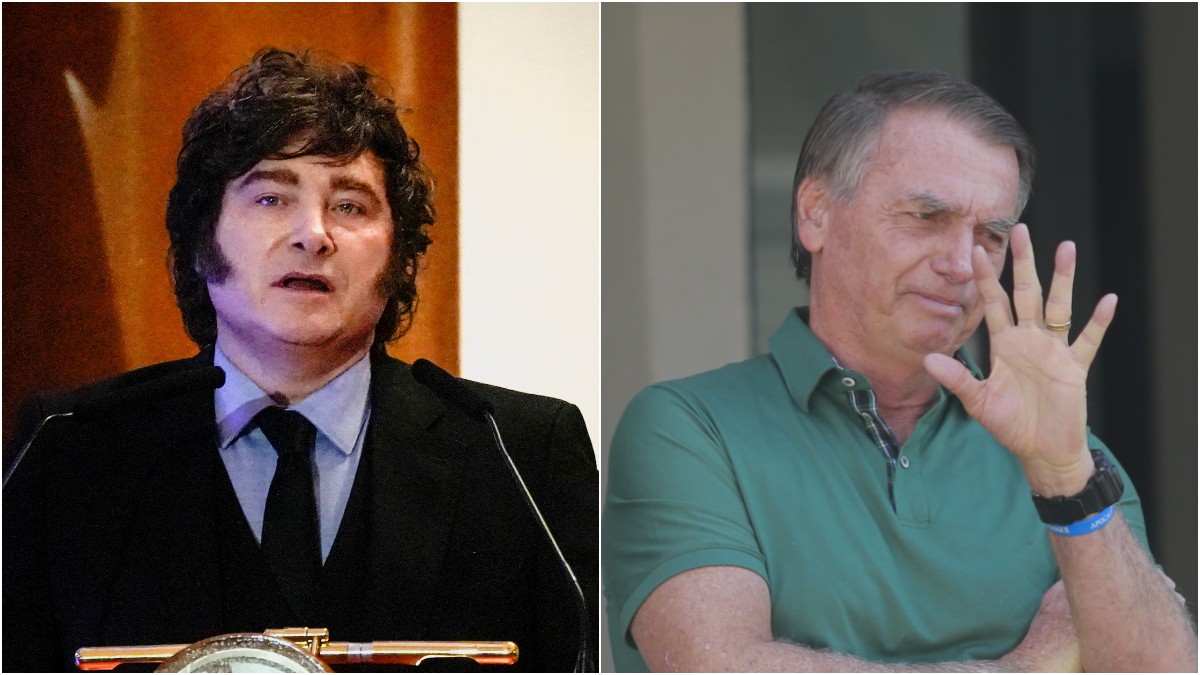
Brazil's Supreme Court Minister Alexandre de Moraes denied a request on Saturday, July 18th, for Argentine President Javier Milei to visit former Brazilian President Jair Bolsonaro. The proposed meeting was scheduled for July 25th, coinciding with Milei's planned visit to Brazil. Minister Moraes cited the restrictive precautionary measures Bolsonaro is currently under, emphasizing a recent decision that prohibits visits of a "political-electoral" nature. This ruling deemed Bolsonaro's request "prejudiced."
Earlier on Friday, July 17th, Moraes had already prohibited Bolsonaro from receiving visitors for political or electoral purposes until the end of the 2026 elections. He also banned the dissemination of political manifestos, even through third parties, and suspended general visits for 30 days, with exceptions only for legal counsel, medical professionals, and physical therapists. Bolsonaro is serving a 27-year and three-month sentence for attempted coup, under house arrest in Brasília.
The recent judicial actions stem from Bolsonaro's alleged violation of previous court orders. On July 11th, Senator Flávio Bolsonaro shared a "Letter to Brazilians" written by his father, explicitly endorsing his son's presidential candidacy. In response, Moraes had already suspended Flávio Bolsonaro's visits to his father for 90 days on July 13th. The minister stated there was a "flagrant non-compliance" and "active participation" by Jair Bolsonaro in creating "pre-fabricated material" to circumvent external communication and social media restrictions while under humanitarian house arrest. Bolsonaro's defense claimed he was unaware the letter would be publicized, but Moraes and the Prosecutor General's Office dismissed this, noting the letter's public nature and address "to Brazilians."
Jair Bolsonaro has been under house arrest since March 24th, following hospital discharge, after being transferred from a custodial regime. Moraes rejected claims that the new sanctions would completely isolate Bolsonaro, calling them "pathetic." He noted Bolsonaro lives with his wife, daughter, stepdaughter, staff, and security, and has received 185 visits since the house arrest began, including 64 from lawyers and 70 private medical appointments. The minister warned that further violations could lead to the revocation of his humanitarian house arrest and immediate return to a closed prison regime.
The Brazilian Supreme Court's decision to deny Javier Milei's visit to Jair Bolsonaro, and the broader restrictions on Bolsonaro's communications and visitors, highlight the ongoing tension between judicial oversight and the rights of individuals under restrictive legal measures. Minister Moraes's actions, framed as enforcing court orders and preventing political interference, underscore the judiciary's role in managing high-profile cases involving alleged threats to democratic processes. The ruling reflects a strategy to contain potential political influence from an incarcerated former head of state, particularly in the lead-up to future elections. This approach, while asserting judicial authority, raises questions about the balance between public security, the right to political expression, and the conditions of house arrest. The judiciary's firm stance suggests a systemic concern about the weaponization of political discourse and the potential for continued disruption, even from a confined individual. Future developments will likely involve continued scrutiny of Bolsonaro's communications and interactions, with the judiciary maintaining a vigilant posture to prevent further alleged breaches of court mandates.
AI-generated to prompt reflection — not editorial opinion, not advice, not a statement of fact. How this works.