Brazil's Supreme Court Orders Review of Bolsonaro's Potential Judicial Order Violation
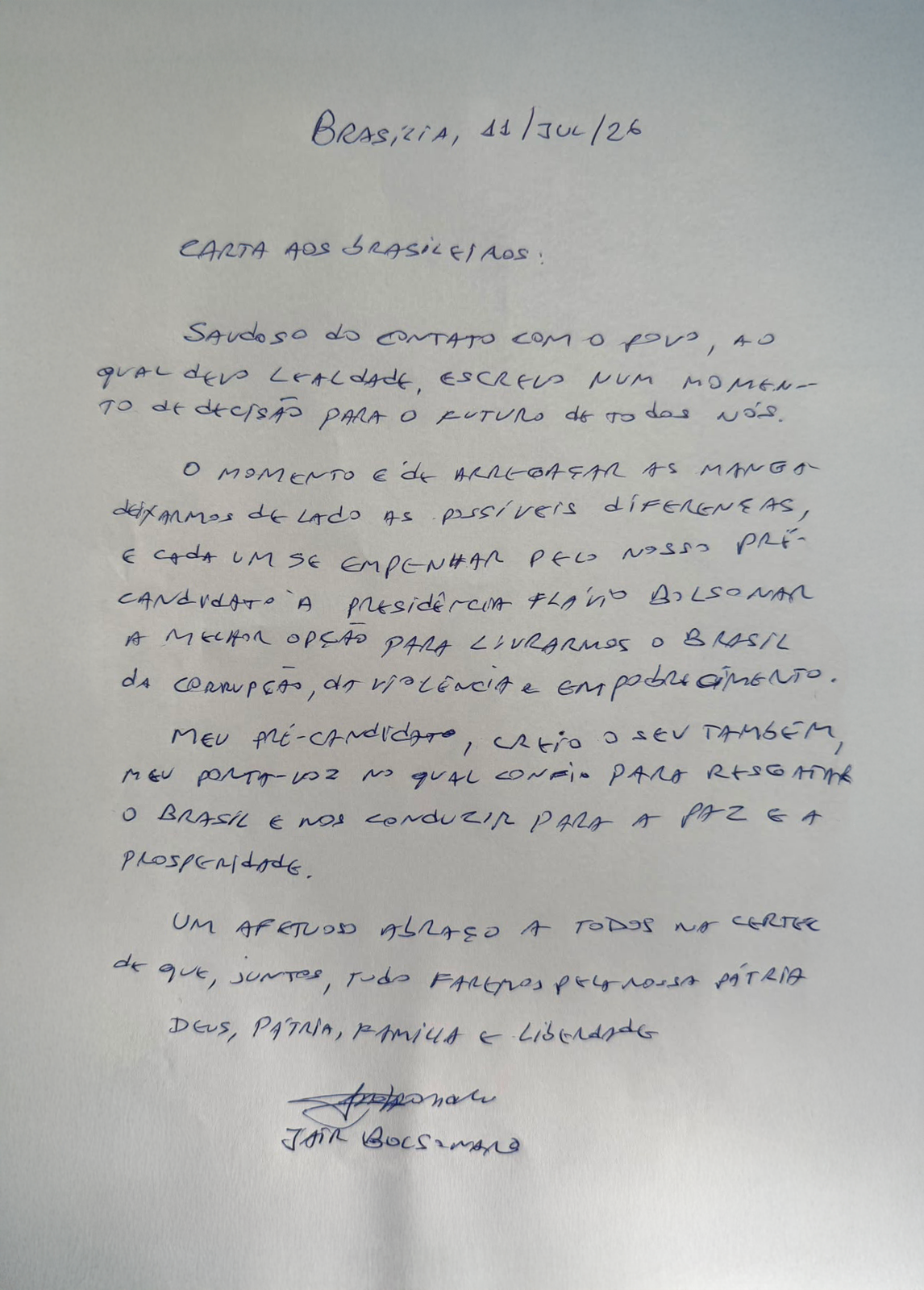
Supreme Court Justice Alexandre de Moraes has given the Prosecutor-General's Office five days to assess whether former President Jair Bolsonaro violated a judicial order. The investigation stems from Senator Flávio Bolsonaro's public release of a letter written by his father, endorsing his presidential candidacy for the Liberal Party (PL). The court's action follows the defense's claim that Jair Bolsonaro was unaware his son would publicize the letter. Moraes had initially set a 48-hour deadline for clarification after the letter was read publicly and shared on social media. In addition to seeking explanations, Moraes suspended Flávio Bolsonaro's visits for 90 days, citing the letter's dissemination as a breach of the order prohibiting Jair Bolsonaro from using social media, directly or indirectly. The defense maintains the letter was drafted privately and legitimately during an authorized visit, with no expectation of public disclosure. They also argued that Bolsonaro has written similar letters previously under the same restrictions without issue. The former president's legal team stated he remains committed to complying with all court-ordered measures since receiving humanitarian house arrest in March due to health reasons. Bolsonaro is serving a 27-year and three-month sentence for leading a coup attempt after his 2022 election defeat.
This judicial action highlights the complex interplay between political expression and legal restrictions imposed on former leaders. The court's scrutiny of the letter's dissemination, regardless of intent, underscores the stringent enforcement of orders designed to prevent further political maneuvering. The defense's argument regarding prior, similar actions suggests a potential debate over the interpretation and consistency of the court's directives. Future legal proceedings may explore the precise boundaries of communication for individuals under judicial restrictions, particularly concerning indirect influence and the definition of "third-party" dissemination in the digital age. This case could set precedents for how political figures under legal constraints engage with public discourse and their family members' political activities.
AI-generated to prompt reflection — not editorial opinion, not advice, not a statement of fact. How this works.