Brazil's Supreme Court Upholds Bolsonaro's House Arrest, Orders Surrender of Firearms
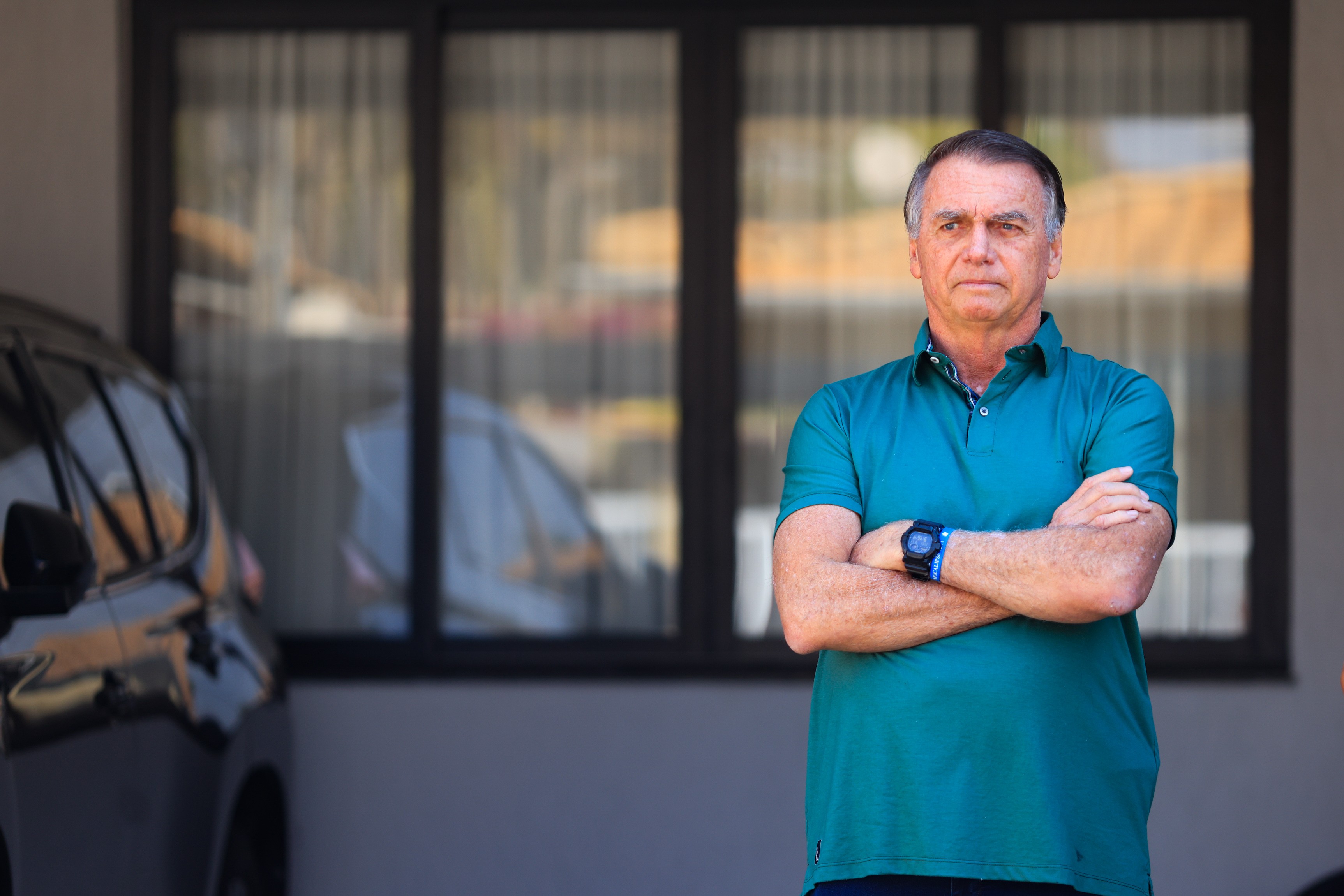
Brazil's Supreme Court Justice Alexandre de Moraes has ruled to maintain former President Jair Bolsonaro under house arrest, extending his confinement beyond the initial 90-day period. The decision comes amid scrutiny of recent incidents related to Bolsonaro's compliance with court-imposed restrictions. Justice Moraes has also mandated that Bolsonaro surrender all firearms registered in his name within 48 hours, and has revoked his Collector, Sports Shooter, and Hunter (CAC) registration. The original house arrest order, granted for humanitarian reasons due to bronchopneumonia, was set to expire on Thursday, October 25th. Bolsonaro is currently serving a combined sentence of 27 years and 3 months. His house arrest began on March 24th of this year. The court's decision considered the recent discovery of a pistol registered to Bolsonaro, found with a member of the Institutional Security Cabinet (GSI) during a police operation on June 15th. Bolsonaro claimed the weapon was his and was only sent for repair, stating he kept it at home for security reasons. The Public Prosecutor's Office recommended that any determination of serious misconduct await the final investigation outcome. Bolsonaro's defense argued that the weapon was legally registered and that he had not been notified of any suspension or revocation of its registration. The former president appeared briefly outside his residence on Thursday, September 11, 2025. The First Panel of the Supreme Court had previously finalized Bolsonaro's sentence for attempting a coup after the 2022 elections, totaling 27 years and three months in a closed regime.
The Supreme Court's decision to maintain Jair Bolsonaro's house arrest and demand the surrender of his firearms highlights the ongoing legal and political ramifications of his post-presidency. This ruling underscores the judicial branch's assertion of authority in enforcing legal sanctions, particularly concerning individuals with significant public influence. The case navigates the complex intersection of personal security concerns, legal compliance, and the potential for political instability. Future developments will likely hinge on the interpretation of 'serious misconduct' and the effectiveness of judicial oversight in managing high-profile cases. This situation prompts reflection on the balance between individual rights and public order, especially within the context of democratic governance and the potential for executive overreach or challenges to electoral outcomes.
AI-generated to prompt reflection — not editorial opinion, not advice, not a statement of fact. How this works.