Brazil's Trade Dispute with the US: More Than Just Tariffs
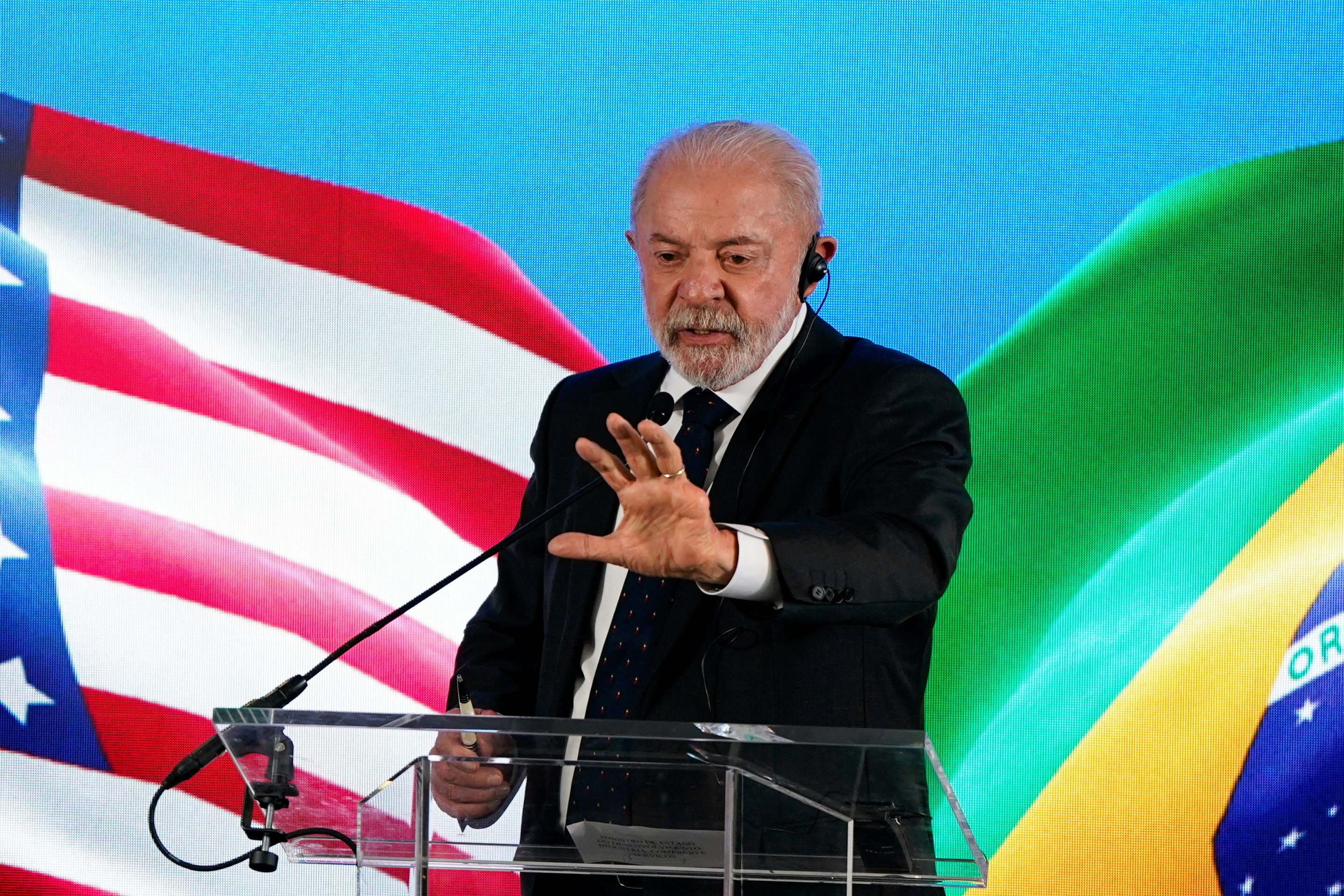
Brazilian President Luiz Inácio Lula da Silva has stated that Brazil will remain at the negotiation table to reverse the 25% tariffs imposed by the United States on various Brazilian products. Lula emphasized that Brazil has historically maintained a trade surplus with the U.S. and will continue to present proposals, challenging the U.S. justification for the tariffs. However, analysts suggest the issue extends beyond mere trade balance, involving broader U.S. geopolitical and economic strategies. The U.S. is reportedly seeking to revise multilateral agreements, counter Chinese influence, and assert economic dominance more aggressively. Unlike technical trade discussions, these tariffs are seen as having deeper political and geopolitical implications. Experts point to previous bilateral agreements signed by the UK, Japan, and the EU with the U.S., which involved significant concessions for trade stability but still faced uncertainties. Canada, despite a comprehensive trade agreement, also faced new tariffs, leading to accusations of treaty violations. Analysts like Daniel Vargas from FGV Direito Rio argue that current negotiations with the U.S. under Trump involve ideological affinities and aims to discourage close ties with China, rather than purely economic calculations. Carlos Gustavo Poggio, a professor of international relations, believes the tariffs are driven by an ideological stance, particularly influenced by Secretary of State Marco Rubio, rather than a coherent long-term strategy. He notes that the investigation preceding the tariffs began after Trump sent a letter referencing Brazilian political figures. While Brazil has attempted negotiations, its approach may be too narrow, not fully accounting for the political dimensions. Geopolitical analyst Gustavo Blum suggests that Trump's "maximalist" approach leaves little room for concessions, and the tariffs might even backfire by pushing countries like Brazil closer to China, as indicated by recent discussions between Lula and Xi Jinping. Poggio further argues that comparing Brazil's situation to negotiations with Europe or Japan is difficult due to the significant political component in the Brazil-U.S. relationship and the ephemeral nature of agreements with the Trump administration, which can be easily overturned by future governments.
The U.S. tariffs on Brazilian goods appear to be driven by a blend of economic protectionism and geopolitical objectives, aiming to reshape trade relationships and assert influence in Latin America. While Brazil seeks to negotiate based on trade deficits and historical surpluses, the U.S. strategy seems to leverage tariffs as a tool for political alignment and to counter perceived rivals like China, rather than for purely economic gains. This approach creates a complex negotiation environment where technical trade arguments may be secondary to ideological and strategic considerations. The inherent instability of agreements under administrations prioritizing unilateral action, as noted, poses a challenge for long-term trade stability and may incentivize countries to diversify partnerships, potentially leading to outcomes contrary to the U.S.'s stated goals.
AI-generated to prompt reflection — not editorial opinion, not advice, not a statement of fact. How this works.