Brazil's União Brasil and PP Parties Nominate Derrite for Senate, Back Tarcísio in São Paulo
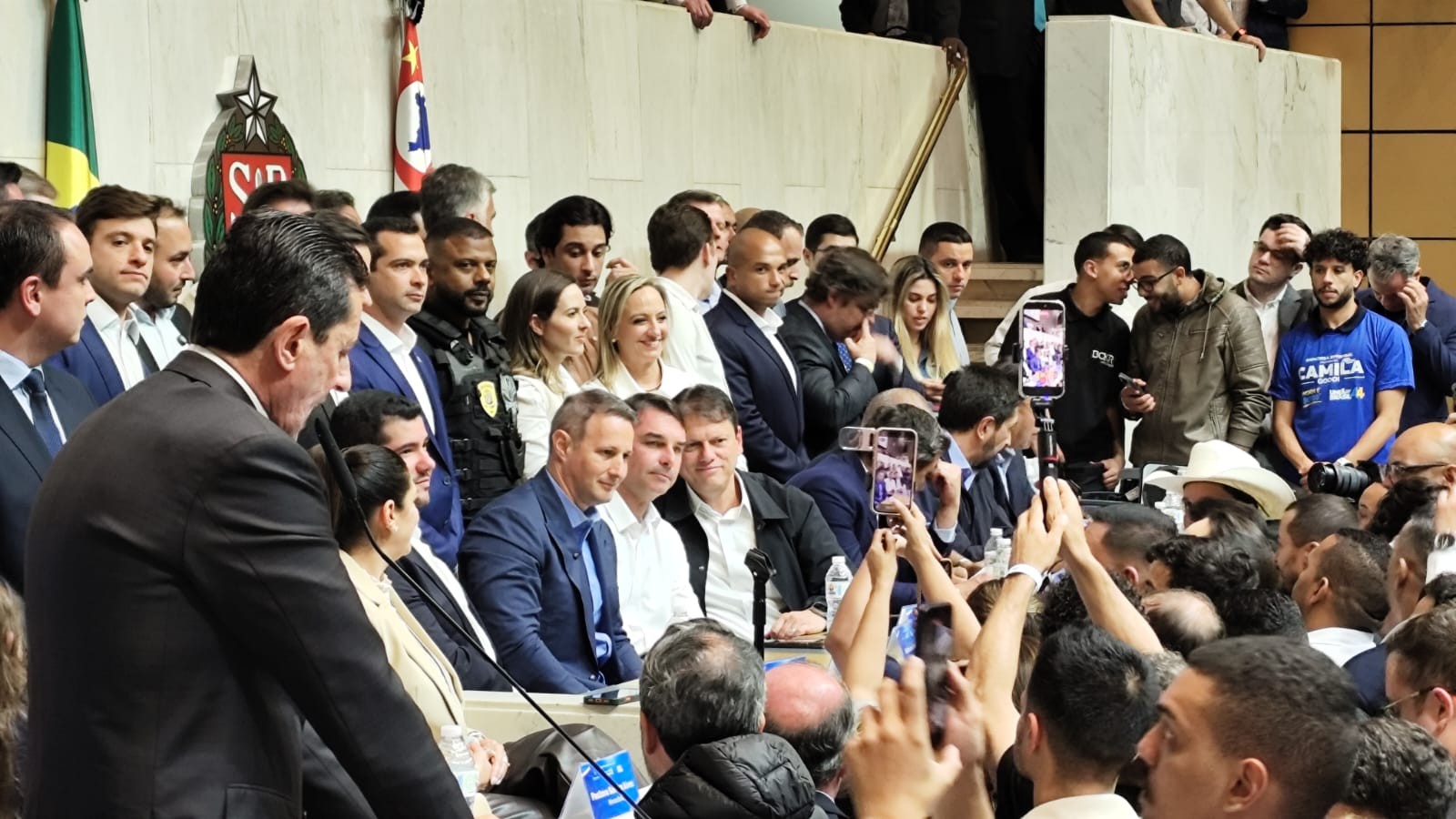
The São Paulo state chapters of the União Brasil and Progressistas (PP) parties have officially launched their candidates for the 2026 elections during a joint state convention. Held at the Legislative Assembly of São Paulo (Alesp), the convention formalized the "União Progressista" federation, formed by the two parties. Guilherme Derrite, the current Secretary of Public Security for São Paulo, was selected as the PP's candidate for the Senate. André do Prado of the PL party will also contend for one of the two Senate seats. Derrite stated that São Paulo would align with Flávio Bolsonaro's national political stance. The federation also approved 35 federal deputy candidacies for each party, totaling 70 candidates, and 47 state deputy candidacies per party, amounting to 94 candidates. Crucially, the União Progressista confirmed its endorsement of current Governor Tarcísio de Freitas for re-election, who is expected to run under the Republicanos party. Furthermore, the federation declared its support for Flávio Bolsonaro's presidential bid. Notable attendees included Governor Tarcísio de Freitas, Senator Flávio Bolsonaro, São Paulo Mayor Ricardo Nunes (MDB), and the President of Alesp and pre-candidate for the Senate, André do Prado.
This event highlights the strategic alignment of political parties in Brazil, specifically União Brasil and PP, in São Paulo. The formation of the "União Progressista" federation and their endorsements signal a consolidation of forces aiming to influence the 2026 electoral landscape, particularly concerning the Senate and the São Paulo gubernatorial race. The declared support for Flávio Bolsonaro's presidential aspirations indicates a broader national coalition-building effort. Such alliances are driven by the incentive to maximize electoral success through shared resources and voter bases. Looking ahead, these regional power plays will likely shape the dynamics of national political competition, testing the efficacy of federated party structures against established party loyalties and individual candidate appeal in the evolving Brazilian political system.
AI-generated to prompt reflection — not editorial opinion, not advice, not a statement of fact. How this works.